This year marks the 190th anniversary of the founding of the West Kazakhstan Regional Museum of History and Local Lore. Over nearly two centuries, the museum has amassed a rich collection of heritage materials that tell the story of our region’s centuries-old history and bear witness to the material and spiritual culture of our people. One of the museum’s most important responsibilities is not only to preserve this heritage but also to study it through scholarly research, explore its contents, organise it systematically and make it accessible to the public.
In the lead-up to the museum’s 190th anniversary, we placed particular emphasis on re-examining our collections, identifying previously understudied heritage materials and bringing them into scholarly circulation. One of the first major initiatives I undertook after assuming leadership of the museum was the project entitled “Collection of Historic Books, Manuscripts and Photographs”. The project arose from a specific need. Although historic books and manuscripts written or printed in Arabic script had been preserved in the museum’s collections for many years, they had never been comprehensively studied or fully catalogued as a unified collection. There was no systematic scholarly information about their exact number, the languages in which they were written, the periods to which they belonged, their places of publication, their authors or, most importantly, their contents and historical and scholarly significance. The project therefore aimed to identify, collect, read, subject to scholarly examination and systematically organise historic written materials held in the museum’s main collection and its departments, while also establishing suitable conditions for their preservation. At the same time, we worked to identify and collect historic books, manuscripts and photographs preserved by residents of the region as family and ancestral heirlooms passed down through generations.
On 6 September 2025, we introduced the project to the public and issued a special appeal to residents of the region, inviting them to donate historic books, manuscripts and photographs preserved in their homes to the museum. We also made provision for those who were reluctant to part permanently with their family heirlooms. The proposed arrangements included creating digital copies of these objects and returning the originals to their owners, as well as arranging for specialists to examine books and manuscripts written in Arabic script and other historical writing systems. This would help establish their titles, contents, dates and historical significance. Following the launch of the project, public interest was considerable, and numerous historic books and manuscripts were brought to the attention of museum specialists. Among them were valuable items previously unknown to the museum, preserved by families for decades and, in some cases, across several generations. This demonstrated that a substantial body of written heritage remains in private hands, much of it yet to enter scholarly circulation, and highlighted the need for its systematic identification.
Another important issue emerged during the project. Not everyone who offered their historic books for examination was prepared to transfer their ancestral heritage permanently to the museum’s collections. This was entirely understandable. For many owners, these objects were not simply old books but precious heirlooms passed down from generation to generation as a sacred ancestral trust. This prompted us to explore new approaches to preserving historical heritage. As a result, the project expanded beyond the collection and cataloguing of historic books into a broader initiative aimed at identifying, recording and creating community-based arrangements for the preservation of historical and cultural objects held by private individuals. To establish cooperation with owners who wished to retain their possessions, we introduced a mechanism known as the “community collection custodian” and began concluding appropriate agreements. The purpose of this initiative was not to require owners to surrender their valuable heritage to the museum. On the contrary, it allowed historical objects to remain with their owners, within their established family settings, while coming to the attention of museum specialists. This created opportunities for their scholarly identification, description, digitisation and use in future research. In this way, we took a step towards establishing a new relationship between heritage held by private individuals and the collections of a state museum. We regard the development of the community collection custodian model as one of the project’s significant achievements. A museum’s mission should not be confined to gathering historical objects within its own walls. It must strive to identify and study the historical and cultural heritage of its region, regardless of who possesses it, help prevent its loss and, wherever possible, create the conditions necessary to pass it on to future generations. From this perspective, the project became an initiative aimed at fostering a shared sense of responsibility between the museum and society for the preservation of historical heritage.
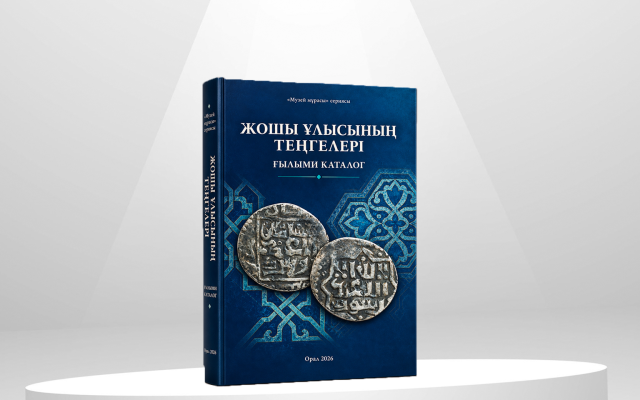
As a result of these efforts, 200 books and manuscripts in Arabic script were examined. They came from the main collection of the West Kazakhstan Regional Museum of History and Local Lore, its branches and private individuals. Their contents, languages, places and dates of publication, states of preservation and historical and scholarly significance were studied. Following scholarly examination and selection, 130 books were included in the present catalogue. Books not included in this edition are intended for a subsequent publication, together with newly identified heritage materials. We also decided to publish historic photographs in a separate collection, and I appointed my colleague Kazbek Kuttymuratuly to oversee that work.
 This undertaking goes beyond registering objects in the museum’s collections or compiling an inventory. Through this catalogue, written heritage materials that had long been preserved in the museum’s holdings, but whose contents and scholarly significance had not been fully explored, have for the first time been systematically organised, provided with scholarly descriptions and presented to researchers in Kazakhstan and abroad.
The geographical origins and linguistic and thematic diversity of the books included in the catalogue reflect the extensive spiritual and cultural connections of West Kazakhstan during the nineteenth and early twentieth centuries. The presence in our region of works published in Kazan, Orenburg, Ufa, Istanbul, Cairo, Tashkent and other major centres of printing and education demonstrates the close ties of the local population to Islamic learning, educational traditions and book culture. The preservation of publications in Arabic, Tatar, Turkic, Persian, Ottoman Turkish and Kazakh provides valuable opportunities for deeper research into the spiritual and cultural dimensions of the region’s history.
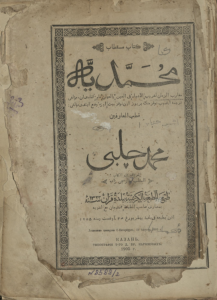
Every publication in the catalogue possesses its own historical and scholarly significance. The oldest is Muhammadiya by Yazicizade Mehmed Efendi, published in 1845 at the Ludwig Schutz printing house in Kazan. This 300-page work, printed in Ottoman Turkish, explores a wide range of subjects, including creation, the history of the prophets, the life of the Prophet Muhammad, the Mi’raj (the Prophet’s Night Journey and Ascension), interpretations of Quranic surahs and hadiths, the Day of Judgement and the afterlife. Another important feature of this book is an inscription that sheds light on its ownership history. The fourth page records that the book was inherited by Bibi Zuhra from Nizamuddin Gimaduddinuly, her father. This single inscription indicates that the book was once treasured as part of a family’s spiritual heritage and passed down from one generation to another.
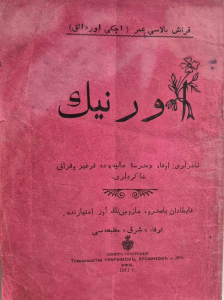 Among the most valuable items in the catalogue for the history of West Kazakhstan are two editions of works by Gumar Karash, a poet, educator and prominent figure of the Alash movement: Ornek (Pattern) and Turymtai (Merlin). Published in Ufa in 1911, Ornek is a rare Kazakh-language edition. The story of how it entered the museum’s collection holds particular personal significance for me. In 2012, I travelled to Moscow specifically to meet Nadezhda Burkhankyzy, the granddaughter of Gumar Karash. During our meeting, she entrusted me with documents and materials relating to her grandfather that had remained in her possession. Among them was an original copy of Ornek. I still remember her words as she handed over these items, which had been preserved as a family trust for so many years: “A heavy burden has been lifted from my shoulders.” Those words conveyed the profound responsibility she had felt for safeguarding her ancestral heritage. The materials Nadezhda Burkhankyzy provided were subsequently used in collecting and studying Gumar Karash’s legacy and became valuable sources for the publication of a three-volume collection of his works. In 2018, I made another special journey to Moscow and personally presented the published three-volume collection to her. When she saw that her grandfather’s legacy had been collected, studied, published and returned to his homeland in book form, she was delighted and expressed her sincere gratitude. When we announced the launch of the present project and held a special gathering, I transferred the documents and materials relating to Gumar Karash that Nadezhda Burkhankyzy had entrusted to me, including the original copy of Ornek, to the museum’s collection. Thus, this historical heritage was made available to researchers and ultimately found its place in the state museum’s holdings, becoming part of the shared cultural wealth of the nation. This story itself demonstrates the importance of seeking out, collecting and studying historical heritage preserved among the public and transferring it into museum collections.
The second edition of a work by Gumar Karash preserved in the museum’s holdings is Turymtai (Merlin), a collection of poetry published in 1918 by the Sharq publishing house in Ufa. It contains poems written during the Alash period, including Kun Tudy (The Day Has Dawned), Neden Qorqam? (What Am I Afraid Of?), Sagan Ne Boldy? (What Happened to You?), Koremiz Be? (Will We See It?) and other works. The book’s ownership history is also known. Its first owner was Shamgon Kazhigaliuly, a resident of Kokterek village in the former Furmanov District. From 1950 onwards, it was preserved by his son, Temirzhan Kazhigaliyev. My colleague Kazbek Kuttymuratuly donated the book to the museum’s collection. There is profound symbolic significance in the fact that Ornek and Turymtai, both published more than a century ago, are now preserved together in the museum. This represents not only the return of an Alash figure to his native region through his written legacy, but also a tangible example of how spiritual treasures, carefully safeguarded by individuals and families, become part of the nation’s shared heritage.
Another particularly valuable work from the perspective of national education and the history of Kazakh writing is Alip-biy (Zhana Qural) (Alphabet: A New Teaching Aid) by Akhmet Baitursynuly, published in Kyzylorda in 1926. This 117-page Kazakh-language primer is one of the historical educational publications designed to teach Kazakh children literacy in their native language. All the pages of the copy included in the catalogue have been preserved. Given Akhmet Baitursynuly’s historic contribution to the development of Kazakh writing and the establishment of a national education system, the preservation of this publication in the museum’s collection is of considerable scholarly and spiritual importance.
One of the valuable works representing the shared spiritual heritage of the Turkic peoples is Bakyrgan Kitaby (The Book of Bakyrgan) by Suleiman Bakyrgani, also known as Hakim Ata. The copy included in the catalogue was published in 1893 at the Chirkov printing house in Kazan in a Turkic language and belongs to the tradition of Sufi literature. Its preservation in the museum’s collection provides important evidence of West Kazakhstan’s historical continuity within the wider spiritual and cultural world of the Turkic peoples.
These publications alone demonstrate the scope and richness of the catalogue. Bringing together such significant works, from the 1845 edition of Muhammadiya and the spiritual writings of Suleiman Bakyrgani to the works of Gumar Karash and Akhmet Baitursynuly, illustrates the deep historical roots of written culture in West Kazakhstan. The catalogue also includes books on dream interpretation, everyday life, food preparation and other subjects alongside religious, educational, literary and historical works. This diversity reveals the breadth and variety of reading interests among the population of the period.
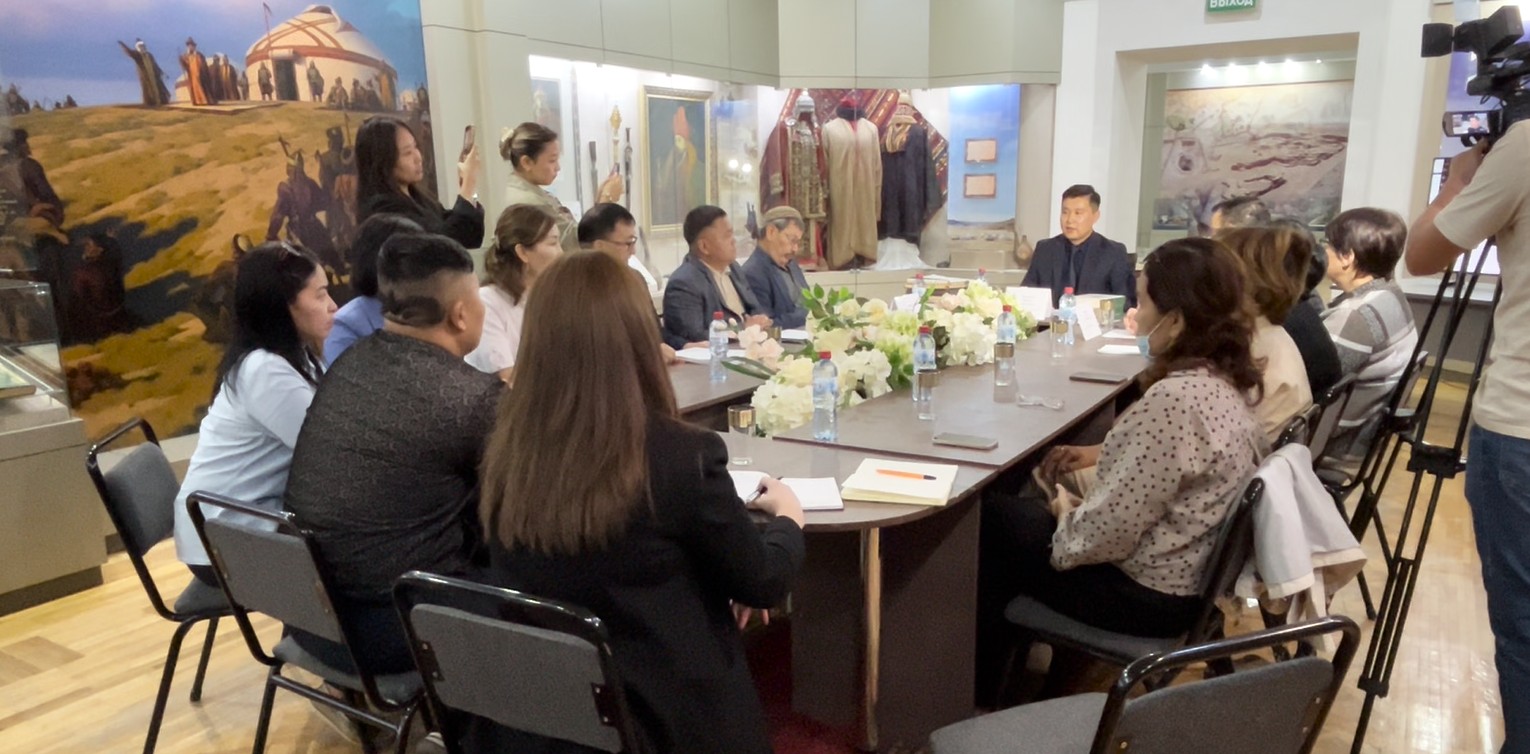
In preparing the catalogue, we considered not only domestic experience but also international scholarly research in this field. In particular, an important model was the structure and methodological approach of the scholarly work Catalogue of Rare Turkish-Language Works in Arabic Script in the National Library of Kazakhstan (Almaty), compiled by Dr Osman Kabadayi and Professor Zubaida Shadkam and published in 2021. Its methods of describing rare books, organising bibliographic information and standardising catalogue records provided a valuable methodological foundation for our own work. As a continuation of this scholarly engagement, a research and educational roundtable entitled “The Written Traces of History: Issues in the Study of Written Monuments and Manuscripts” was held at the West Kazakhstan Regional Museum of History and Local Lore on 3 November 2025. The gathering focused on discussing research methods for ancient written monuments and inscriptions on gravestones, reviewing domestic and international scholarship and promoting the shared spiritual heritage of the Turkic peoples. Dr Osman Kabadayi, an associate professor and scholar from Kirsehir Ahi Evran University in the Republic of Turkiye, attended as a special guest. The Turkish scholar had come to West Kazakhstan University named after M. Utemisov under an academic mobility programme, and the meeting provided an opportunity for museum specialists to exchange experience in the study of written heritage and scholarly cataloguing. The roundtable addressed current issues in researching ancient written monuments, manuscripts, inscriptions on gravestones and historical sources, while participants also exchanged views on further developing academic cooperation. The meeting also helped connect the research undertaken for the catalogue with international scholarly experience.
To introduce the catalogue’s scholarly findings to researchers beyond Kazakhstan, its texts were translated into Russian, Turkish and English. By scanning the QR code placed alongside each Kazakh-language text, readers can access its Russian, Turkish and English translations. This enables international researchers to use the information presented in the catalogue and helps introduce the written heritage preserved in West Kazakhstan’s museums to the global scholarly community.
We extend our particular gratitude to Osman Kabadayi for his scholarly and linguistic assistance in preparing the Turkish-language version of the catalogue. His academic expertise and collegial support contributed to broadening the international scholarly connections associated with this publication.
One of the most important lessons of this project was the realisation that many historic books have survived to the present day not only through the efforts of museums and libraries, but also thanks to the care taken by ordinary families. Each of these books, passed down through generations and preserved through different historical periods, has its own story. Preserving an old book and donating it to a museum is therefore much more than handing over a single object. It means contributing a family’s treasured legacy to the collective historical memory of the nation. From this perspective, the efforts of those who supported the project, made valuable objects available for research, permitted their digitisation or donated them to the museum deserve the highest respect. Thanks to these individuals, the museum’s collections have not only been enriched with new heritage materials, but previously unknown historical evidence has also been brought to the attention of the scholarly community.
For a museum, it is essential not only to safeguard historical objects but also to study them, prepare scholarly descriptions and make them accessible to society. The publication of this catalogue is one of the tangible achievements of the museum’s research activities over its 190-year history. Most importantly, this work has enabled us to take a significant first step towards systematically examining not merely how many books in Arabic script have been preserved in our collections over the years, but also what they contain, which historical periods and spiritual traditions they represent, and how they came to West Kazakhstan. Our work does not end with this catalogue. On the contrary, it should mark the beginning of new scholarly investigations. In the years ahead, we intend to continue studying the heritage included in the catalogue in greater depth, digitising and restoring the materials, investigating their preservation and ownership histories, and presenting them to the public through exhibitions and research projects. The search for and collection of historic books and manuscripts still held by families throughout the region must also continue.
I would like to express my gratitude to the catalogue’s compiler, Orynbasar Nurlanuly, for his extensive work in identifying, reading and organising the historic books, verifying their bibliographic descriptions, conducting scholarly assessments and preparing the publication. We also extend our appreciation to our colleagues and partners who provided academic and organisational support throughout the project.
I believe this publication will be more than a scholarly reference work introducing the written heritage in Arabic script preserved in the museum’s collections. It will also serve as an expression of the spiritual continuity linking past and present, revealing deeper layers of a museum collection that has developed over 190 years and still holds much that remains to be explored.
Preserving the legacy of the past is the responsibility of the present generation, while studying it, uncovering its meaning and passing it on to future generations is our shared duty.
Zhantas Nabiollauly Safullin
Director, West Kazakhstan Regional Museum
of History and Local Lore
Oral, May 2026