The collections of the West Kazakhstan Regional Museum of History and Local Lore contain a wealth of historical and cultural heritage that tells the story of our region’s centuries-old past. Every artefact preserved in the museum’s archaeological, ethnographic, numismatic and other collections is a tangible witness to a particular era and a valuable source of knowledge that contributes to our people’s historical memory. Yet the museum’s responsibility must extend beyond collecting, documenting and preserving this heritage. Only when each valuable artefact is subjected to scholarly research, its historical significance is revealed and it is made available to the academic community can it fully serve the interests of society and scholarship.
Until recently, however, the West Kazakhstan Regional Museum of History and Local Lore had largely confined its efforts to bringing together exhibits considered particularly valuable, without establishing a programme for publishing scholarly catalogues. Although the museum had accumulated important materials over nearly two centuries, insufficient attention had been given to organising them into distinct research collections, establishing their attribution, conducting comparative studies and publishing the findings in specialised academic editions. As a result, the scholarly potential of many artefacts remained largely unexplored, while the historical narratives presented in the museum’s exhibitions had not been fully developed.
We therefore identified strengthening the museum’s research activities and raising the quality of collections management as key priorities. To achieve these objectives, we began recruiting qualified specialists with relevant academic knowledge and professional training, undertaking systematic research into the museum’s collections and preparing scholarly catalogues. Our principal aim is to move beyond the information recorded in existing inventory documentation: to re-examine artefacts, clarify their attribution, organise them according to scholarly principles and make the findings accessible to both specialists and the wider public, while also renewing the museum’s exhibitions.
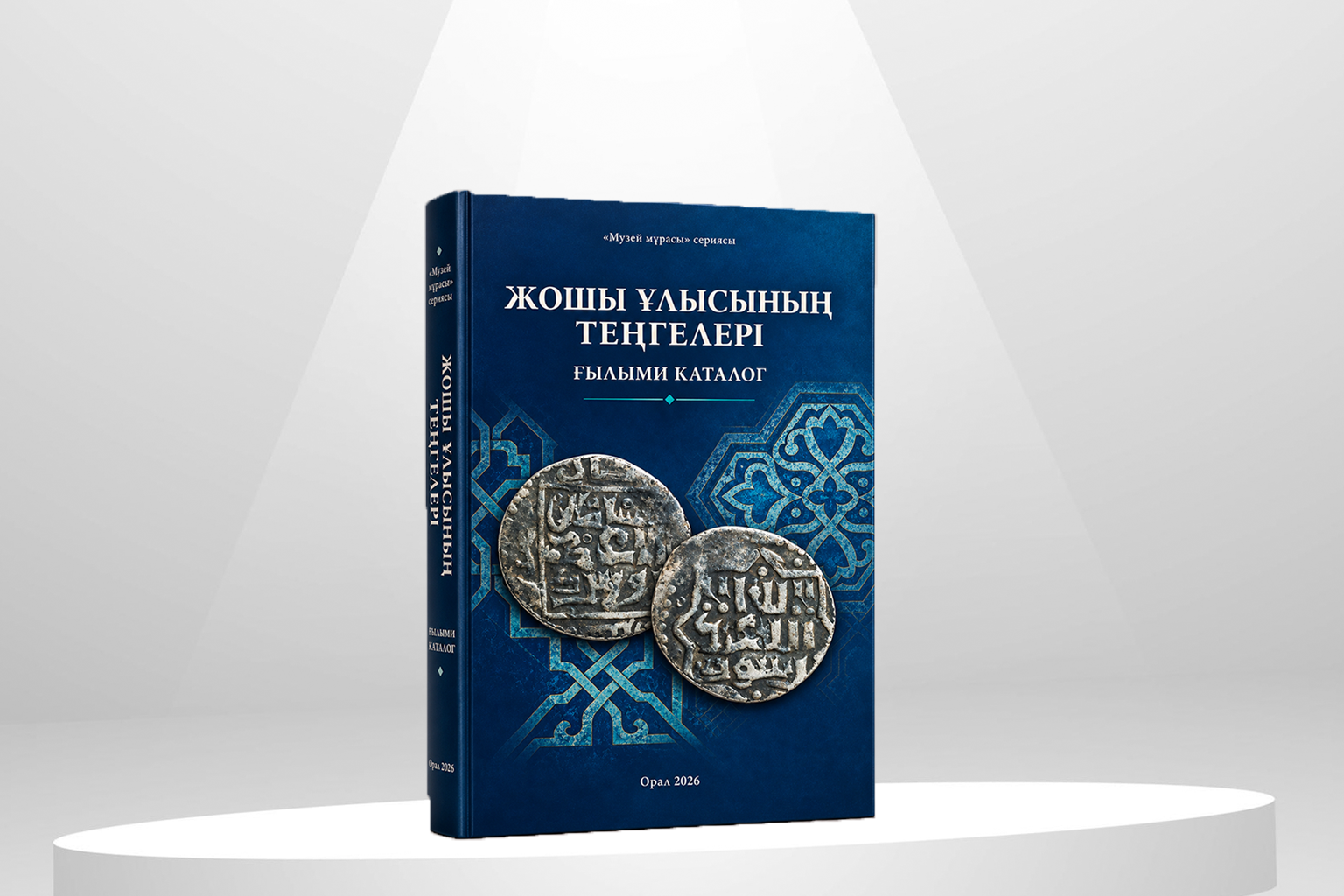
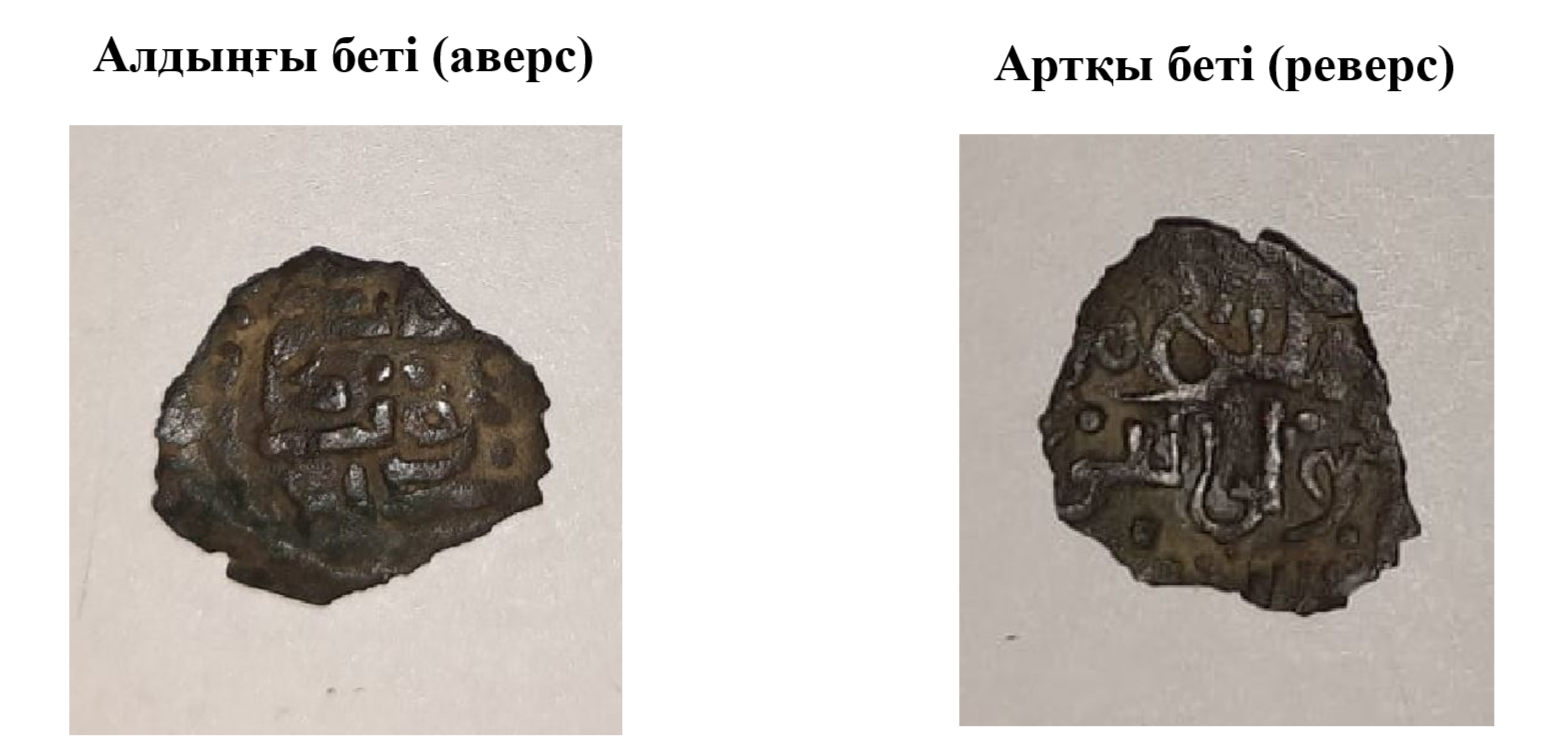 Our catalogue, Coins of the Ulus of Jochi, is one of the results of this initiative. For the first time, the numismatic heritage of the Ulus of Jochi preserved in our museum has been examined as a coherent subject of scholarly research, systematically documented and presented to the academic community. The title Coins of the Ulus of Jochi was chosen deliberately. It reflects a clear understanding of historical continuity. Following independence, Kazakhstan introduced its own national currency, one of the principal symbols of sovereign statehood, and named it the tenge. The origins of this name are connected with the history of medieval monetary circulation across the Great Steppe, particularly the monetary culture of the Ulus of Jochi. At the international symposium “The Golden Horde: A Model of Steppe Civilisation — History, Archaeology, Culture and Identity”, held in Astana on 19 May 2026, President Kassym-Jomart Tokayev drew particular attention to this historical continuity. He noted the direct connection between the name of Kazakhstan’s national currency, the tenge, and the Horde-era monetary term dang. The President described this not merely as a linguistic coincidence but as evidence of the Golden Horde’s influence on the development of monetary relations across a vast region. This observation is especially meaningful to us. By choosing the title Coins of the Ulus of Jochi, we sought not only to introduce medieval coins from the museum’s collections into scholarly circulation but also to demonstrate the continuity between the name of our national currency and the historical monetary traditions of the Great Steppe. In this sense, the term tenge in the catalogue’s title represents a historical link between past and present.
The numismatic heritage of the Ulus of Jochi is one of the most important sources for studying the medieval history of Kazakhstan and Eurasia as a whole. Coins were more than instruments of exchange or payment. Their surfaces preserve evidence of a state’s political history, systems of government, economic relations, religious beliefs, written culture and international connections. The ruler’s name, date of minting, mint, epigraphic inscriptions, tamgas, and metrological and artistic characteristics together make each coin a tangible historical document of its time. The scale of the monetary system of the Ulus of Jochi was also closely connected with the state’s economic strength. At the same international symposium, the President noted that significant discoveries are being made in the field of Golden Horde numismatics, that archaeological investigations have identified dozens of previously unknown mints and that, according to specialists’ estimates, approximately 28 million silver coins were struck during the Golden Horde’s period of prosperity. Monetary production on such a scale is an important indication of developed trade relations and the existence of an integrated economic space.
The Ulus of Jochi controlled the northern branch of the Silk Road, transforming the Eurasian steppe into a major transit corridor linking East and West. Chinese silk, Indian spices, furs from Rus’, and goods produced by craftsmen in Europe, the Middle East and Central Asia passed through its territories. A shared system of monetary circulation was particularly important to the functioning of this extensive economic network. Thus, every coin of the Ulus of Jochi now preserved in our museum is more than a numismatic artefact: it is tangible evidence of the economic, political and cultural connections that shaped Eurasia.
A total of 70 coins from the museum’s collections were included in the catalogue. Initially, my colleagues informed me that the museum held 23 coins. Further examination of the collections, however, brought additional specimens to light, increasing the total to 70. Their inventory records were reviewed, the rulers, dates of minting and mints were identified, epigraphic inscriptions were read and translated, and their typological and metrological characteristics were examined.
The research revealed an important issue. Direct examination and translation of the inscriptions showed that some information recorded in the museum’s earlier documentation did not correspond to the evidence found on the coins themselves. Preparing the catalogue therefore involved much more than compiling and republishing existing inventory records. Every coin was re-examined, with the evidence preserved on the object itself serving as the primary basis for scholarly analysis. To refine their attribution, the coins were compared with corresponding specimens published in other scholarly numismatic catalogues. The content of faint, worn or partially illegible inscriptions was clarified and reconstructed through comparison with similar examples. As a result, earlier information concerning the rulers, minting dates, mints and epigraphic content of individual coins was reviewed and corrected. This work also demonstrated the importance of periodically re-examining museum artefacts with the involvement of appropriately qualified specialists.
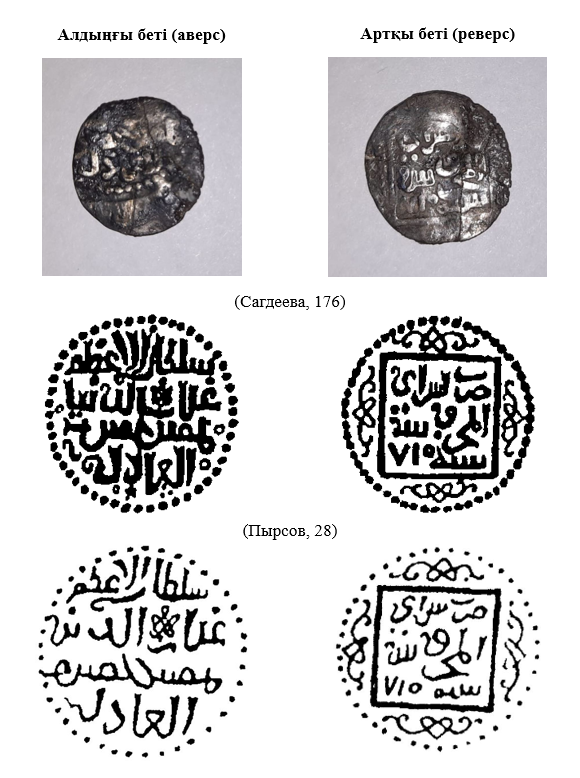 The numismatic examination of the coins, reading and translation of their inscriptions, comparison with parallels in scholarly catalogues, refinement of their attribution and preparation of their academic descriptions were undertaken by the museum’s research associate, Orynbasar Nurlanuly. His research enabled previously understudied materials to be examined from new perspectives and documented in accordance with scholarly standards. Another research associate, Denis Maryksin, also made a substantial contribution to the catalogue. His involvement with this collection began long before work on the publication commenced. Over the years, Denis Maryksin discovered numerous coins from the period of the Ulus of Jochi at Zhalpaktal, the Mokrinsky I burial ground, Zhanaturmys, the Zhaiyk I archaeological site and other locations, and transferred them to the museum’s collections. Among these finds are coins dating from the reigns of Khans Toqta, Uzbek, Janibek and Muhammad. His present participation in preparing the catalogue as a museum research associate, drawing on his extensive archaeological experience and accumulated knowledge of the collection’s formation, has further enriched the scholarly content of the publication.
The 70 coins included in the catalogue represent several political periods in the history of the Ulus of Jochi. Of these, 29 belong to the reign of Khan Janibek, 23 to Khan Uzbek, six to Khan Toqta, two to Khan Khizr, two to Khan Tokhtamysh, one to Khan Berdibek and one to Khan Muhammad. The rulers associated with the remaining six coins could not be identified. Coins from the reigns of Uzbek and Janibek constitute the overwhelming majority of the collection, accounting for 52 specimens. The chronological range of the collection is also considerable. The earliest securely dated coin was minted at Sarai under Khan Toqta in AH 691 (AD 1292). The latest securely dated specimen is a coin of Khan Muhammad, struck at Orda in AH 777 (AD 1375). The presence of coins from the reign of Khan Tokhtamysh extends the collection’s historical coverage into the final quarter of the fourteenth century. Taken together, the collection provides numismatic evidence for almost a century of the history of the Ulus of Jochi, from Khan Toqta to Khan Tokhtamysh.
While preparing the catalogue, we began to wonder what these coins would have been worth in their own time. We attempted to assess the purchasing power of silver currency using accounts by contemporary authors. The Arab historian and geographer al-Umari (1301–1349), writing about the average price of mutton in the Golden Horde, stated, in English translation: “The average price of mutton is one dirham for three ratls.” The ratl was a historical unit of weight whose value varied according to region and period. If we take one ratl to be approximately 450 grams, three ratls would amount to about 1.35 kilograms. According to al-Umari’s account, therefore, a silver dirham could purchase approximately 1.35 kilograms of mutton in the fourteenth century. This allows us to make an illustrative comparison with purchasing power today. If we assume a present-day price of 2,500 tenge per kilogram of mutton, 1.35 kilograms would cost 3,375 tenge. On this single-commodity basis, the purchasing power of one fourteenth-century silver dirham (tenge) would be approximately equivalent to 3,375 tenge today. This is, of course, not a direct exchange rate between two currencies, but merely an illustrative comparison based on the price of one product. Ibn Battuta’s account also offers an insight into the purchasing power of silver currency at the time. The traveller, who visited the Dasht-i Qipchaq in 1334, wrote, in English translation: “In this country there are very many horses, and they are inexpensive. The finest horse costs fifty to sixty dirhams in their currency. This is equivalent to one of our dinars.” Thus, during the reign of Khan Uzbek, a good horse cost between 50 and 60 dirhams (tenge). Applying the same illustrative comparison, 50 dirhams × 3,375 ≈ 168,750 tenge, while 60 dirhams × 3,375 ≈ 202,500 tenge. This account indicates that horses were plentiful in the Dasht-i Qipchaq and comparatively inexpensive.
The period during which these coins were minted and circulated was marked by major developments in the political history of the state. Khan Toqta (1291–1312) sought to establish internal stability and helped strengthen central authority. The reign of Khan Uzbek (1313–1341) was one of the periods of political and economic consolidation of the Ulus of Jochi. Khan Janibek (1342–1357) continued his father’s policies, and relative stability was maintained during his rule. Following the brief reign of Khan Berdibek (1357–1359), who succeeded Janibek, the Golden Horde entered a period of political instability known as the Great Troubles, or Great Turmoil. Khan Khizr (1360–1361) ruled briefly during this turbulent period. During the Great Turmoil, princes who might have become khans were killed one after another. As the prospect of ascending the throne became increasingly dangerous, prominent military commanders and beglerbegs emerged as powerful political figures. One of them was Beglerbeg Mamai, whose political influence grew considerably. He is said to have installed rulers dependent on him on the khan’s throne. Later, Khan Tokhtamysh (1380–1395) attempted to reunify the state and temporarily restored the political unity of the Ulus of Jochi. However, wars against Timur (Tamerlane) weakened the state and ultimately led to the collapse of Tokhtamysh’s rule.
The distribution of coins by place of minting also reveals the geography of monetary production in the Ulus of Jochi. Of the 70 coins included in the catalogue, 27 were struck at the Sarai al-Jadid mint, 19 at Sarai, ten at Sarai al-Mahrusa, seven at Khwarazm, three at Gulistan and one at Orda. The minting locations of three coins remain unidentified. Accordingly, coins from Sarai al-Jadid account for 38.6% of the collection, Sarai for 27.1%, Sarai al-Mahrusa for 14.3%, Khwarazm for 10%, Gulistan for 4.3% and Orda for 1.4%. Coins of unidentified mint origin account for the remaining 4.3%. Taken together, the mints recorded as Sarai, Sarai al-Mahrusa and Sarai al-Jadid produced 56 coins, representing 80% of the entire collection. This demonstrates the clear predominance of coins struck in the principal political and economic centres of the Ulus of Jochi within the museum’s numismatic holdings.
Another feature that enhances the catalogue’s scholarly value is the effort to establish, wherever possible, the findspots of the coins and the circumstances of their accession to the museum’s collections. This collection is not a single hoard discovered at one location or at one time. Rather, it was assembled over different periods through archaeological investigations, fieldwork and contributions made by individual citizens. The geographical distribution of the finds includes Zhaiyk, Zhalpaktal, Zhanaturmys, the Zharsuat I burial ground, Qorgan, the Mokrinsky I burial ground and Khantusken. Zhaiyk is situated 12 kilometres southwest of Oral (Uralsk), on the second floodplain level of the Ural River. Zhalpaktal is located in the Kaztalov District of West Kazakhstan Region, while Zhanaturmys, Qorgan and Khantusken lie within the Qamysty Rural District of the Zhanibek District. The Zharsuat I burial ground is situated near the village of Zharsuat in the Burlin District. The Mokrinsky I burial ground is located 1.5 kilometres southeast of the settlement of Zhanazhol (Mokrinsky) in the Zhangala District, on the left bank of the Maly Uzen River.
Researchers from different generations have contributed to the formation of the collection. Several coins dating from the reigns of Khans Uzbek, Janibek and Tokhtamysh, discovered during excavations conducted by G. Kushaev and B. Zhelezchikov at the Mokrinsky I burial ground in 1974–1975, were transferred to the museum in 1976. In 1980, M. G. Moshkova, B. F. Zhelezchikov and V. A. Kriger discovered a coin of Khan Uzbek in Burial Mound No. 4 at the Zharsuat I archaeological site. The coin had been struck at Sarai al-Mahrusa in AH 722 (AD 1322). In 1974, A. P. Rudkovsky donated to the museum a coin of Khan Janibek discovered near Shyngyrlau, minted at Khwarazm in AH 743 (AD 1342).
A substantial part of the collection is associated with Denis Maryksin’s many years of archaeological excavation work. Coins dating from the reigns of Khans Toqta, Uzbek, Janibek and Muhammad, which he discovered over the years at Zhalpaktal, in various burial mounds at Mokrinsky I, at Zhanaturmys, at the Zhaiyk I archaeological site and elsewhere, were accessioned into the museum’s collections. Among them are the collection’s earliest securely dated coin, struck at Sarai under Khan Toqta in AH 691 (AD 1292), and a coin of Khan Muhammad minted at Orda in AH 777 (AD 1375). The finds also include specimens dating from the reigns of Khans Uzbek, Janibek, Berdibek and Khizr. The collection has continued to expand in recent years. In 2026, A. S. Salimov donated to the museum a coin of Khan Janibek that he had discovered at Saraishyk in the 2000s. It was struck at Sarai al-Jadid in AH 752 (AD 1351). The circumstances surrounding the acquisition of three coins found by T. Gizzatov in 2024 at Khantusken and Qorgan, within the Qamysty Rural District of the Zhanibek District, are of particular personal significance to me. One is a coin of Khan Khizr, minted at Sarai al-Jadid in AH 761–762 (AD 1360–1361); the other two are anonymous coins struck at Gulistan in AH 764 (AD 1362) and AH 766 (AD 1364). I purchased these three historical artefacts with my own funds and donated them to the museum in 2026 without compensation. My purpose was to ensure that these authentic relics of the Ulus of Jochi would not remain exclusively in private hands but would be preserved in a state museum collection, professionally studied and passed on to future generations.
These facts alone demonstrate that the collection was formed through the efforts of several generations of scholars, archaeologists and citizens committed to preserving historical heritage. For this reason, the catalogue does not merely identify the ruler, minting date and mint of each coin. Particular attention was also given, wherever the available evidence permitted, to systematically recording where and when each specimen was found, who discovered it, and by whom and when it was transferred to the museum. Such information helps reconstruct an artefact’s scholarly biography and preserve its archaeological context.
Coins of the Ulus of Jochi is a scholarly catalogue that brings together, within a unified system, the chronology, rulers, mints, epigraphic inscriptions, findspots and accession histories of 70 coins preserved in the museum’s collections. Most importantly, the coins themselves were re-examined during the preparation of the catalogue, and information contained in earlier collection records was subjected to comparative scholarly analysis.
This catalogue marks the beginning of a tradition of scholarly cataloguing at the West Kazakhstan Regional Museum of History and Local Lore. In the coming years, we will continue to undertake the systematic study of archaeological, ethnographic and other valuable museum collections with the participation of qualified specialists in the relevant fields, and to publish their scholarly catalogues. This work will provide new sources for academic research, create opportunities to investigate aspects of our region’s history that remain insufficiently explored, and ensure that authentic historical heritage is transmitted to future generations on a sound scholarly basis. It is another step towards transforming our museum into a centre that investigates historical sources and contributes to the creation of new knowledge.
I wish to express my gratitude to all the specialists who contributed to the preparation of the catalogue, as well as to the archaeologists and members of the public who, over the years, discovered, studied and donated these coins to the museum. I am particularly grateful to our research associate Orynbasar Nurlanuly, who read and translated the inscriptions, refined the coins’ attribution by comparing them with corresponding specimens in scholarly catalogues, and prepared their academic descriptions. I also extend my sincere thanks to Denis Maryksin, whose longstanding contributions to the formation of the collection and current involvement in preparing the catalogue as a museum research associate have been invaluable.
I am confident that the scholarly cataloguing initiative we have launched will usher in a new phase of systematic research into the rich heritage preserved in our museum’s collections. As more artefacts are studied, their histories established and their findings made available to the academic community, our understanding of our people’s past will continue to deepen and expand.
Zhantas Nabiollauly Safullin
Director, West Kazakhstan Regional Museum
of History and Local Lore
Oral, Kazakhstan, 10 June 2026