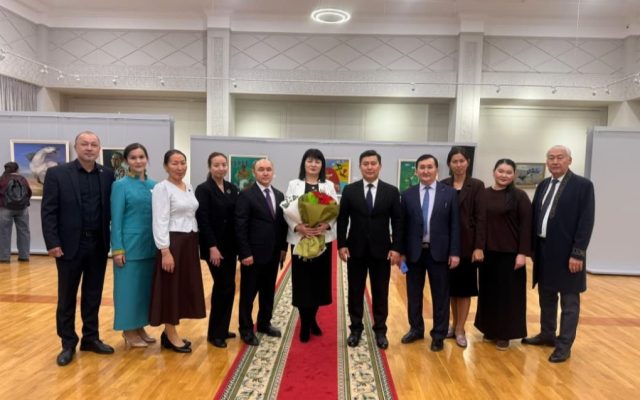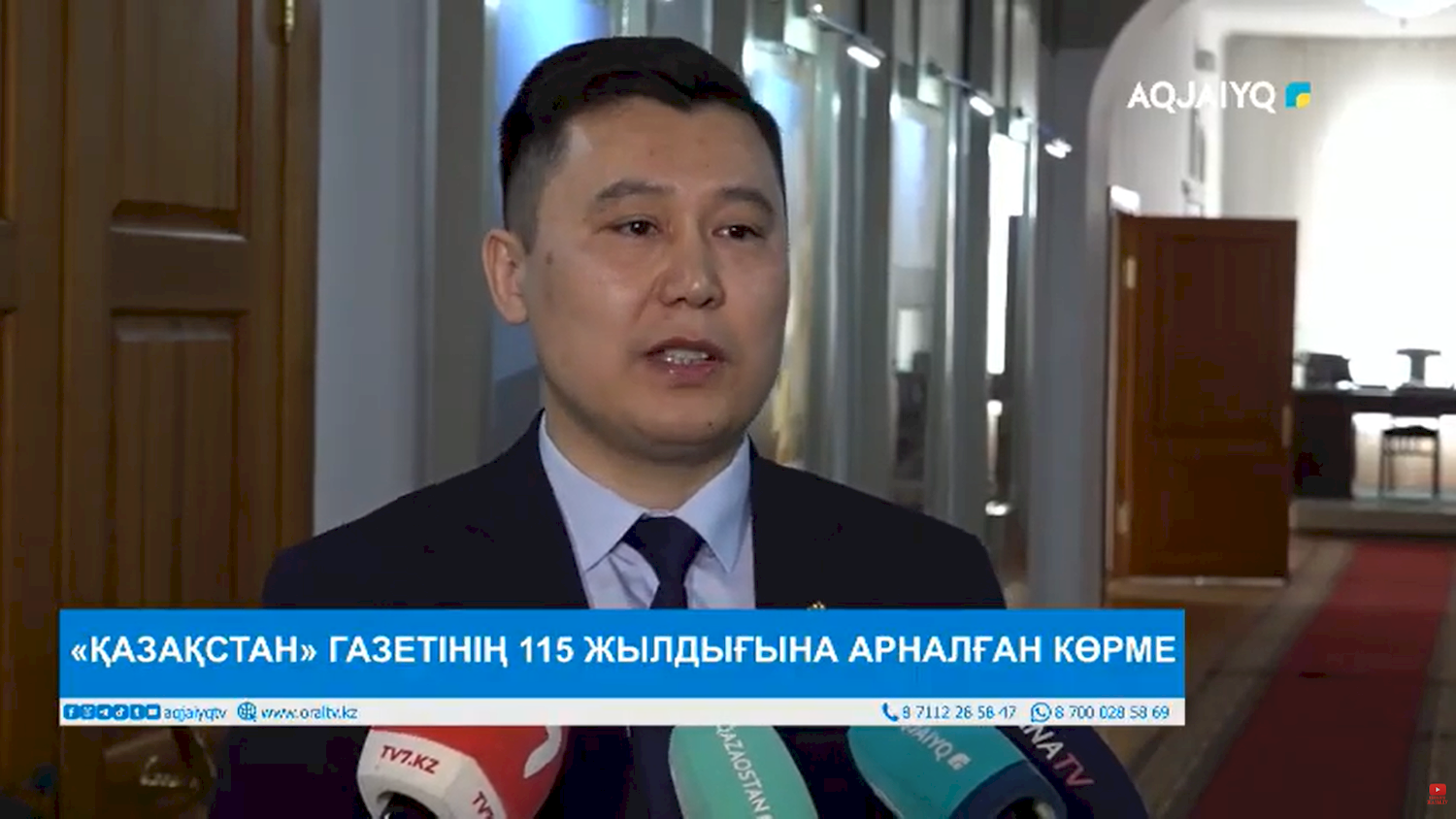
An exhibition dedicated to the 115th anniversary of the Qazaqstan newspaper was held at the West Kazakhstan Regional Museum of History and Local Lore, accompanied by a commemorative gathering. Historians, literary scholars and academics came together to discuss the significance of one of Kazakhstan’s earliest newspapers and its contribution to the development of national consciousness. The exhibition also featured extensive material on Gumar Karash, one of the publication’s founders.
The exhibition presented a wealth of historical information about the Qazaqstan newspaper, whose history dates back to 16 March 1911. Its first two issues were published in the village of Orda, while subsequent editions appeared in Oral. According to local historians, a total of 18 issues were published over two years. Despite its relatively short existence, the newspaper played an important role in Kazakh society at the time, helping to awaken and shape national consciousness.
Baqtyly Boranbayeva, Candidate of Historical Sciences:
“The principal aim of the Qazaqstan newspaper was to encourage the Kazakh people to embrace science, education, a settled way of life and culture. Compared with other periodicals published before 1917, Qazaqstan stood out for its democratic, reformist and progressive outlook.
“Publishing the newspaper was by no means easy for the Kazakh intellectuals involved. First, it required financial resources. Second, they had to contend with censorship imposed by the Tsarist authorities. Despite these obstacles, they joined forces and succeeded in bringing Qazaqstan to its readers.”
The newspaper was established through the efforts of intellectuals associated with the Alash movement, including Yeleusin Buirin, Gumar Karash and Bakhytzhan Karatayev. The exhibition therefore also presented new material on the life, public activities and literary legacy of Gumar Karash, a poet, thinker and one of the newspaper’s founders.
Historians describe Karash as one of the most distinguished Kazakh intellectuals of the early twentieth century, actively engaged in virtually every sphere of the country’s political and social life. Preserving his intellectual and literary heritage and restoring it to the collective memory of future generations remains an important priority.
Zhantas Safullin, Director of the West Kazakhstan Regional Museum of History and Local Lore:
“Although Gumar Karash was brutally murdered in 1921, his works were subjected to political repression in 1947. A special government decree was issued, leading to the removal of his writings from books and publications.
“As a result, researchers faced considerable difficulties in bringing together his surviving materials and developing a comprehensive understanding of who Gumar Karash was.
“Following Kazakhstan’s independence, opportunities emerged for more in-depth research into his life and work. His writings were rehabilitated and returned to the public. However, one important problem remains. Although researchers have published books about him, there has still been no sufficiently accessible resource where ordinary readers can find a comprehensive answer to the question: ‘Who was Gumar Karash?’”
Visitors to the exhibition were also able to explore Gumar Karash’s literary and intellectual works through QR codes. The educational event brought together local historians, researchers, literary figures and university students, offering them an opportunity to deepen their understanding of the newspaper and its historical significance.
Ali Nabi, Lecturer at M. Utemisov West Kazakhstan University:
“Researchers such as Zhantas and Kazbek have studied Gumar Karash’s legacy, located historical materials in Russian archives, transcribed them into the Cyrillic script and published substantial multi-volume editions.
“We need to introduce these works more widely to today’s students and ensure that they are studied. For many years, Gumar Karash was among the subjects that could not be openly discussed. I believe much more needs to be done to raise awareness of his life and intellectual heritage.”
The Qazaqstan newspaper was the first publication to introduce the name “Kazakhstan” into public usage. Before that, official documents had referred to the Kazakh people by the distorted designation “Kirghiz-Kaisak”.