The State Archive in Moscow, Russian Federation, preserves Case No. 6516, concerning the charges brought against Zhahansha Dosmukhamedov under Article 58, Sections 10 and 11, of the Criminal Code. The archival reference is Fond 10035, Inventory 1, File No. P-50151. Although several researchers have examined these documents, the information they contain remains largely unknown to the general public.
At the beginning of the interrogation record compiled following his arrest in early June 1938, Zhahansha Dosmukhamedov provided a detailed account of his career and public service. Yet despite the clear and chronological nature of his testimony, the investigators appear to have employed various tactics during questioning to substantiate the accusations they sought to establish.
This is particularly evident in the changes to Dosmukhamedov’s signature from one page of the interrogation record to another. His earlier signatures are clear and complete, while those on subsequent pages become increasingly abbreviated, eventually resembling hurried scribbles. What suffering and humiliation he endured is known to God alone.
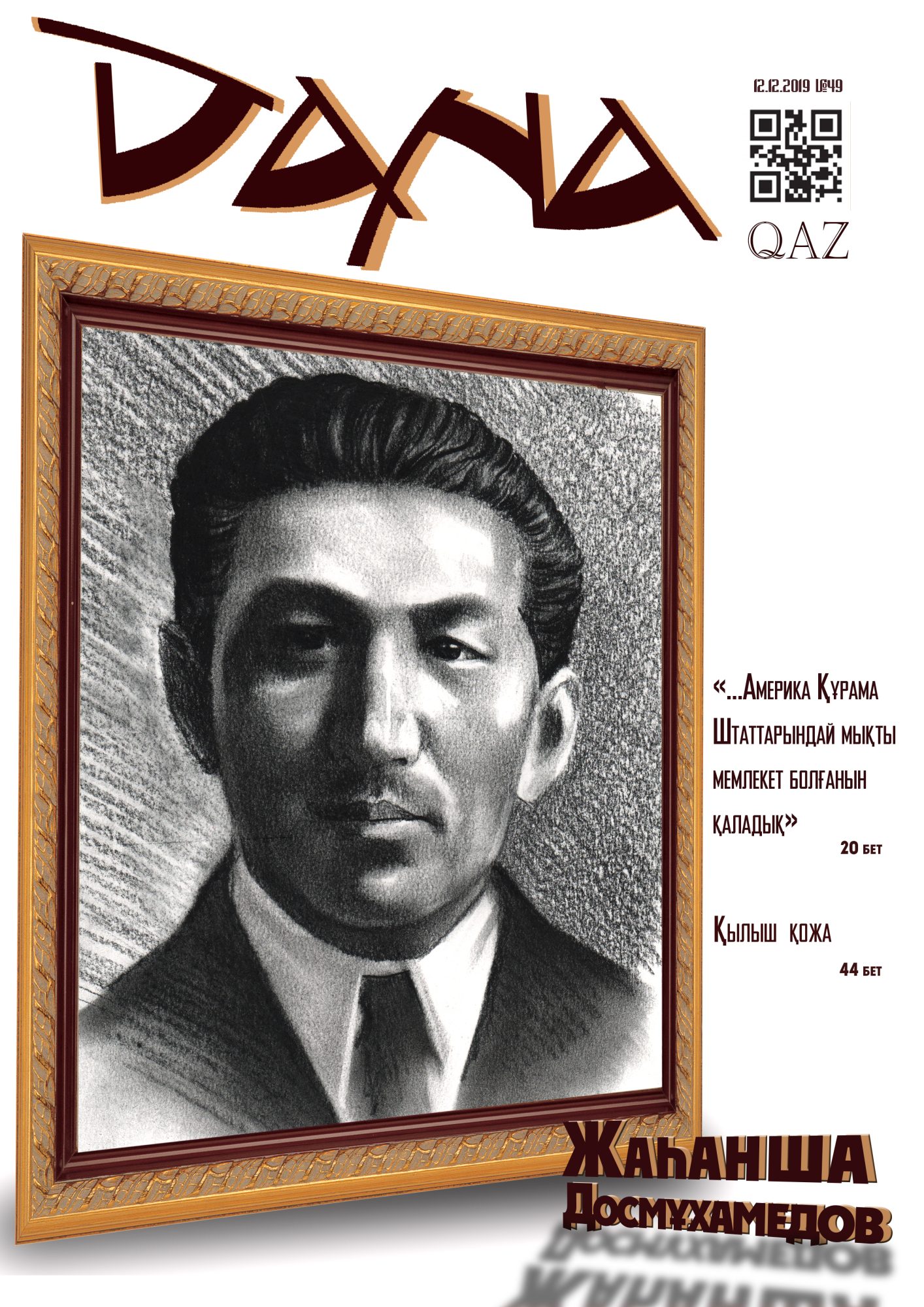
Zhahansha Dosmukhamedov rose from among the ordinary people to become a leader hailed as a khan by his compatriots. He boldly pioneered the proclamation of autonomy, assumed its leadership and succeeded in securing recognition from the Soviet authorities. He devoted himself to the service of his people, honouring the hopes and sacrifices of the mother who raised him.
Every word preserved in his 1938 interrogation record is therefore of immense historical value. These documents reveal not merely the story of one individual, but also the history and painful destiny of an entire nation during a time of profound upheaval.
Let us consider three examples.
The Dispute over the 100-Som Tax
Previous accounts of the 1918 congress held in Karatobe have described a disagreement that arose over the collection of taxes. The principal source of contention was reportedly a proposal to levy 100 som on every household. According to these accounts, those who opposed the proposal demanded that the wealthy should pay according to their wealth and the poor according to their limited means.
The idea of imposing the same tax on everyone, regardless of their financial circumstances, naturally appears unreasonable. Even today, some people regard this purported position of the Alash Orda leaders as unjust.
However, Zhahansha Dosmukhamedov himself clarified this contentious issue in his interrogation testimony.
Referring to the All-Kazakh Congress held in Orenburg in December 1917, where the establishment of the Alash Orda government was agreed upon and Semey was designated as its capital, he stated:
“At that congress, it was decided to levy a tax of 100 som per yurt to establish Kazakh military units. The contributions were to be assessed across the volosts according to each taxpayer’s financial circumstances, with some paying more and others less.”
He continued:
“As soon as the delegates from Oral returned home, we convened a regional congress in Karatobe and immediately began implementing the decisions adopted at the All-Kazakh Congress.”
Thus, as Dosmukhamedov’s testimony indicates, the tax was intended to take account of people’s financial circumstances: the wealthy would contribute more, while poorer households would pay less.
This suggests that certain groups deliberately misrepresented the decision in an effort to turn the population against the Alash Orda leadership.
Literary accounts of the Karatobe congress describe how Zhahansha’s passionate speech helped resolve the disagreement and restore mutual understanding among the delegates. The attempts to sow discord failed when the taxation arrangements, which applied to the entire territory of Alash Orda rather than merely its Western Branch, were properly explained.
Reuniting a Divided People and Laying the Foundations for Kazakhstan’s Borders
Beginning in 1812, the territory inhabited by the Junior Zhuz was divided into two parts. The tsarist authorities appointed Sergazy as khan on the Kazakh side of the Zhaiyq (Ural) River and Bokey as khan on the Russian side. Guided by the principle of “divide and rule,” the Russian Empire accelerated its colonial policies.
From that period onwards, the two territories, each with its own ruler and administrative structure, became increasingly separated, while rivalry developed between their respective leaderships.
Yet in 1918, 106 years later, it became possible to bring both banks of the Zhaiyq River under a unified administration.
In his testimony, Zhahansha Dosmukhamedov explained:
“I headed the government of the Western Branch of Alash Orda. Its members included Kulmanov (from the Bokey Horde) and Khalel Dosmukhamedov, who also served as chairman of the regional zemstvo board.”
The decision to include B. Kulmanov, a representative of the Bokey Horde, in the newly established government demonstrated remarkable political foresight. Rather than allowing disputes over authority to deepen the existing divisions, the leaders sought to unite the two territories within a common system of governance.
This decision also reflects the exceptional confidence placed in Zhahansha Dosmukhamedov by the prominent figures of the time who were concerned about the future of their people.
His efforts to unite the Kazakhs living on both sides of the Zhaiyq River under a single administration ultimately bore fruit.
There are therefore compelling grounds to argue that the actions of Zhahansha Dosmukhamedov and his fellow Alash leaders not only helped reunite communities divided by the river for more than a century, but also contributed to laying the foundations for the future territorial boundaries of Kazakhstan.
Elders as Members of the Government
Dosmukhamedov’s testimony also reveals that, following elections held at the regional congress, respected elders representing the principal Bayuly, Zhetiru and Alim tribal groupings of Oral Region were included in the government of the Western Branch of Alash Orda.
By involving elders from the three major tribal confederations of Western Kazakhstan, the government adopted a system of administration intended to ensure fair representation.
This approach stood in contrast to the colonial policies of the tsarist authorities, which had systematically dismantled traditional Kazakh institutions of governance and sought to impose administrative arrangements that disregarded the people’s established customs and political traditions.
Involving respected community elders in government offered a democratic form of representation rooted in Kazakh society and broadly welcomed by the population.
The primary purpose of this article is to draw attention to the exceptional historical significance of Zhahansha Dosmukhamedov’s testimony preserved in the interrogation records.
A comprehensive examination and critical analysis of these documents could help resolve numerous longstanding historical questions, uncover previously overlooked evidence and shed further light on the truth about one of the most complex periods in the history of the Kazakh people.
Zhantas Nabiollauly
DANAqaz Magazine, Issue No. 49
12 December 2019
Translated from the original Kazakh into English.