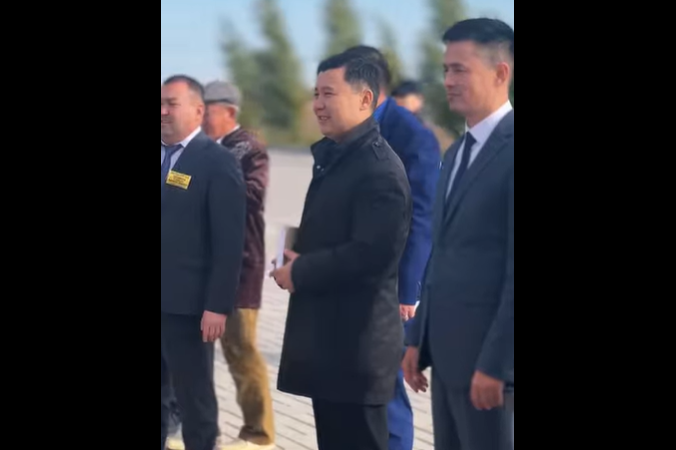
During a working visit to Kaztalov District in West Kazakhstan Region, we presented the findings of historical research conducted at our museum’s initiative and paid tribute to Ishangali Mendikhanuly, an educator and one of the pioneers of Kazakh drama. At his recently marked gravesite, verses from the Quran were recited and prayers offered in his memory.
Earlier, we had compiled materials relating to Ishangali Mendikhanuly from the museum’s collections and allocated dedicated funding to publish the book Ishangali Mendikhanuly as part of our Muzei Murasy (Museum Heritage) project. We also met with his descendants and presented them with copies of the research publication.
As a continuation of this work, we initiated efforts to establish the precise location of Ishangali Mendikhanov’s burial site and install a memorial marker on his grave. Museum specialists were dispatched to the area to examine historical sources and information provided by local residents. Their research enabled us to identify the gravesite.
With the support of the Kaztalov District Akimat (local administration), and through the contributions of local residents and the educator’s descendants, our initiative was successfully realised. A new memorial plaque was installed at the gravesite.
This is a tangible outcome of our museum’s scholarly research.
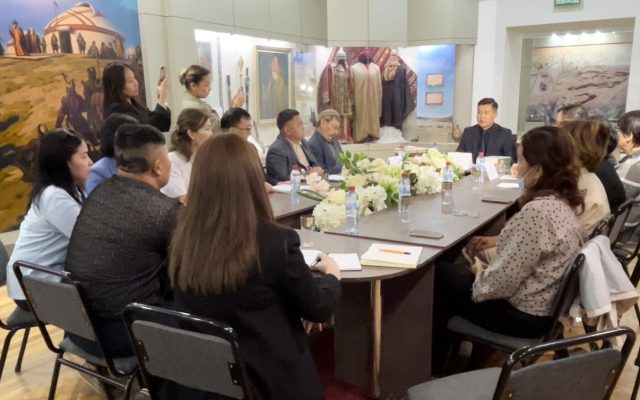
At A. Khusainov School in Zhuldyz village, we presented the results of our work during a roundtable discussion entitled Ishangali Mendikhanov: A Figure in History. We also donated copies of the book to the district library and the school. Sarsenbi Anukhanov, a local resident who helped identify the burial site, was granted free admission to all branches of our museum.
During the visit, we also travelled to the site of the medieval settlement of Zhalpaktal. Denis Maryksin, a Candidate of Historical Sciences who conducted archaeological excavations there between 2011 and 2015, showed us the locations of previously excavated dwellings and shared his research findings. We carried out drone photography of the settlement, creating a digital record of the archaeological site’s current state of preservation.
These materials will be used in our future research and digitisation work.
Respect for historical heritage is measured not only by how we remember the past, but also by our efforts to recover its missing chapters and preserve them for future generations.