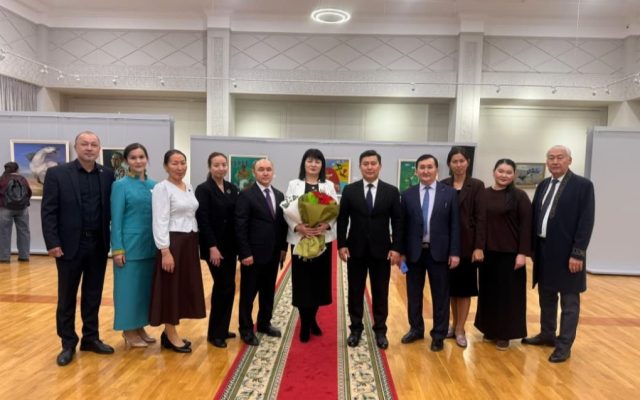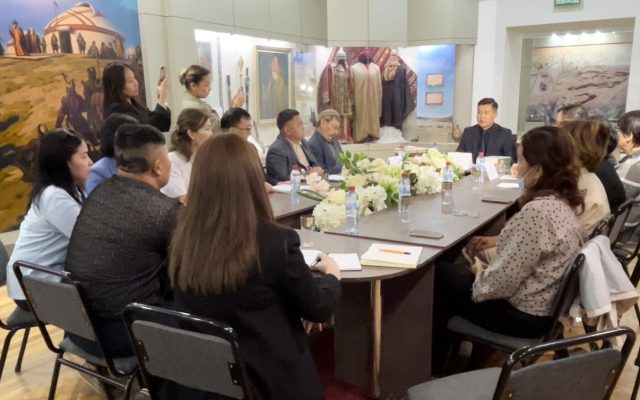
Museum work is a field of great responsibility. It goes far beyond preserving the past: it also demands continuous learning, innovation and a commitment to the future. Developing exhibitions that meet modern standards, ensuring the proper preservation of museum collections, digitising cultural heritage and presenting it to visitors in engaging ways all require museum professionals to continually enhance their expertise and learn from the experience of their colleagues. It was this need for professional growth that inspired an initiative which eventually evolved into Музей Travel (Muzei Travel) — a project combining an international training seminar, visits to museums across several regions of Kazakhstan and a journey spanning thousands of kilometres.
A Journey Towards Renewal
After taking up my position as Director of the West Kazakhstan Regional History and Local Lore Museum, I held individual conversations with my colleagues. I wanted to learn which seminars and training courses they had attended and what opportunities they had been given to develop their professional skills. These conversations revealed that our specialists had rarely participated in specialised seminars or practical training programmes.
This was a particularly important issue for us. The exhibition halls of the West Kazakhstan Regional History and Local Lore Museum were designed and installed in 2004 and have not undergone a comprehensive renovation since then. Furthermore, we will eventually need to raise the question of constructing a new museum building. When undertaking a project of such magnitude, our employees must have sufficient professional knowledge to offer informed opinions and make specific recommendations about what a modern museum should look like. With this in mind, I had been considering ways to involve our colleagues in professional seminars held in Astana, Almaty and other cities across Kazakhstan whenever opportunities arose.
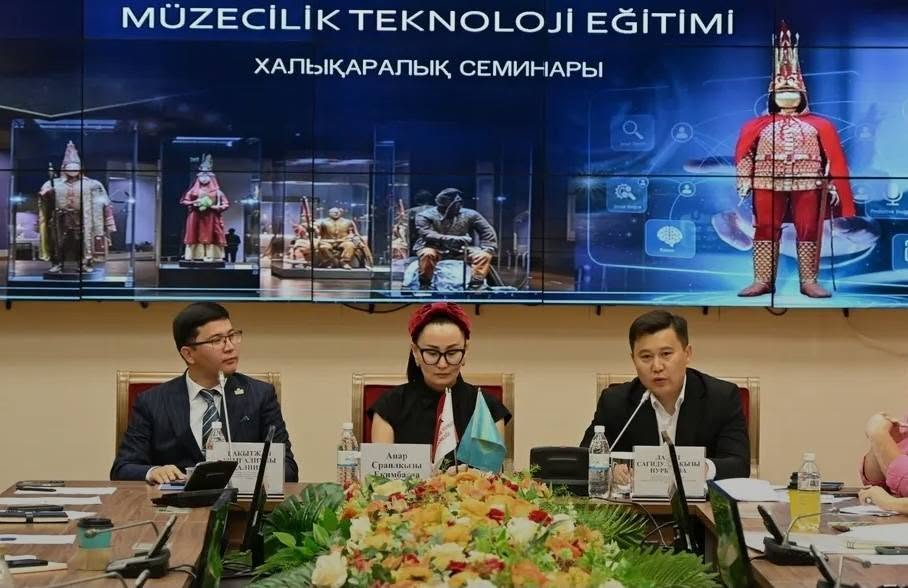
It was at this point that we received an invitation from the National Museum of the Republic of Kazakhstan to attend an international seminar entitled Digitisation and Development of Museums in the Republic of Kazakhstan. The event was organised at the initiative of Kazakhstan’s Ministry of Culture and Information and Türkiye’s Ministry of Culture and Tourism, with support from the Turkish Cooperation and Coordination Agency (TİKA). We were informed that experienced museum professionals from Türkiye would deliver lectures and training sessions over five days. This was exactly the opportunity we had been hoping for. We planned our journey, combining participation in the seminar with visits to museums along the route, for 20–29 July 2026.
I gathered my colleagues and presented the proposal. Despite the considerable distance involved, everyone enthusiastically expressed a willingness to participate. The main challenge, however, was financial. The museum had not allocated funds for a business trip of this scale. Rather than sending just a few employees by plane or train, we decided that travelling together in a spacious vehicle would allow more specialists to benefit from the experience. As a result, approximately ten employees representing different museum departments joined the trip.
The route from Oral through Aktobe and Kostanay to Astana covered approximately 1,950 kilometres in one direction — almost 2,000 kilometres. Since the journey would take us through several regional capitals, we decided not to limit the programme to the seminar alone. Instead, we would visit museums along the way and learn from their work. We named the project Музей Travel, combining the Kazakh word muzei (museum) with the English word travel. I entrusted Assel Suyingalikyzy with planning the route.
Our first task was to determine the cost of hiring a Gazelle minibus. When we realised how expensive this would be, we began looking for a vehicle suitable for a long journey through our professional contacts. Dauletkerei Atauuly, Head of the Department of Culture and Language Development in Baiterek District, kindly offered us temporary use of his institution’s Gazelle minibus. When we first saw the vehicle, we were pleased to find that it was new and comfortable. There was just one problem: it had no window curtains. Upon hearing this, our colleague Ainagul Khalykkyzy volunteered to sew them herself. “Will we have enough time?” I asked. “Of course we will,” she replied confidently. And true to her word, the curtains were ready before our departure.
Accommodation represented another considerable expense. I explained openly to my colleagues that we could afford to rent separate apartments for the women and men, but could not cover more expensive accommodation arrangements. Everyone accepted this suggestion with understanding.
To make the most efficient use of our time, we distributed responsibilities in advance. One employee researched places where we could eat, while another identified petrol stations along the route. Assel Suyingalikyzy coordinated the overall itinerary and planned which museums we would visit. I also prepared a special travel journal for every participant and distributed the journals at a staff meeting. The purpose was to encourage each specialist to record their observations, reflect on what they had learned, identify effective practices that could be introduced at our museum and compile a report on their professional activities during the trip.
With our plans finalised and journals in hand, we departed from the West Kazakhstan Regional History and Local Lore Museum at approximately five or six o’clock in the morning on 20 July 2026.
During our preparations, I had given each colleague another assignment: to read three instructive stories and share one of them with the group during the journey. The aim was to use our travelling time meaningfully, encourage independent learning and strengthen relationships within the team through shared discussions.
After leaving Oral, I began telling my colleagues stories about the historical sites we passed. We discussed the hill associated with Syrym, the story of Yesengeldi and his son Bekei, the mosques that once stood along the Ural River, and the river’s historical significance as a natural boundary. I wanted my colleagues to pay closer attention to the names of the places we passed and develop a deeper appreciation of the history of our region.
At one point, we came across a place called Bulan. When I asked about the origin of its name, nobody could provide a definite answer. I therefore encouraged my colleagues to research the place name and discover its history themselves. After all, understanding the origins and historical significance of geographical names is an important part of a museum professional’s work.
A few employees then shared the stories they had prepared. Our colleagues also organised a short geography quiz. Through historical discussions, questions and lively conversation, we made productive use of our time and hardly noticed the length of the journey before arriving in Aktobe.
Our Museum Visits Begin in Aktobe
We had contacted the management of the Aktobe Regional History and Local Lore Museum in advance. As soon as we arrived in the city, we went directly to the museum to learn about its work. The newly constructed building impressed us with its attractive interiors and thoughtfully designed exhibitions. My colleagues recorded the most interesting approaches and effective design solutions in their journals. We continued discussing these observations together as we travelled.
After Aktobe, we proceeded to Kostanay. We had planned to visit the Kostanay Regional History and Local Lore Museum and the Ibray Altynsarin Memorial Museum the following morning. Unfortunately, both museums were closed. We therefore had lunch and continued towards Astana in the afternoon. We reached the capital late that night, rested briefly and arrived at the international seminar on time the following day.
Five Days of Professional Learning
Participants at the seminar, held at the National Museum of the Republic of Kazakhstan, had been divided into two sections in advance. Our employees joined both groups. As one of the official organisers, the National Museum made comprehensive arrangements to ensure that the event was held to a high standard. Anar Sraiylkyzy, a member of the museum’s staff, coordinated the organisational work. Our group from West Kazakhstan was assigned a curator, Zhadyra Kairatkyzy, the daughter of Kairat Zhumagaliyev, a well-known poet from our region. From the very first day, we became acquainted with the visiting Turkish experts and quickly recognised their extensive professional experience and expertise in museum work.
On the opening day, the speakers introduced the topics to be covered during the five-day programme. Our colleagues attended every session, determined not to waste a single minute. They listened attentively, asked questions and participated actively in discussions. The organisers repeatedly praised the engagement of the participants from West Kazakhstan. They were particularly impressed by our specially prepared travel journals, describing the initiative as a good example for other participants to follow.
The seminar addressed the entire process of managing museum objects, from acquisition to storage, exhibition and eventual return to the collections. The experts explained how objects should be registered upon entering a museum, how they must be stored, the procedures for placing them on display, how they should be returned to storage after an exhibition and the legal requirements governing each stage. The programme also examined contemporary approaches to exhibition design, current trends in museum practice and the key issues requiring professional attention.
During one question-and-answer session with the Turkish experts, the conversation turned to one of West Kazakhstan’s most remarkable archaeological discoveries: the Taksai Princess. The experts were interested in the social status of the woman whose burial had yielded gold ornaments. We explained that she was believed to have performed priestly functions and participated in religious rituals. This information attracted considerable interest among our international colleagues.
As the original gold ornaments associated with the Taksai Princess are preserved at the National Museum, the Turkish experts expressed a wish to visit the relevant exhibition hall with us after the seminar and learn more about the artefacts. We were delighted by their interest. Unfortunately, time constraints prevented us from personally guiding them through the exhibition. We therefore immediately contacted our colleagues in Oral and asked them to send us the text used during guided tours. We condensed the material and translated it into Turkish. Then, using artificial intelligence, we created a video in which my photograph was animated and my voice was reproduced speaking Turkish. We handed the finished video to the organisers.
Another pleasant discovery during the seminar concerned our colleague Alina Aslankyzy. It was only during the event that we realised how proficient she was in Turkish. She communicated confidently with the visiting experts and asked her questions in their own language. Anar Sraiylkyzy also drew attention to her abilities. Only a handful of participants spoke Turkish, and one of them was a member of our team. Alina had never boasted about her language skills before the trip. Her knowledge and abilities became evident through her work. When the seminar organisers selected her to speak in Turkish on behalf of the participants, we all felt genuinely proud.
New Opportunities for International Cooperation
The seminar offered us more than professional training. It also provided valuable opportunities to establish working relationships with museum specialists from Türkiye. We reached several important understandings.
We had already been planning to establish a Board of Trustees at the West Kazakhstan Regional History and Local Lore Museum. During the seminar, we sent a letter to Ali Haydar Atalar, Director of Türkiye’s July 15 Democracy Museum, inviting him to become a member of the board. He warmly welcomed the proposal and agreed to participate. The next stage will involve signing the necessary documents.
We also proposed developing special AI-assisted videos based on the shared cultural heritage represented in the collections of Turkish museums and the West Kazakhstan Regional History and Local Lore Museum. Other ideas included exchanging materials and organising online exhibitions. Our Turkish colleagues supported these initiatives, and we reached a verbal understanding about future cooperation. This marked a promising opportunity to strengthen international professional relationships and lay the groundwork for joint projects.
While visiting the National Museum, we wanted to explore not only its exhibitions but also the systems and procedures behind its day-to-day operations. I asked Anar Sraiylkyzy whether arrangements could be made for us to meet department heads and learn from their experience. She supported the request and informed the relevant managers in advance.
As a result, we were able to study the work of the research and methodology department, the collections department and other organisational units. We even gained access to the collection storage facilities, where we observed how valuable objects were preserved and managed. My colleagues established direct professional contacts with specialists working in their respective fields and received detailed answers to their questions. We also obtained examples of documentation procedures and agreed to adopt suitable practices in our own museum.
The five-day seminar proved both productive and rewarding. At the conclusion of the programme, every participant received a certificate. These certificates represented an important record of the knowledge and practical experience we had gained. Our colleagues, the other participants and the organisers all concluded the seminar in high spirits.
ALZHIR: Where Silent History Speaks
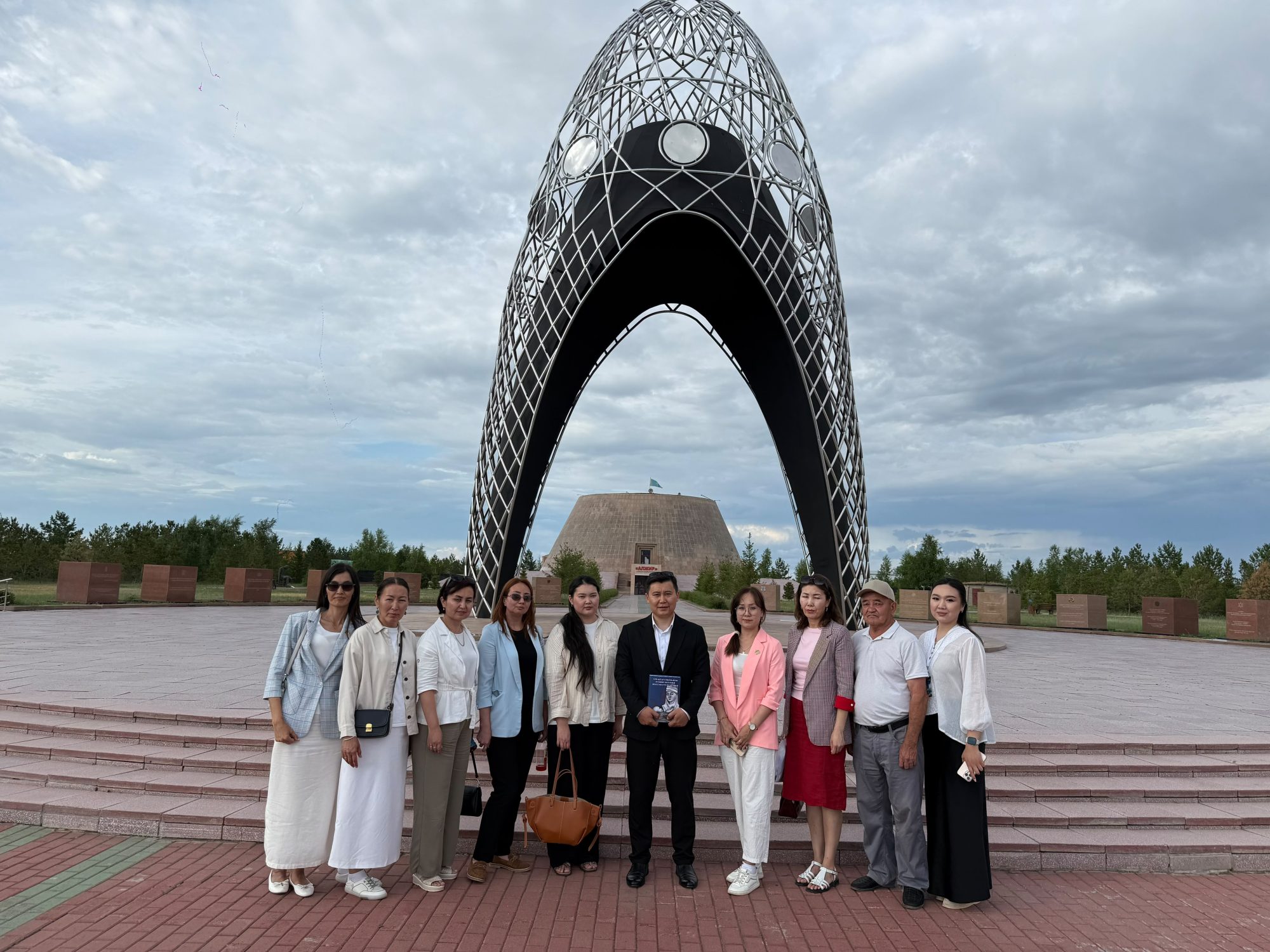 While staying in Astana, we had also planned a visit to the ALZHIR Museum on the outskirts of the capital. We asked Anar Sraiylkyzy whether we could leave the seminar a little earlier one afternoon. At approximately 4:30–5:00 p.m., we set out for the museum in our vehicle.
The atmosphere of this place is deeply moving from the moment one enters. A guide took us through all the exhibition halls. The tragedies endured by the Kazakh people, the fate of innocent women, the suffering of children, the violation of their rights, the violence they experienced and their forced separation from their parents left a profound impression on us. The letters written by children separated from their families were particularly heartbreaking. Reading them without being overcome by emotion was almost impossible. Every line stirred the soul and brought tears to our eyes.
One of the letters read:
“Здравствуй, дорогая мамочка. Почему ты мне не пишешь письма. Мамочка, ты не знаешь где папа. Мамочка, я учусь во 2-м классе. Мамочка, я очень долго болел стригучим лишаем. Мамочка, я жив и здоровый. Мамочка, ты писала, что у тебя нет бумаги. Мамочка, я тебе пришлю. Мамочка, я за тобой очень скучаю. Больше писать нечего”.
In English, the child’s words mean:
“Hello, my dear Mummy. Why don’t you write me letters? Mummy, don’t you know where Daddy is? Mummy, I’m in the second grade. Mummy, I was ill with ringworm for a very long time. Mummy, I’m alive and well. Mummy, you wrote that you had no paper. Mummy, I’ll send you some. Mummy, I miss you so much. I have nothing more to write.”
At the bottom of the letter, the child had drawn a single-storey building with smoke rising from three chimneys. Above the drawing were the words “Building 3-A”, while beside it the child had written, “Mummy, this is my building.” This brief letter from a child conveys the tragedy of an entire era.
Burabay: Where Nature and History Meet
On the afternoon of 26 July, after receiving our certificates at the National Museum, we began our return journey. Our next destination was Burabay. Many of my colleagues had never visited this region before. Although we could have chosen a different route home, everyone wanted to see Burabay and explore its museum complexes. We therefore agreed to return via Burabay and Kokshetau.
Before we departed, our seminar curator, Zhadyra Kairatkyzy, approached us with several bags of food. “You are my fellow countrymen, visiting from home,” she said. “I have prepared something especially for you to take on the road.” Her kindness touched us all.
As we approached Burabay, the tall pine trees, smooth roads and beautiful natural scenery created a wonderful first impression. We arrived in the evening and began settling into the apartments we had arranged in advance. This, too, turned into a small adventure. The first apartment was situated beside a dark, unlit courtyard. Empty bottles lay near the entrance, curious neighbours watched the newcomers, and residents gathered outside speaking quietly among themselves. For a moment, it felt as though we had travelled back from the twenty-first century to the 1980s or 1990s. The location of the first apartment was unsuitable, so we began searching for alternative accommodation, moving from one apartment to another. By the time we had resolved everything, night had fallen.
As we looked for somewhere to have dinner, we remembered the food Zhadyra Kairatkyzy had given us. We took it along to a café and explained our situation to the manager.
“Do you know the poem ‘People Who Have Their Mothers Never Grow Old’?” I asked.
The manager replied that he knew the poem.
“Its author is Kairat Zhumagaliyev,” I explained. “His daughter prepared this food especially for our long journey. We will also order from your café, but if you don’t mind, we would like to share the food she gave us here.”
The manager responded warmly and gave us permission. So we enjoyed the food prepared by Kairat-aga’s daughter and spent another memorable evening together.
Despite a tiring day and a late night, everyone woke early the following morning. Perhaps it was Burabay’s fresh air, but we had all slept remarkably well. Our first destination was Bolektau. A staircase had been provided for visitors to climb the hill. From the top, we admired the magnificent views of Burabay. The beauty of the landscape filled us with gratitude towards our ancestors, who had preserved this remarkable land for future generations.
At the highest point of Bolektau, we found a table and benches. We had brought along some of the food left over from the previous evening. Sitting together at the summit, we enjoyed breakfast and conversation before making our way back down. We then took a motorboat towards Okzhetpes and saw the famous Zhumbaktas and Zheke Batyr rock formations. The boat operator also served as our guide, sharing legends associated with these natural landmarks.
According to the legend of Okzhetpes, a young woman, unwilling to become the object of a contest between suitors, climbed to the top of a cliff. “I will marry whoever can strike my scarf with an arrow,” she declared. Yet none of the warriors could shoot an arrow high enough to reach it. Refusing to be forced into marriage, the young woman eventually leapt from the cliff and sacrificed her life. The legend of Zhumbaktas tells of another girl who jumped into a lake to protect herself and was transformed into stone. According to local belief, the rock resembles a young girl when viewed from one angle, a middle-aged woman from another and an elderly mother from a third. The legend of Bolektau recounts the tragic deaths of two young lovers whose parents opposed their relationship. The story of Zheke Batyr tells of a warrior who fell asleep while guarding his homeland and was turned to stone. These legends, each linked to a natural landmark, made our excursion even more memorable.
Lessons from a Multimedia Museum
We next visited an interactive multimedia museum complex in Burabay. The admission fee was 5,000 tenge. Since I had rarely encountered such a high museum ticket price in my professional experience, it initially seemed expensive to us. Moreover, we had not informed the museum of our visit in advance. However, when we explained that we were museum professionals from West Kazakhstan Region, the staff kindly allowed us to enter free of charge.
Within the museum profession, there is an unwritten tradition of mutual respect and professional solidarity. Wherever one travels in Kazakhstan, it is reassuring to feel part of a wider museum community. We were grateful to the Burabay museum staff for their hospitality and willingness to share their experience with us.
The complex impressed us with both its rich content and effective use of technology. Visitors are first introduced to the natural environment of Burabay and the surrounding area. As they move from one exhibition hall to another, different periods of Kazakh history unfold before them. Visitors can try archery and take part in interactive activities. Kazakh history and legends are presented through films and immersive 5D and 7D experiences. We came away convinced that introducing similar technologies into other museums could make visits more engaging for both children and adults.
Learning from Botai–Burabay and Kokshetau
In the afternoon, we left Burabay and headed towards Kokshetau. Along the way, we stopped at the Botai–Burabay Open-Air Archaeological Museum, located approximately 15 kilometres from Shchuchinsk. The museum specialists had been informed of our arrival and were waiting for us. They welcomed us warmly and gave us a comprehensive tour of the complex.
Archaeological discoveries associated with the Botai culture had originally been made at excavation sites elsewhere. To introduce this ancient culture to the public and make it more accessible to tourists, reconstructed dwellings based on archaeological evidence had been built at the museum complex. We were greatly impressed by the concept and felt that similar approaches could be adopted in other regions. The reconstructions allow visitors to visualise how people lived three to five thousand years ago, what their homes looked like, how living spaces were organised and how family and kinship relationships were structured.
At around six o’clock that evening, we arrived at the Akmola Regional History and Local Lore Museum in Kokshetau. The museum normally closed at 5:00 p.m. However, because we had informed the management of our visit in advance, our colleagues kindly stayed to welcome us. Although the building itself was somewhat old, the exhibitions were thoughtfully designed and rich in content. We found many ideas worth considering. As we toured the galleries, my colleagues noted approaches that could be useful when we eventually renovate our own exhibitions. After leaving the museum, we immediately continued towards Kostanay.
An Ordeal on a Dark Road
After setting off from Kokshetau towards Kostanay, I fell asleep for a short while. When I woke, I opened the map on my phone to check our route. I immediately noticed that we had left the main highway and were travelling in the wrong direction. By then, however, we had already covered a considerable distance.
The sun had set, and the road was becoming increasingly difficult. At first, we drove along a badly uneven road. Then we found ourselves on a slippery track softened by rain. Thick fog descended, making it increasingly difficult to see in the darkness. Before long, both internet access and mobile phone reception disappeared. To keep track of the situation, I moved to the front of the minibus, stood beside the driver and helped monitor the road and our direction.
The Gazelle shook violently over the ruts and potholes, causing luggage and suitcases at the back to slide out of place. When the driver informed us that we were running low on fuel, the seriousness of our predicament became even more apparent. There was no signal, no visible settlement and darkness all around us. My colleagues were understandably anxious. Nobody slept. Each person quietly recited “Bismillah” and hoped that we would reach the main road safely.
After some time, mobile reception returned, allowing us to check our location on the map. We made our way around the Sarykol area and gradually approached the highway. Finally, when the minibus reached smooth asphalt again, my colleagues spontaneously burst into applause. It was a moment of immense relief after several hours of uncertainty and anxiety.
Kostanay: Hospitality and the Preservation of Historical Memory
On our outward journey to Astana, we had been unable to visit two museums in Kostanay because both were closed. We were determined to make up for the missed opportunity on the way home. I contacted our fellow countryman Bakytzhan Khaberuly Narymbetov, who was serving as Deputy Akim of Kostanay Region. He kindly helped us arrange suitable times for our museum visits.
The Kostanay Regional History and Local Lore Museum was specially opened for our group, and the staff introduced us to its exhibitions. At the time, the galleries were undergoing renovation. The building’s exterior, including its colour scheme, strongly resembled that of the West Kazakhstan Regional History and Local Lore Museum. It also had a large courtyard.
One historical feature in that courtyard made a particularly strong impression on us. During the Civil War, people who had participated in the revolutionary movement were executed there, according to historical accounts presented at the museum. A wall associated with these executions has survived to the present day. Rather than demolishing or altering it, the museum has preserved the wall as a physical witness to those tragic events. Bullet marks remain clearly visible on its surface. According to accounts passed down over the years, the blood of those executed once flowed towards the nearby Tobol River. Seeing this preserved historical site reminded us how important it is to protect authentic evidence of the past. Such places do more than enrich a museum’s exhibitions: they help visitors understand the human tragedy behind historical events and the significance of the very ground on which they stand.
We then visited the nearby Ibray Altynsarin Memorial Museum. Its building and exhibition spaces gave the impression of having been recently renovated. The interiors were rich in content, while the exhibition design was modern, attractive and carefully conceived. One gallery featured a specially reconstructed classroom showing Ibray Altynsarin teaching his pupils. This kind of presentation transports visitors back to the educator’s era and brings the historical narrative vividly to life.
After the museum visits, Bakytzhan Khaberuly and the officials accompanying him thanked us for coming and presented us with commemorative gifts. We were delighted, and as the head of our institution, I considered the gesture a great honour. As lunchtime approached, he kindly suggested: “You still have a long journey ahead. Please have lunch before you leave.” We went to the place he recommended, where a meal had been specially prepared for us. Warm wishes were exchanged, and we enjoyed a meaningful conversation. Grateful for the exceptional hospitality and kindness shown by our fellow countryman, we continued our journey towards Aktobe.
The road out of Kostanay was remarkably smooth. We chatted and took turns resting. Then, quite suddenly, the road deteriorated, and travelling became increasingly difficult. “Why has the road become so bad all of a sudden?” we wondered. The reason soon became clear: we had left Kostanay Region and entered Aktobe Region. We continued along the uneven road, reached Aktobe during the night and, without stopping, travelled onwards. On the morning of 29 July, we returned safely to Oral.
The Most Important Lesson of the Journey
Over the course of nearly ten days, we encountered difficult roads, unexpected challenges and many memorable experiences. Most importantly, we gained valuable knowledge at an international seminar, explored museums across several regions and acquired professional experience that will be useful in the future. Every member of the team returned in good spirits, bringing fresh ideas and new proposals.
For me, another particularly significant outcome was the strengthening of our team’s unity. When we set off on this long journey, nobody was discouraged by the difficulties ahead. Throughout the trip, colleagues supported one another, looked after each other and maintained a positive spirit. This solidarity demonstrated that even the most demanding tasks can be accomplished when people work together towards a common goal.
I would like to express my sincere gratitude to everyone who supported this journey. Above all, I am grateful to my colleagues, who shared the responsibilities and challenges of travelling such a long distance and demonstrated a genuine commitment to professional development.
On behalf of myself and the entire museum team, I extend heartfelt thanks to Dauletkerei Atauuly for providing transport. Without his support, it would have been difficult to organise a joint trip for so many employees.
I am also deeply grateful to Anar Sraiylkyzy for her efforts in ensuring that the seminar at the National Museum was conducted to such a high standard. Throughout the event, she regularly drew attention to the museums of West Kazakhstan Region and our valuable artefacts, highlighting our colleagues’ active participation as an example to others. She also helped arrange our visits to the departments of the National Museum and made it possible for us to visit the ALZHIR Museum.
Our curator and fellow countrywoman Zhadyra Kairatkyzy showed us exceptional kindness and care. She was consistently attentive to our needs. I was particularly moved when, before our departure, she took the time to prepare food with her own hands and send it with us for the long journey home. What mattered was not simply the food itself, but the sincere affection and thoughtfulness she showed towards people who had travelled from her home region. I was delighted to see how much my colleagues appreciated the hospitality of the daughter of such a respected figure as Kairat Zhumagaliyev. I extend my heartfelt thanks to Zhadyra Kairatkyzy.
I would also like to express special gratitude to Bakytzhan Khaberuly Narymbetov, Deputy Akim of Kostanay Region. His warm welcome, assistance in arranging our museum visits, kind wishes and thoughtful hospitality left a lasting impression on both my colleagues and me. Remembering and supporting people from one’s home region, wherever life may lead, is a quality worthy of admiration and emulation.
For us, Музей Travel became far more than a one-off journey. It demonstrated the value of professional development, the importance of strengthening partnerships and the achievements that become possible when a team works together towards a shared purpose. Our main task now is to put what we have seen and learned into practice at our own museum. After all, the true value of a journey is measured not by the kilometres travelled, but by the positive changes we bring about after returning home.
Zhantas Nabiollauly Safullin
Director, West Kazakhstan Regional History and Local Lore Museum
Oral, Kazakhstan
31 July 2026