Bilim insanları, Sarmatlar döneminde Jayık Nehri kıyılarında Dayık adlı bir kabilenin yaşadığını ileri sürmektedir. Hatta Jayık Nehri’nin adının, bu Dayık kabilesinin adının küçük bir değişikliğe uğrayarak günümüze kadar ulaşmış hâli olabileceğine dair bir varsayım da bulunmaktadır. Tomiris filminde, Tomiris’in Dayık kabilesinin liderinin oğluyla evlendiği gösterilmektedir. Bundan 2.000–2.500 yıl önce bu topraklarda yaşayan göçebelerin kendilerini Sarmat olarak adlandırmadıkları dikkate alındığında, söz konusu kabilelerin adları büyük önem taşımaktadır. Kazaklar Jayık Nehri’ni öteden beri bu adla anmışlardır. Nehrin adını “Ural” olarak değiştiren ise, E. Pugaçev önderliğindeki ayaklanmayı halkın hafızasından silmeyi amaçlayan Rus İmparatoriçesi’nin daha sonraki dönemde başvurduğu bir hile olmuştur. Bu bakımdan, Jayık kıyılarında yaşamış göçebelerden kalan tarihî mirasın araştırılması büyük önem taşımaktadır.
Batı Kazakistan Bölgesi’nin Oral şehri sınırları içerisinde, Jayık antik yerleşiminin yakınında, Oral–Atırav ana yolu kenarında Sarmatlar dönemine ait büyük bir kurganda arkeolojik kazı çalışmaları gerçekleştirildi. Bu çalışma, Batı Kazakistan Bölgesi Tarih ve Arkeoloji Merkezi adlı belediyeye bağlı devlet kurumunun yöneticiliğine atanmamın ardından düzenlediğim çalışmalardan biriydi. Kazı çalışmalarına tanınmış arkeolog Yana Amangeldikızı Lukpanova başkanlık etti. Ağustos 2019’da kazıları tamamlayarak çeşitli bilim insanları ve uzmanlarla incelemeler yapılması konusunda görüşmelere başlamıştık. Uzmanların görüş ve değerlendirmelerini de ekleyerek sonuçları 2020 yılında kamuoyuna açıklamayı planlıyorduk. Ancak 2020 yılının başında kurumun kapatılarak bölge tarih ve yerel kültür müzesiyle birleştirilmesine karar verildi. Ardından ilkbaharda salgın başladı; tarihi araştırmak bir yana, halkın sağ salim kalması başlı başına bir kaygıya dönüştü. İşte şimdi, kazılarda ortaya çıkarılan eserler ile bu alanın bir açık hava müzesi kompleksine dâhil edilmesi amacıyla hazırlattığımız ön tasarım projesi ilk kez Dana dergisinde yayımlanmaktadır.

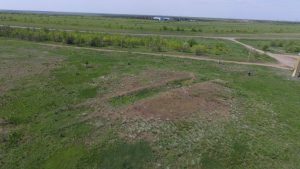
27 Mayıs 2019 tarihinde, Oral şehri sınırları içerisinde bulunan Orta Çağ Jayık şehrinin yakınındaki tahrip edilmiş bir kurganda kazı çalışmalarına başlandı. Bu kurganın kazılması için birkaç neden vardı. Yaklaşık 10–15 yıl önce bir buldozerin kurganın tam ortasından, çapı boyunca geçerek burayı yardığı ve ayrıca birkaç yerinde kazı yapılarak araştırıldığı görülüyordu. Başka bir deyişle, kültürel miras niteliğindeki bu anıt tahrip edilmişti. Jayık yerleşiminin gelecekte bir açık hava müzesine dönüştürülmesi devletin planları arasında yer almaktadır. Şimdiden bile eski şehrin bulunduğu alanı görmek isteyen çok sayıda insan vardır.
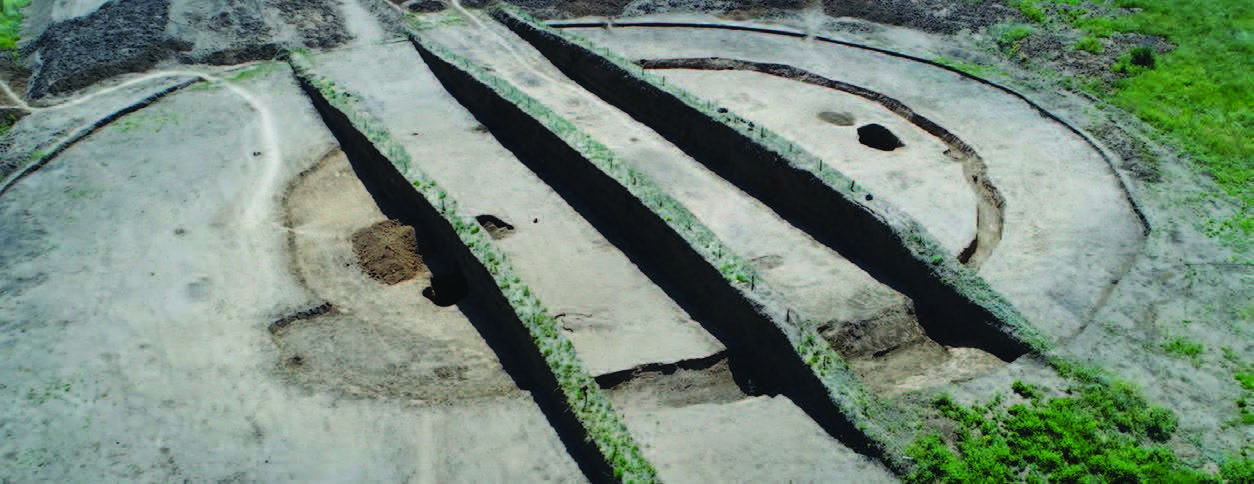
Orta Çağ şehrine giden yol üzerindeki tahrip edilmiş kurganın insanların dikkatini çekeceği ve pek çok kişinin “Şehrin hemen yakınındaki bu kurganı kim yağmaladı?” diye düşüneceği kuşkusuzdur. Neler korunmuştu? Neler yağmalanmıştı? Arkeolojik kazı yapılmadan bu sorulara kimsenin cevap veremeyeceği açıktır. Daha önce Segizsay, Kırıkoba, Taksay ve benzeri komplekslerde kazı çalışmaları yürütülmüştür. Ancak şehir sınırları içerisinde bir kurganda arkeolojik kazı yapılması oldukça nadirdir. Oral şehrinin tarihi yazılırken, burada şehir kurulmadan önce kimlerin yaşadığının belirlenmesi ve tarihin çok daha eski dönemlerden itibaren ele alınması kuşkusuz yerinde olacaktır. Bütün bunları göz önünde bulundurarak alana “Jayık-1” adını verdik ve kazı çalışmalarına başladık. Öncelikle Asan Camii imamı Muratbek Jahatov’u özel olarak davet ederek vefat edenlerin ruhları için dua ettik. Kurganın çapı 48 metre, yüksekliği ise 2 metreydi. Kuzeyden güneye doğru uzanan ve her biri yaklaşık bir metre genişliğinde olan üç kazı kesitini (balk) bırakarak, Mahambet Ötemisov Batı Kazakistan Devlet Üniversitesi’nden uygulamalı eğitim için gelen ikinci sınıf öğrencileriyle çalışmaya başladık. Kazı çalışmalarının başkanı arkeolog Yana Lukpanova’ydı.
Zamandan tasarruf etmek ve işi kolaylaştırmak amacıyla yüzey tabakasını skreyper kullanarak yaklaşık 10 santimetre kalınlığında katmanlar hâlinde kaldırdık. Her tabaka kaldırıldığında alan dikkatle incelendi ve kontrol edildi. Kurganın orta kısmından 0,50 metre derinliğinde toprak kaldırıldığında, kırmızı renkli, taş benzeri sert kalıntılar ortaya çıkmaya başladı. Bunlar, yüksek ısıya maruz kaldığında kızararak tuğla gibi sertleşmiş toprak parçalarıydı. Kurganın yapısı içerisinde kemikler de ortaya çıkmaya başladı. Tahminimize göre bunlar, kurban edilmiş bir atın leğen, kaburga, göğüs ve kürek kemikleriydi.
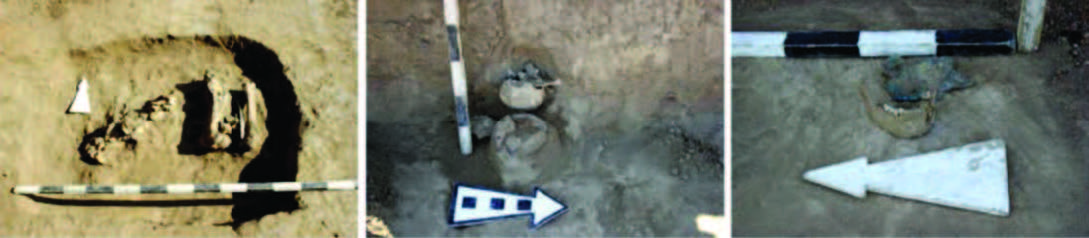
Kazı çalışmalarını yaklaşık iki ay içerisinde tamamladık. Kazılar sırasında yedi erkek, beş kadın ve iki çocuğa ait kemikler tespit edildi. Bu kişilerin çeşitli gündelik kullanım eşyaları, süs eşyaları, silahlar ve aletlerle birlikte gömüldüğü anlaşıldı. Ana merkezî mezar çukurunun yağmalandığı ortaya çıktı. Ancak ithal bir kâse, ahşap bir tarak ve çeşitli boncuklar yerinde kalmıştı. Bu kurganı bölgemizde daha önce kazılan kurganlardan ayıran başlıca özellik, yaklaşık 1 metre derinliğinde, 1,5 metre genişliğinde ve yaklaşık 35 metre çapında bir hendeğin bulunmasıydı. Hendeğin güney tarafında geçiş için özel bir açıklık bırakılmıştı. Ayrıca bu hendeğin içine iki kişinin gömüldüğü tespit edildi. Kurganın toprağını incelemek amacıyla Rusya Federasyonu’nun Puşkin şehrinden toprak bilimci M. Yeltsov’u özel olarak davet etmiştik. Yeltsov, ilk gömü sırasında ahşaptan özel bir yapı inşa edilmiş olabileceğini, bu yapının çevresine ve üzerine hendekten çıkarılan toprağın yığılmış olabileceğini, yüzey tabakasının da kesilerek üstüne örtülmüş olabileceğini öne sürdü.
Kazı çalışmalarının her aşaması yerden ve havadan fotoğraf ve video ile kaydedildi. Açılan her mezar çukurunun üç boyutlu (3D) modeli de hazırlandı. Bundan sonraki süreçte ortaya çıkarılan insan kemikleri, hayvan iskeletleri ve eserler üzerinde laboratuvar incelemeleri gerçekleştirerek kapsamlı değerlendirmeler yapmamız gerekmektedir.
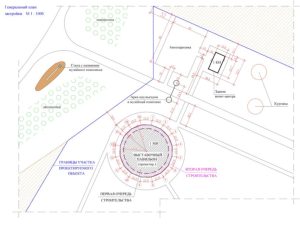
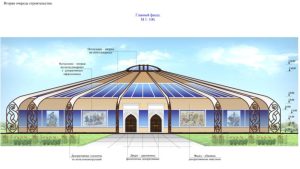
Jayık şehrinin bulunduğu alanın açık hava müzesine dönüştürülmesinin planlandığı bilinmektedir. Bu kompleksin başlangıç noktasının, Erken Sarmat dönemine ait tam da bu kurgan olması gerektiğini düşünüyorum. Bunun için şimdilik özel bir koruyucu örtü tasarlanmalı ve vakit kaybetmeden kurganın üzerine kapalı bir müze binası inşa edilmelidir.
Bunun birkaç nedeni var. Birincisi, burası yaklaşık 2.500 yıl önce yaşamış insanların ebedî istirahatgâhı olması ve onların kullandığı süs eşyaları ile aletlerin korunduğu bir yer olması bakımından kutsaldır. İkincisi, bugüne kadar pek çok kurgan kazılmış olmasına rağmen hiçbirinin bulunduğu alan korunarak halkın ziyaret edip tanıyabileceği bir mekâna dönüştürülmemiştir. Uzmanlar dışında toplumun büyük bir bölümünün eski dönemlerdeki defin törenleri hakkında bilgisi sınırlıdır. Burayı ziyaret eden herkes, bozkırlarımızda sıra sıra yükselen kurganların altında nice atamızın kemiklerinin yattığını hissedecektir. Üçüncüsü, şehre yakın olması sayesinde hazırlanan müze kompleksini geniş kitleler ziyaret edebilecek ve burası gelecekte köklü tarihimizi tanıtan önemli bir turizm merkezi hâline gelecektir.
Jantas NABİOLLAULI,
“Dana” dergisi Danışma Kurulu Başkanı
Excavations and Artefacts Discovered
Zhaiyk-1 Complex, Mound 1
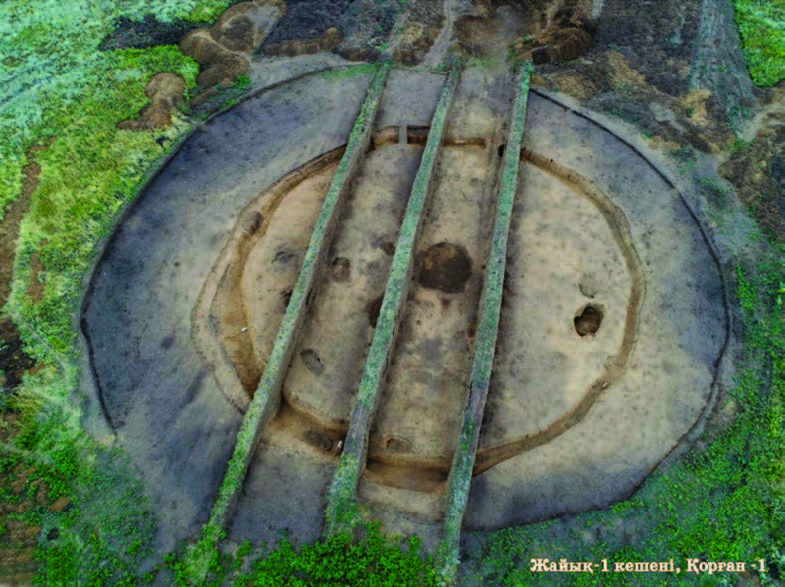
Located 13 km south-west of Oral. The complex consists of four burial mounds. The mound was in a severely damaged condition. In 2019, excavations were carried out by staff of the West Kazakhstan Regional Centre for History and Archaeology. Three north–south baulks were left in place to study the stratigraphy of the mound. The distance between the baulks was 7 m.
Archaeological excavations of Mound 1 at the Zhaiyk-1 complex began on 28 May 2019.
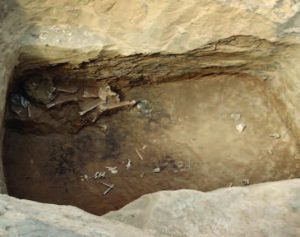
Artefacts Discovered
-
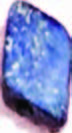
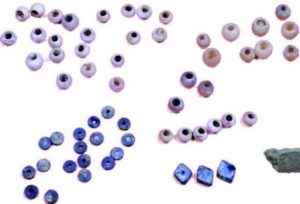
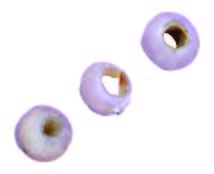
Three rhombus-shaped geshir beads. The beads are black, with through-holes on both sides and a recessed cavity in the centre.
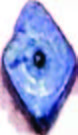
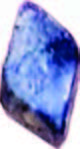
-
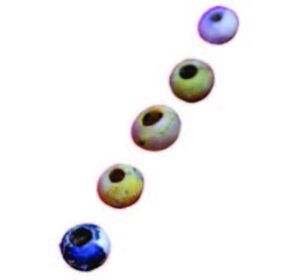
Thirty-nine barrel-shaped glass beads with internal gilding and through-holes. The beads measure 0.7 cm in height, with a hole diameter of 0.3 cm. They have developed a surface coating and are well preserved. Eighteen flat, disc-shaped geshir beads, each with a single through-hole, measure 0.5 cm in diameter and 0.2 cm in height. They are light in colour and shine like gold when wet or exposed to bright sunlight.
Beads. 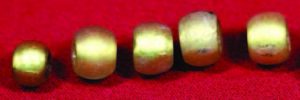
Barrel-shaped glass beads with internal gilding and through-holes. -
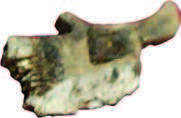
A fragment of an ornamented wooden comb. The fragments have a rectangular base, and the comb has both coarse and fine teeth. Seven holes are drilled into one side of the comb, while five concentric circles are depicted on the opposite side. Height: 4.8 cm; thickness: 3 cm. Poorly preserved, broken into two pieces.
-
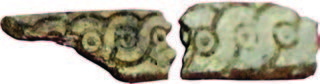
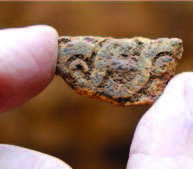
Fragments of rectangular decorative mounts. A concentric circle is depicted among interconnected wave-shaped ornaments. Two rectangular fragments are decorated with two concentric circles and a triangle. Three small fragments are undecorated. Five ornamented mounts measure between 2.2 and 3.6 cm in length and 1.3–1.5 cm in width, with a thickness starting at 0.3 cm. Two other mounts measure between 2.6 and 3 cm in length and 0.9–1.0 cm in width. Poorly preserved, with broken edges.
-
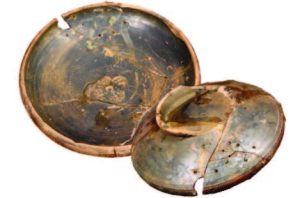
Bowl. The inner surface of the base of the ceramic vessel bears a four-petalled floral motif surrounded by an ornament of vertical lines. Height: 4.2 cm; height of the foot: 1 cm; diameter: 14 cm; base diameter: 6.5 cm. The ceramic vessel shows signs of repair: holes along the fractures appear to have been made to join the broken parts of the bowl. The rim is broken.
-
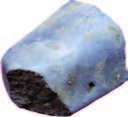
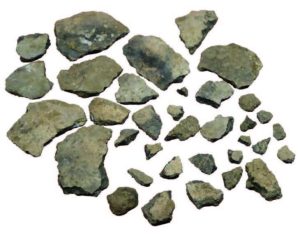
Cut slag; a black, trapezoidal fragment of a rectangular stone object, with one edge broken.
-
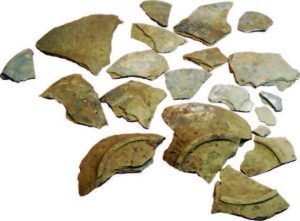
A grey-clay vessel with a handle, made on a potter’s wheel. The vessel is elongated, with a broad middle section and a goose-neck-shaped neck widening towards the top. Approximate height: 16.3 cm; base diameter: 12 cm; base thickness: 1.3 cm; diameter of the widest part: 28.6 cm; upper diameter: 14 cm; wall thickness: 0.7 cm. Poorly preserved and completely broken; the fragments cannot be fully joined together.
Pit 2, Burial 2
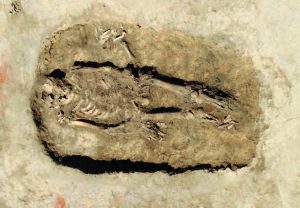
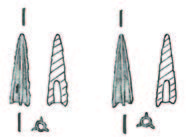
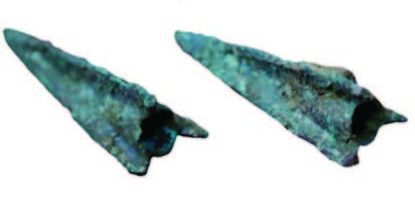
The skeleton of a man, located north of the central pit. The head is oriented westwards. Sheep bones were discovered on the left side of the grave, at the level of the ulna. Two bronze arrowheads, described as three-edged and bladed, without sockets and measuring 3.7 cm in length, were found on the left side of the skeleton at leg-bone level. They are well preserved and bear a surface coating.
Pit 3, Burial 3
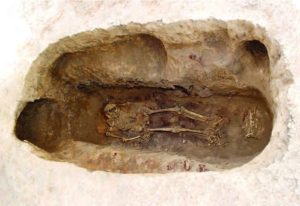
The skeleton of a man. The head is oriented towards the south-east. The elongated burial pit runs from north-west to south-east.
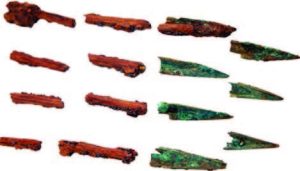
Four types of arrowheads were discovered on the left side of the burial. The first type consists of four bronze three-bladed arrowheads with triangular socketed heads, measuring 3.5 cm in length, with a socket diameter of 0.4 cm; the second type consists of two bronze three-bladed arrowheads with internal sockets and medium-sized triangular heads, measuring 2.5 and 2.6 cm in length, with a socket diameter of 0.4 cm; the third type consists of two bronze three-bladed arrowheads with elongated triangular heads and blades cut obliquely towards the internal sockets, measuring 3.6 and 3.8 cm in length, with a socket diameter of 0.4 cm; the fourth type consists of three iron three-bladed arrowheads measuring 2 cm in length.
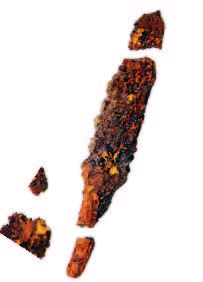
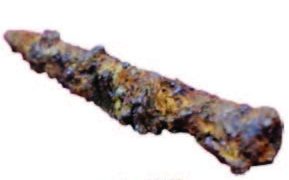
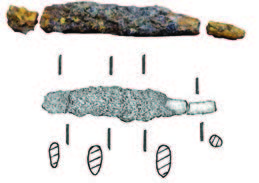
An iron tanged knife, measuring 13 cm in length and 2.1 cm in width, was found among iron fragments and sheep bones. The knife is poorly preserved, broken in two places and covered with rust.
Pit 4, Burial 4
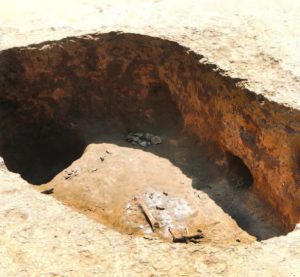
A presumably female burial, looted in antiquity. The pit is elongated and rectangular, oriented from north-west to south-east. Three glass beads with internal gilding were discovered in the central area at the bottom of the pit. They measure 0.7 cm in height and 0.8 cm in width, with a hole diameter of 0.4 cm. The beads are poorly preserved and covered with oxidation deposits. Fragments of a handmade vessel were discovered in the southern corner of the pit.
Pit 5, Burial 5
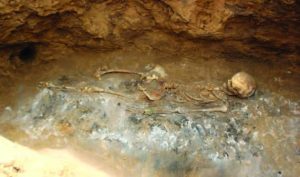
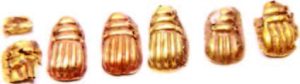
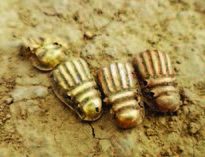
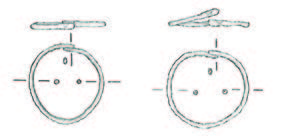
A female burial. The remains have been disturbed; bones of the right arm, ribs, shoulder and shoulder blade are missing. The head is oriented towards the south. A bracelet made from a solid bronze rod, with overlapping ends, was found on the wrist. The bracelet measures 6.5 and 6.6 cm in diameter, with a thickness of 0.4 cm. Its flattened ends bear incised ornamentation resembling the letter X on the outer surface. Six beetle-shaped appliqués were discovered in the area of the cervical vertebrae. They measure 1.7 cm in length, 1 cm in width and 0.3 cm in height, and have five attachment holes. Two appliqués are broken and deformed, one has split into two pieces, and the remaining four are well preserved.
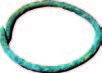
During the backfilling of the pit, the remaining bones of the woman, a second bracelet and a fragment of a bronze mirror were discovered. The mirror is cast, with a flat disc. Handle length: 10.5.
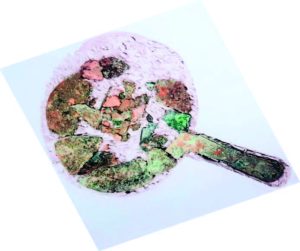
Pit 5, Burial 6
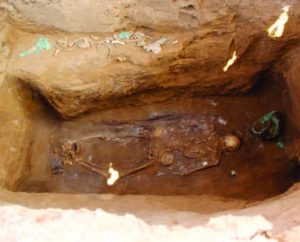
A presumably female burial. The head is oriented towards the south. The remains have been disturbed; a bereneli-type structure had been constructed above the grave.
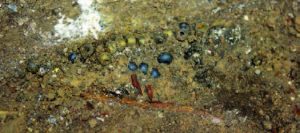
Thirty-six beads were found near the left wrist and 31 near the right wrist. Another 56 beads may have served as decoration on the right side of the clothing.

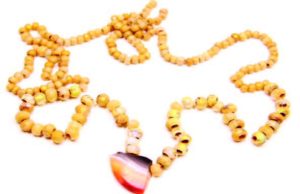
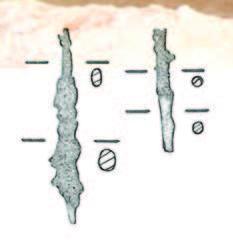
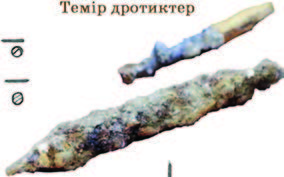
A neck ornament consisting of 193 internally gilded beads was discovered around the cervical vertebrae. The beads measure 0.4–0.6 cm in height, with hole diameters of 0.3–0.4 cm. A triangular-shaped stone pendant amulet, measuring 2.2 cm in height, was also found. To the right of the buried person’s legs were iron darts measuring 4.5 cm in length, with circular cross-section diameters of 0.3 and 0.6 cm, and a knife measuring 7 cm in length. The objects are poorly preserved and covered with rust and oxidation deposits.
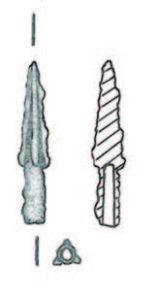
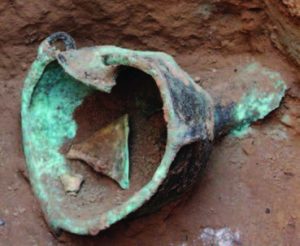
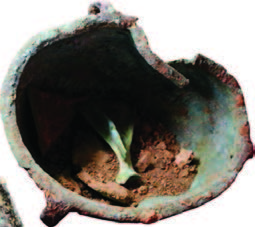
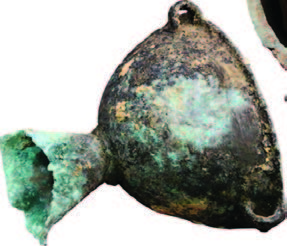
Rust-covered, poorly preserved three-bladed arrowheads with pronounced sockets were discovered near the head. They measure 5.4 cm in length, with a socket diameter of 0.4 cm. A bronze cauldron with three handles and a long conical leg was also found. The cauldron’s diameter is recorded as 30 × 25 cm, with a height of 31.5 cm, leg height of 12 cm, wall thickness of 0.4 cm, handle height of 5.2 cm and handle-ring diameter of 3 cm.
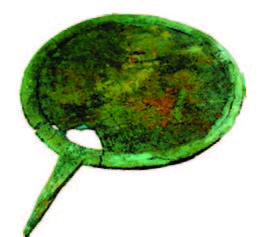
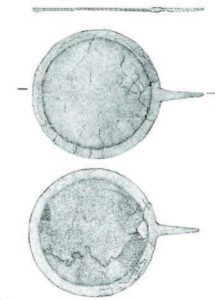
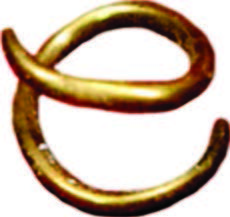
A circular bronze mirror with a side handle and a raised rim was discovered beneath the skull. Thickness: 0.3 cm; diameter: 19.5 cm; handle length: 6.5 cm; raised-rim width: 1.5 cm. A small part of the mirror is missing, and its preservation is moderate. A well-preserved gold earring made from thin yellow-metal wire, coiled one and a half turns, was found in the same place. Its diameter is 1 cm and its thickness 0.1 cm.
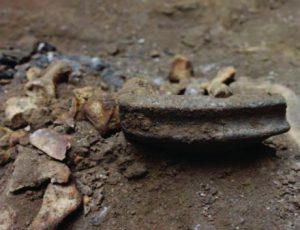
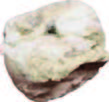
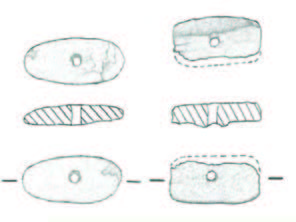
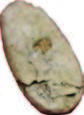
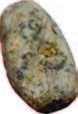
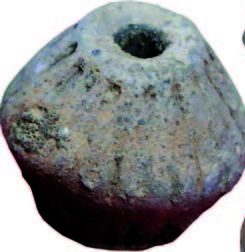
A ritual ceramic bowl on a tall pedestal was discovered near the woman’s ankle. The handmade ritual bowl has two raised bands around the upper part of its walls. Its cylindrical pedestal widens towards the bottom. Stone hammers of oval and approximately square shapes were also discovered, each with a central through-hole measuring 0.6 cm in diameter. Their height ranges from 5.3 to 6.3 cm and their thickness from 1.3 to 1.4 cm. A chalk spindle whorl shaped like a washer was found on the left side of the burial. It measures 4 cm in diameter and 2.1 cm in height, with a central through-hole 0.7 cm in diameter.
Handmade vessel and stone hammers.
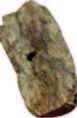
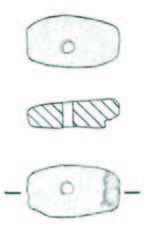
Gold earring made from thin wire coiled one and a half turns.
Bronze cauldron with a long leg.
Pit 6, Burial 7
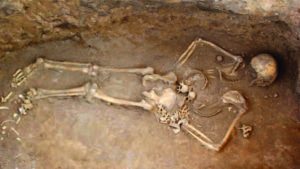
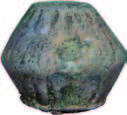
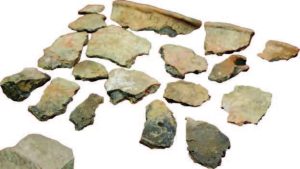
A presumably female burial. The deceased was buried face down. The shallow pit is oriented north–south, with the head directed towards the south. Between the left arm and the ribs were a well-preserved biconical spindle whorl, measuring 3.5 cm in height, with a through-hole diameter of 0.3 cm and vertical line ornamentation on its surface, and a worked stone. Near the legs, fragments of a broken handmade clay vessel decorated with a horizontal wavy line were discovered.
Pits 6 and 5 are connected by a passage.
Pit 7, Burial 8
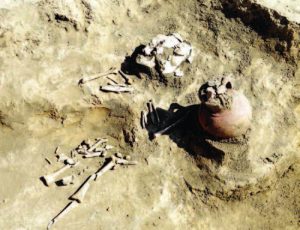
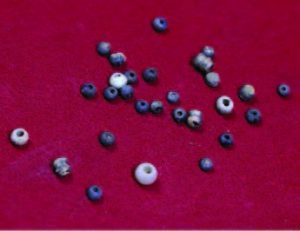
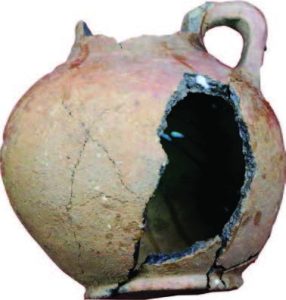
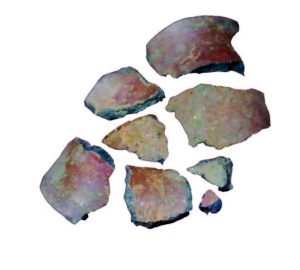
The burial of a girl. The head is oriented towards the south. The pit was located in the encircling ditch in the western part of the mound. It is elongated and oriented from north-west to south-east. Four beads made of a glass-like material were discovered around the cervical vertebrae. Height: 0.4 cm; diameter: 0.2 cm. Twenty-two small black beads were also found. Height: 0.2 cm; diameter: 0.1 cm. A handmade ceramic jug of rounded form was discovered. It has a broad middle section, a long neck widening upwards, a side handle and a flat base. Jug height: 20.5 cm; diameter of the upper neck: 11 cm; diameter of the narrowed middle section of the neck: 8 cm; diameter of the broad middle section: 16.8 cm; base diameter: 9.5 cm; handle height: 7 cm; handle thickness: 1.4 cm. Wall thickness: 0.7 cm; base thickness: 1 cm. Poorly preserved, glued together, with the upper rim broken.
Pit 8, Burial 9
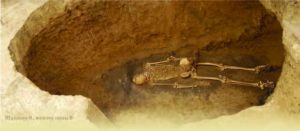
An oval pit discovered beneath the eastern baulk, oriented from south-east to north-west. A step was identified in the eastern part of the pit. A male burial was discovered, with the head directed towards the south-east. The arms and legs are extended alongside the body, and the head is turned to the right.
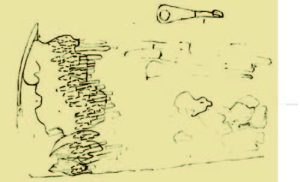
At the man’s head, on top of sheep bones, lay the base of a quiver made from animal hide. An iron quiver loop was found nearby. Length: 7 cm; width: 0.6 cm; diameter of the loop opening: 1.1 cm. Poorly preserved.
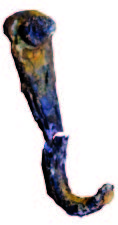
The quiver contained 43 arrowheads with fragments of their wooden shafts. The arrowheads are well preserved and measure between 2.5 and 4.5 cm in length. The quiver may have consisted of two sections.
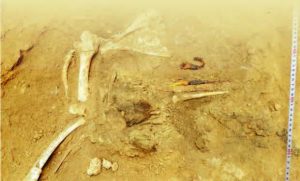
In another section, a bone implement resembling an awl or hook was found. Length: 12 cm; cross-sectional diameter: 0.7 cm. The length of an awl, excluding its tip, is 13.5 cm, with a cross-sectional diameter of 0.4 cm. The length of an awl with a spear-shaped tip is 14.7 cm, with a cross-sectional diameter of 0.4 cm.
Two iron darts. One has a tip shaped like a laurel leaf.
They lay on sheep bones near the head of the deceased.
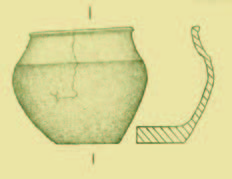
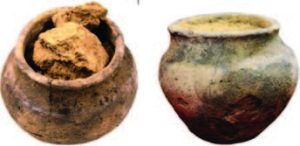
A ceramic jug with a body widening from the bottom towards its middle section. Jug height: 10.5 cm; body height: 3 cm; base diameter: 6 cm; wall thickness: 0.5 cm; base thickness: 1.5 cm; height of the broad section: 13 cm. Well preserved, with a crack near the upper part.
A sword lay on the pelvic bones. The blade of the short sword measures 29.5 cm in length and 4.5 cm in width. The upper part of the hilt ends in two crossing antenna-like projections resembling a butterfly. Overall sword length: 41.5 cm. Poorly preserved and heavily rusted.
Burial 10
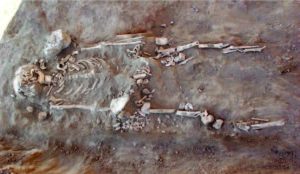
A burial made at the level of the ancient ground surface. It was discovered in the eastern part of the mound, on the surface of the ditch near its northern periphery. The deceased was presumably male. The head is oriented towards the south-east, the arms extend along the body and the legs are straight. The head is tilted to the right. No grave goods were discovered. The human remains are poorly preserved.
Pit 9, Burial 11
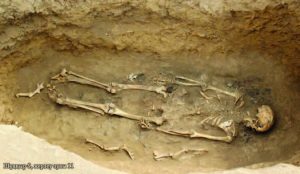
An oval pit with its long sides oriented towards the north-east. The western edge of the pit extends into the ditch. The burial is presumed to be male. The deceased lay face down, with the head oriented southwards, the arms and legs extended along the body and the feet together. The head is turned to the right. Sheep bones were found on the right side, along the western wall and beneath the northern wall of the pit. No grave goods were discovered.
Pit 10, Burial 12
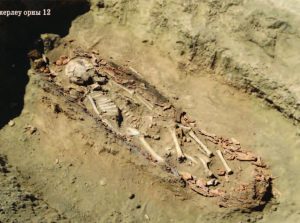
The burial is situated at the bottom of the ditch, to the west, parallel to Burial 11. It is a child’s burial. The child’s remains were placed in a wooden burial container (kolodka). The head is turned to the right and oriented towards the south. Sheep bones were discovered between the knees and the bones of both legs.
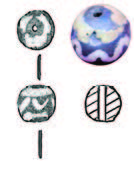
A round brown bead was found on the right side, at the level of the forearm bones. Its middle section is divided by two white lines and decorated with a white zigzag pattern. Bead height: 1.2 cm; hole diameter: 2 mm.
An iron tanged knife, measuring 8.4 cm in length and 1.5 cm in width. Poorly preserved, broken in two places and heavily corroded.
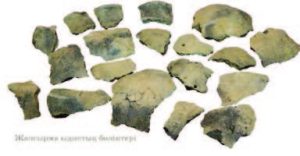
Fragments of a ceramic vessel were discovered. The vessel has a rounded middle section, a short neck, a side handle and a gradual transition towards the base. The lower part is rough and rounded, and the handle is attached to the upper part of the vessel. Vessel height: 21.8 cm; diameter of the widest section: 20 cm; neck height: 4.5 cm; base diameter: 9 cm. Broken and poorly preserved.
Burial 13
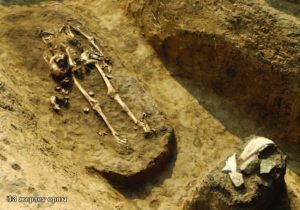
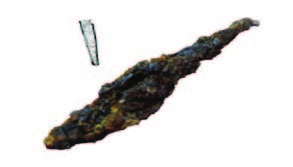
Discovered at the bottom of the ditch in the northern part of the mound. The skeleton was buried on an organic bedding layer and was oriented towards the east. The arms and legs were extended alongside the body. The skull was discovered near the right forearm. A three-bladed arrowhead measuring 4.1 cm in length was found near the ribs.
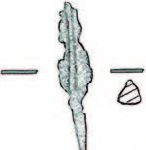
Pit 11, Burial 14
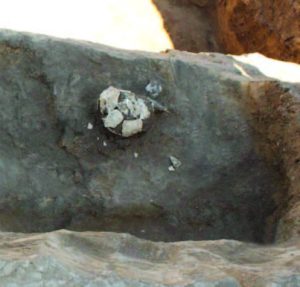
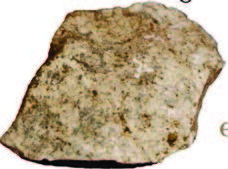
The pit is oriented west–east. Its northern wall borders a furrow. It is located in the northern part of the mound. Only the skull of an adult remained in the pit. The burial was probably looted. A worked stone and a knife were discovered.
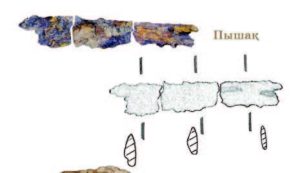
Mound Fill. Objects discovered during the removal of layers of the burial mound:
1) Bead. Height: 0.8 cm; hole diameter: 0.2 mm.
2) A skull, presumably belonging to a woman, found beneath the eastern baulk of the mound.
3) A handmade ceramic jug with a flat base, short neck and mouth widening towards the top. Two rows of horizontal lines extend from beneath the neck towards the base, and the middle section is decorated with a zigzag pattern. Height: 11.3 cm; base diameter: 9 cm; rim diameter: 7.5 cm; diameter of the broad section: 11.5 cm; wall thickness: 1 cm. Poorly preserved and broken.
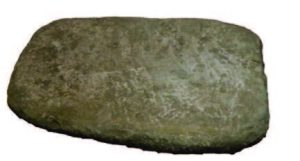
1) A rectangular stone ritual slab for grinding pigments or herbs. Found at the northern edge of the mound, in its eastern section.
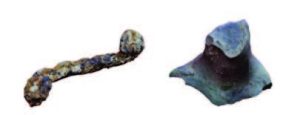
2) An iron horse-harness fitting. Length: 8.3 cm; thickness: 0.6 cm.
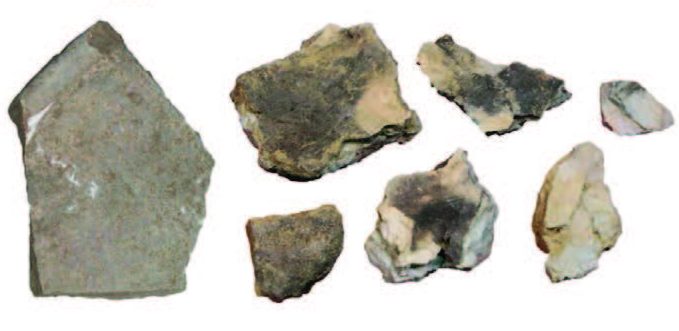
3) A fragment of a sacrificial stone. Found at the southern edge of the mound, beneath the eastern baulk.
4) A fragment of a ritual vessel. Found at the southern edge of the mound, beneath the western baulk.
5) A fragment of a handmade ceramic vessel with a wall thickness of 1.8 cm.
6) A fragment of a sacrificial vessel (altar), a piece of worked slag, chalk and stone.
7) A fragment of a bronze mirror with a flat disc and a cast side handle. Height: 10.5 cm; width: 10.5 cm; thickness: 0.3 cm. Central part of the mound and the lower part of the human remains. At a depth of 2.8 m, horse bones and a burnt structure were discovered.
Ditch
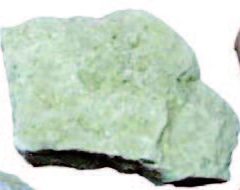
During the archaeological investigation of the Zhaiyk burial mound, an encircling ditch was identified beneath the mound fill. The burials in the mound were situated on the inner side of this ditch, with Burial 11 also referred to in the description of their location. Two skeletons and the following objects were discovered in the ditch:
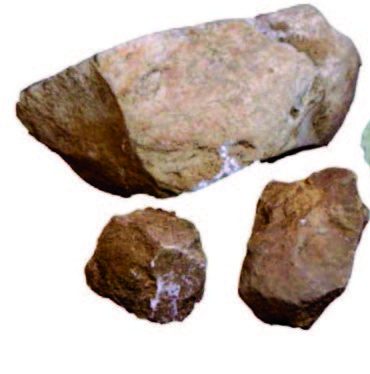
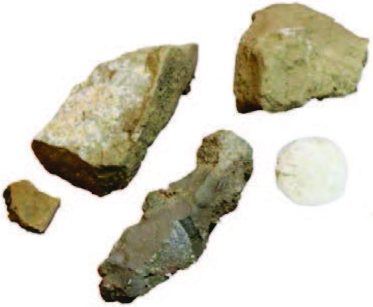
1) Stones. Southern edge, eastern part of the ditch.
2) Stones. Southern edge, western part of the ditch.
3) Fragment of a worked stone. North-western part of the ditch.
4) A triangular fragment of a stone sacrificial vessel that was originally circular, with a white teardrop-shaped element. Length: 8.5 cm; thickness: 2.5 cm. Northern part of the ditch.
5) Fragment of a worked stone. Length: 8.5 cm; thickness: 1.5 cm. North-western part of the ditch.
Translated from Kazakh.