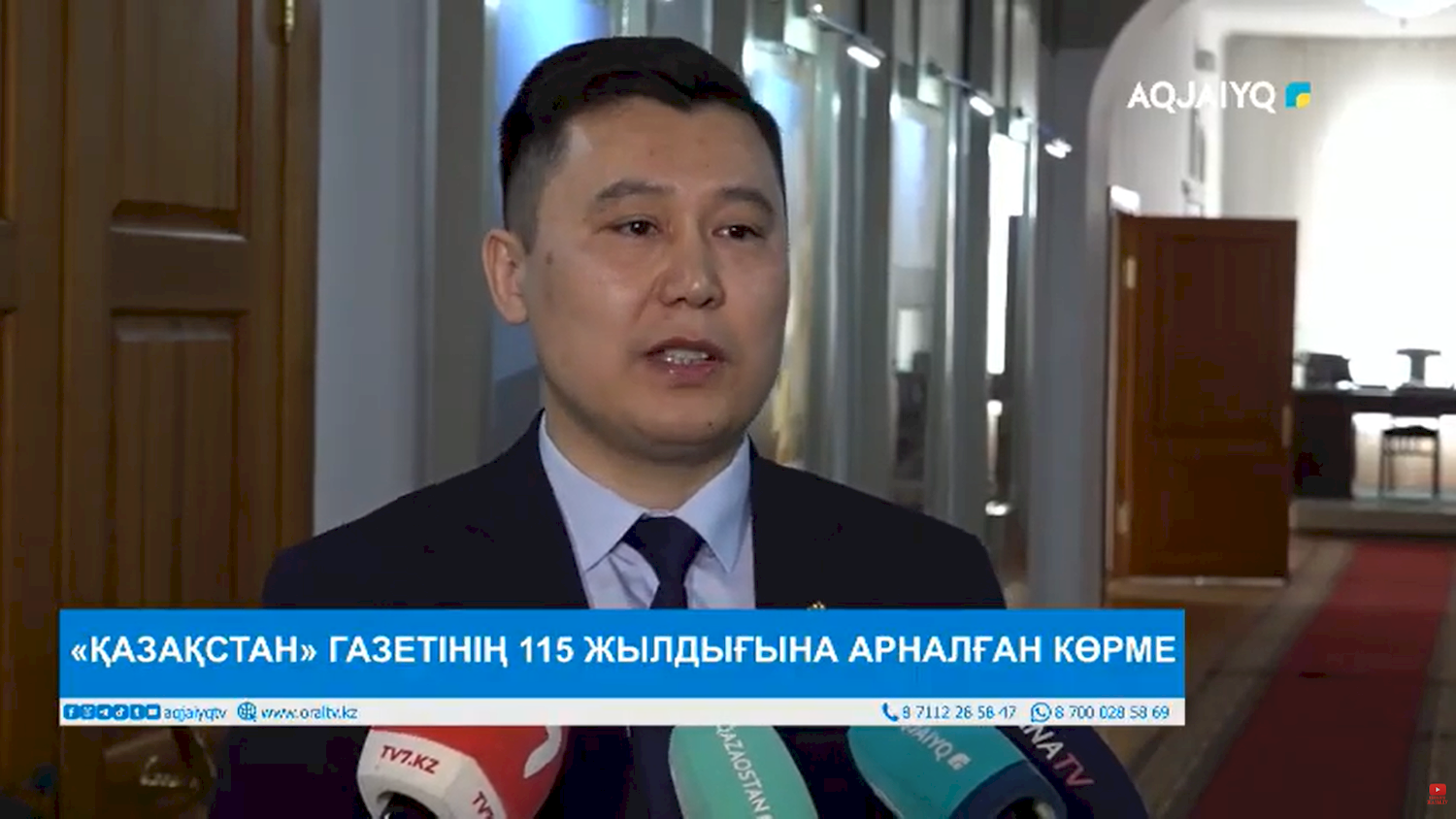
ORAL. Kazinform — The confiscation campaigns of the 1920s and 1930s were among the gravest crimes in human history. Zhantas Safullin, head of the DANA Centre and a member of the working group on the rehabilitation of victims of political repression in West Kazakhstan Region, spoke to a Kazinform correspondent about this subject.
— Zhantas Nabiollauly, it is clear that the confiscation campaign inflicted enormous suffering on our people. Could you begin by discussing its consequences?
— Yes. In terms of its absurdity, the violation of human rights, the number of victims and the severity of its consequences, the confiscation campaign can be compared with other campaigns of persecution and wars, even the world wars. Soviet confiscation was not simply the seizure of property from a particular section of the population. It was an entire complex of measures accompanied by other unlawful actions carried out before, during and after the confiscations themselves. More specifically, those targeted were subjected not only to the confiscation of their property but also to various taxes and levies, restrictions on their civil rights — including the loss of the right to vote and stand for election, and restrictions on freedom of movement within the country — as well as exile, compulsory labour, persecution of relatives and children, imprisonment and other unlawful punishments. The issue of confiscation must therefore be considered, researched and assessed comprehensively and on a broad scale, rather than being regarded merely as the seizure of property.
— The regional commission for the full rehabilitation of victims of political repression is also working in West Kazakhstan Region. Have you encountered previously unknown information during your research?
— Research into victims of political repression among kulaks, wealthy Kazakhs known as bais, semi-feudal groups and peasants in the region who have not yet been rehabilitated has been conducted at the Central State Archive in Almaty, the Presidential Archive of the Republic of Kazakhstan, the state archives of West Kazakhstan and Aktobe regions, and the Special State Archive of the Information and Analytical Centre of the West Kazakhstan Regional Police Department.
The confiscation campaign officially began on 27 August 1928, with the publication of the resolution (decree) of the Central Executive Committee and the Council of People’s Commissars of the Kazakh Autonomous Soviet Socialist Republic, “On the Confiscation of Bai Households”. On 30 August, special instructions were issued for implementing the resolution. In 1928, the number of wealthy households to be subjected to confiscation was specified for each district:
| No. | District | Total | Group 1 | Group 2 |
|---|---|---|---|---|
| 1 | Semey | 88 | 77 | 11 |
| 2 | Pavlodar | 45 | 39 | 6 |
| 3 | Karkaraly | 58 | 50 | 8 |
| 4 | Akmola | 62 | 57 | — |
| 5 | Petropavl | 44 | 39 | 5 |
| 6 | Kostanay | 65 | 55 | 10 |
| 7 | Oral | 71 | 56 | 15 |
| 8 | Guryev | 40 | 35 | 5 |
| 9 | Aktobe | 60 | 51 | 9 |
| 10 | Kyzylorda | 40 | 35 | 5 |
| 11 | Syr Darya | 69 | 60 | 9 |
| 12 | Almaty | 80 | 70 | 10 |
In addition, the authorities designated the districts to which those subjected to confiscation would be exiled:
- from Zhetisu and Syr Darya districts to Oral District;
- from Oral District to Zhetisu District;
- from Guryev District to Petropavl District;
- from Karkaraly District to Kostanay District;
- from Semey District to Syr Darya District;
- from Pavlodar District to Aktobe District;
- from Kyzylorda District to Aday District;
- from Petropavl District to Aktobe District;
- from Akmola District to Guryev District;
- from Aktobe District to Karkaraly District;
- from Kostanay District to Semey District.
After secretly identifying the wealthy individuals who were to be subjected to confiscation and exile, along with those considered dangerous to the Soviet authorities, government bodies began their official public activities. Special representatives were first sent to each district to organise meetings with the population, including the poor. They explained the objectives of the new campaign and urged people to take an active part in it. This agitation and propaganda work was scheduled to take place between 3 and 20 September 1928. The confiscation of livestock and property was to begin on 21 September and be completed by 1 November of the same year.
In accordance with the plan drawn up before the campaign began, a resolution of the Oral District Executive Committee concerning confiscation and exile was published in the newspaper Qyzyl Tu on 20 September 1928.
The resolution named 71 wealthy individuals in Oral District whose property was to be confiscated in 1928. From that point onwards, the confiscation campaign, which laid the principal foundations for the mass deaths of people from starvation, gathered momentum. The newspapers Qyzyl Tu and Krasny Ural published organised material supporting the resolution, and an active propaganda campaign began among the population.
It would be useful to reproduce the list itself.
Group One
| No. | Name | District |
|---|---|---|
| 1 | Dosqalyuly Shamaq | Azgyr |
| 2 | Otegenuly Baqy | Azgyr |
| 3 | Omaruly Shapen | Azgyr |
| 4 | Mambetuly Aubakir | Azgyr |
| 5 | Boldianuly Bomash | Azgyr |
| 6 | Algazyuly Bektileu | Azgyr |
| 7 | Omaruly Latip | Azgyr |
| 8 | Yesenbaiuly Maqash | Azgyr |
| 9 | Algazyuly Koptileu | Azgyr |
| 10 | Omaruly Sharmen | Azgyr |
| 11 | Gabbasuly Imangazy | Azgyr |
| 12 | Mashekenuly Khalyq | Azgyr |
| 13 | Muqatuly Muqambetiar | Azgyr |
| 14 | Balqashuly Sati | Azgyr |
| 15 | Maqashuly Oteshgali | Azgyr |
| 16 | Dosqaliuly Gusman | Azgyr |
| 17 | Absatiruly Qazhybai | Azgyr |
| 18 | Baianasuly Otepali | Azgyr |
| 19 | Tagai baiuly Musagali | Azgyr |
| 20 | Shobaiuly Zulqash | Azgyr |
| 21 | Umbetuly Qabi | Azgyr |
| 22 | Gylmanuly Raqym | Karatobe |
| 23 | Shauildikuly Oteqozha | Karatobe |
| 24 | Shauildikuly Qali | Karatobe |
| 25 | Orynbaiuly Zhumagali | Karatobe |
| 26 | Dostanuly Bisali | Karatobe |
| 27 | Zholamanuly Zhalmaganbet | Karatobe |
| 28 | Bekbatyruly Zhanai | Karatobe |
| 29 | Yesengululy Topash | Zhanakala |
| 30 | Zaliuly Yrysgali | Zhanakala |
| 31 | Sabyruly Gumar | Zhanakala |
| 32 | Qubyluly Zhumazhan | Zhanakala |
| 33 | Zhumaliuly Qarzhau | Zhanakala |
| 34 | Siyquly Magaz | Zhanakala |
| 35 | Omaruly Salyq | Zhympity |
| 36 | Beiimuly Kobes | Zhympity |
| 37 | Muqambetuly Yerzhan | Zhympity |
| 38 | Aqmetuly Qabyl | Zhympity |
| 39 | Zhusipqaliuly Satybaldy | Slamikhin |
| 40 | Shangereiuly Bizhan | Slamikhin |
| 41 | Shangereiuly Tausaq | Slamikhin |
| 42 | Shangereiuly Dusipqali | Slamikhin |
| 43 | Ospanuly Koshen | Slamikhin |
| 44 | Nugymanuly Gabdolla | Slamikhin |
| 45 | Biraliuly Orazbai | Slamikhin |
| 46 | Orazaliuly Zharas | Slamikhin |
| 47 | Zhusipuly Shyntai | Orda |
| 48 | Bokeikhanuly Maqambet | Orda |
| 49 | Bekesuly Musagali | Orda |
| 50 | Meruert, daughter-in-law of Azhaqmet | Orda |
| 51 | Asiraliuly Beken | Orda |
| 52 | Aitymbetuly Yeshban | Shalkar |
| 53 | Kobeyuly Abdolgaziz | Talobki (Talovka) |
| 54 | Quatuly Zhumagali | Taipaq |
| 55 | Yesen-amanuly Kobesh | Zavralny (Zauralny) |
| 56 | Ozbekuly Otemis | Shezhin |
Group Two
| No. | Name | District |
|---|---|---|
| 1 | Qaiyrlyuly Qozhantai | Azgyr |
| 2 | Shombaluly Qaragan | Karatobe |
| 3 | Azhibaiuly Shuqan | Karatobe |
| 4 | Bugaiuly Bakir | Zhanakala |
| 5 | Qudaibergenuly Nagym | Zhanakala |
| 6 | Yelamanuly Nogaibai | Zhympity |
| 7 | Suyinshaliuly Maqmut | Zhympity |
| 8 | Qosdauletuly Quanai | Zhympity |
| 9 | Sananuly Qaumet | Slamikhin |
| 10 | Tileubergenuly Sergazy | Orda |
| 11 | Amanuly Qusaiyn | Shalkar |
| 12 | Qarataiuly Aron | Shalkar |
| 13 | Kusepqaliuly Dauletsha | Taipaq |
| 14 | Baimuqanuly Qospan | Taipaq |
| 15 | Zhunisuly Kenzhegara | Shezhin |
The livestock and property of the wealthy individuals targeted by the campaign were confiscated first. Decisions were then issued ordering their removal from their places of residence, and each person subjected to confiscation was given a special numbered certificate. They were required to register at their destination using this certificate.
Based on the list of the first 71 individuals subjected to confiscation in 1928, an enquiry was submitted to the Special State Archive of the Information and Analytical Centre of the West Kazakhstan Regional Police Department to establish whether criminal case files concerning them were held there. It was found that the archive contained criminal case files relating to 11 of the 71 individuals.
They were:
- Algazyev Bektleu, born in 1868;
- Karatoyev Aron, born in 1874;
- Kudaybergenov Nurum, born in 1893;
- Yusupov Shintai, born in 1893;
- Omarov Salykh, born in 1868;
- Kosdavletov Kuanai, born in 1863;
- Bukeykhanov Makhambet, born in 1891;
- Omarov Sokur-Latyf, born in 1884;
- Mukatov Mukhampediar, born in 1865;
- Amanov Khusain, born in 1873;
- Dzhunusov Kenzhegara, born in 1871.
The names are reproduced in the forms given in the archival records.
Under the resolution approved by the higher authorities, those whose property had been confiscated in Oral District were supposed to be exiled to Zhetisu District. However, archival documents show that, under the record of a special meeting of the OGPU Collegium, in March and April 1929 Algazyev Bektleu, Amanov Khusain, Bukeykhanov Makhambet, Dzhunusov Kenzhegara, Mukatov Mukhampediar, Omarov Sokur-Latyf and Yusupov Shintai were prohibited for up to three years from residing in Moscow, Leningrad, Kharkov, Kyiv, Odesa, Rostov-on-Don and the districts of Central Asia. They were exiled to Penza.
— Were all those subjected to confiscation actually wealthy individuals?
— No. Confiscation and exile were directed not only against wealthy people but also against those who enjoyed authority and respect among the population and those who opposed or did not support Soviet policies. According to their social position, we classified those subjected to confiscation as local Kazakh bais, influential Kazakh figures, descendants of khans and sultans, members of Alashorda and those opposed to the establishment of the Soviet system, religious figures, people who had held government positions under Tsarist rule, and merchants. We consequently established that 35 of the 71 people subjected to confiscation in 1928 did not belong to the category of wealthy bais. Their property was confiscated and they were driven from their homeland because of their origins and political views.
If we examine the social classification of the first 71 people subjected to confiscation in West Kazakhstan Region in 1928, 36 were local Kazakh bais and influential Kazakh figures (including one woman), four were descendants of khans and sultans, five were members of Alashorda or held views opposed to the Soviet system, eight were religious figures, 17 had held government positions under the Tsarist administration, and one was a merchant.
That year, 2,779 horses, 17,591 cattle, 34,043 sheep and 1,459 camels were confiscated from wealthy bais.
Those implementing the confiscation campaign violated the law so flagrantly that confiscation and exile were carried out under the aforementioned resolution rather than the Criminal Code. In fact, the 1926 Criminal Code of the Russian Soviet Federative Socialist Republic did not make being a bai or a kulak a punishable offence. In other words, being a bai or a kulak was not a crime. Consequently, persecuting people solely because they were bais or kulaks contravened even the legislation in force at the time.
Another important point is that confiscation must be considered alongside the campaigns that preceded it and were closely connected with it.
The West Kazakhstan Regional Archive holds documents dating from 1922 that record individuals involved in barymta in our region. At first glance, it seems difficult to understand, even strange, why the Soviet government, which had only just begun to establish itself and was already overwhelmed with urgent problems, devoted attention not to the White Guards or members of Alashorda, but to those engaged in barymta, who had no involvement in politics. After all, viewed superficially, these people were not enemies of the Soviet authorities. Since their actions were directed mainly against those who owned livestock and possessed wealth, they might even have appeared to be allies with a common enemy. From this perspective, the Bolsheviks should have had no reason to concern themselves with those engaged in barymta, whom they deliberately misrepresented as thieves and horse thieves.
— What, then, was actually happening?
— An analysis of the available documents has shown that, although confiscation began as a campaign in 1928, the idea had been conceived much earlier. The Bolsheviks pursued their policies in stages. They first eliminated factors and social groups that might obstruct their activities. Their decision to target those involved in barymta was no coincidence.
Those who practised barymta were among the most active and resolute members of society and formed part of the traditional Kazakh institution of justice. Barymta is a distinctly Kazakh concept, with no equivalent among other peoples. Although its meaning was later distorted, barymta was neither theft nor robbery. It involved driving away livestock belonging to a party believed to have committed an injustice and holding the animals as security until justice had been restored. Not everyone could participate in barymta: it was an undertaking for strong and courageous men. Such individuals, capable of resisting injustice, were clearly unlikely to tolerate the oppressive policies of the Soviet system, including confiscation, exile and similar measures. That is why this active section of society was the first to be identified and placed on official lists.
For example, a list compiled in 1922 recorded the names of 17 people identified as participants in barymta.
Thus, the Bolsheviks first eliminated the courageous men who might rise in resistance — those involved in barymta. They then destroyed the moral barriers represented by people capable of saying that something was wrong: the principles of conscience and the institution of religion. It would have been impossible to carry out collectivisation among people who firmly upheld the values of honour, moral responsibility and good deeds.
Mullahs, who helped preserve moral principles, were separated from the wider population, thereby diminishing their influence on spiritual life. The authority of the biys, the traditional Kazakh judges and leaders, as well as that of the aristocracy, khans and sultans, had already been undermined by the policies of the Russian Empire long before the establishment of Soviet rule. Only remnants of those institutions remained.
Thus, in the Kazakh steppe, where the ruling aristocracy and biys had disappeared, where the courageous men who could defend the people — those involved in barymta — had been eliminated, and where the mullahs who might have called people to order had been separated from their communities, the most influential sections of society had been removed. The final “enemy”, the wealthy, was then handed over to the mercy of the mob. This mob consisted of the most morally degraded section of the poor. Without such a mob, and without the prior elimination of the obstacles described above, it is doubtful that the Soviet government could have carried out the confiscation campaign.
Archival documents have also survived showing that the children of people classified as bais or kulaks were persecuted even when studying in other regions and were expelled from educational institutions.
The total number of bais and kulaks identified as having been subjected to repression is 1,162.
More specifically, in 1928, 80 people became victims of criminal and administrative repression and confiscation and were exiled from their places of residence.
In 1929, of 55 people, one was exiled as a victim of criminal and administrative repression and confiscation, another was exiled as a victim of the grain procurement campaign, and 53 were subjected to administrative penalties.
In 1930, of 610 people, eight were convicted and 453 were exiled. One person was subjected to administrative proceedings. Among the victims of the grain procurement campaign, two were convicted, 144 were exiled and two received administrative penalties.
In 1931, 367 people suffered as a result of collectivisation, of whom 365 were exiled and two received administrative penalties.
In 1932, 51 people were exiled as victims of criminal and administrative repression and confiscation.
Thus, of the 1,162 people, 594 were victims of criminal and administrative repression and confiscation, 366 were victims of collectivisation, and 202 were victims of the grain procurement campaign.
In conclusion, the rehabilitation of victims of confiscation is particularly important for restoring the health of public consciousness, preventing class-based and social hostility and conflict, and advancing desovietisation, decommunisation and decolonisation. Unless we condemn the confiscation campaign — one of the most horrifying events of the Soviet period in Kazakh history — and rehabilitate those who suffered because of it, the danger of similar atrocities being repeated will remain. Carrying out this work systematically, competently and resolutely will increase the opportunities for our state and society to develop through evolution rather than revolution.
— Thank you for speaking with us. We wish the Commission every success in its work.
Interviewer: Yelzhan Yeraly
Kazinform
Translated from Kazakh.