Throughout the 190-year history of the West Kazakhstan Regional Museum of History and Local Lore, a comprehensive inventory covering all items held in its collections has never previously been undertaken. This is a significant issue that requires particular attention in the management and preservation of museum collections.
The museum’s greatest asset is the historical and cultural heritage preserved in its collections. Every museum object has its own history, scientific value and information to pass on to future generations. It is therefore our responsibility to maintain accurate records of these objects, monitor their condition and ensure that all relevant documentation is properly maintained.
The central collections of the regional museum currently contain more than 126,000 collection items. This figure does not include the holdings of the museum’s city and district branches. All museum objects held by these branches also form part of the regional museum’s unified collection. Including these holdings, the total number of collection items exceeds 200,000.
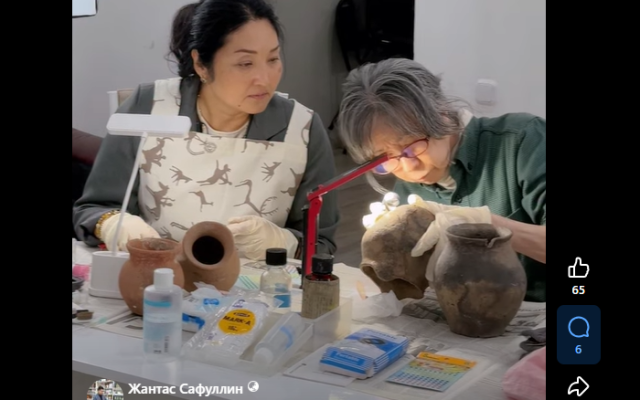
Such an extensive heritage collection requires complete and accurate records. It is essential to conduct a thorough examination to verify the physical existence of every museum object listed in the documentation, assess its condition and establish whether the recorded information corresponds to the actual holdings.
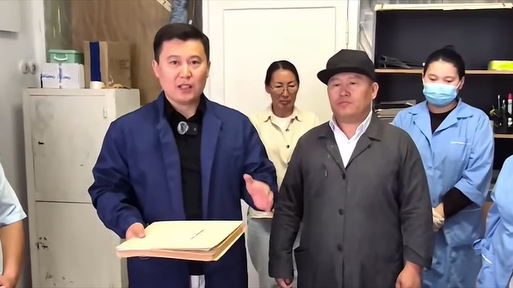
To this end, on 7 August this year, I issued a special order establishing a commission to conduct a comprehensive inventory of the museum collections. The practical work began in mid-August.
To date, the commission has completed the inventory of approximately 1,500 museum objects. The initial stages have already demonstrated the complexity and time-consuming nature of this undertaking. Accordingly, at the commission’s meeting on 9 October, we considered ways to improve the efficiency of the inventory process, accelerate its progress and introduce new organisational approaches. Following our discussions, I decided to adopt a different method of conducting the inventory.
Particular attention will be paid to the completeness of collection documentation, the accuracy of inventory records, the condition of museum objects and the reasons for any discrepancies identified.
The inventory has begun with the regional museum’s central collections. At subsequent stages, we plan to carry out a comprehensive inventory of the collections held by all city and district branches. This work will be organised in phases and will cover every collection item within the regional museum system.
To ensure that this extensive undertaking is carried out to the required standard, we have had to temporarily restrict the activities of the museum’s collections department. This measure is necessary because interruptions arising from interactions with external visitors during the inventory process could lead to errors. Furthermore, the volume of work is considerable, while the number of available staff is limited.
As a result of the inventory, we aim to establish a unified, verified and accurate record of all museum objects held across the regional museum and its branches. This should provide a solid foundation for the further digitisation of museum collections, the systematic organisation of collection documentation, improvements in storage conditions and the development of scientific research.
The museum’s 190th anniversary is not merely an occasion to celebrate its history and honour its achievements. It is also a time to take responsibility for the present condition of the invaluable heritage accumulated over nearly two centuries. We have a duty to pass on to future generations not only the museum building and its history, but also every object entrusted to its care, supported by complete and accurate records, appropriate scholarly documentation and proper conditions for its long-term preservation.
https://www.facebook.com/share/v/19VQnoem2b/
Translated from Kazakh.