As time passes, the excitement and joy surrounding the arrival of copies of our newspapers’ earliest issues may fade into history, and what now seems remarkable may come to be taken for granted. I therefore decided to record the story of our journey, which holds a special place in the history of these newspapers. My colleague Kazbek Kuttymurattuly has already written about our visit to Moscow. His article included the words: “We spent half of our first day in Moscow waiting and the other half searching through dusty newspaper volumes.” Rather than repeat what he has already described, I would like to share some of the details that were not included in his account.
This year, we proudly celebrate the 95th anniversary of our regional newspapers, Oral Öñiri and Priuralye. Yet we had no bound collections of their early editions, not even copies of their very first issues. In the 1960s, copies of those early issues had been obtained from Russia, but they were subsequently lost during the upheaval of the first years of Kazakhstan’s independence. At that time, the editorial offices lost their printing facilities and premises and were forced to move from place to place.
We therefore decided that one of the most important tasks in preparing for the anniversary would be to locate the earliest issues and bring copies home. Since the materials we needed could not be found in any archive or library in Kazakhstan, we set off for Moscow. During that journey, I found myself reflecting on events that had taken place a century earlier.
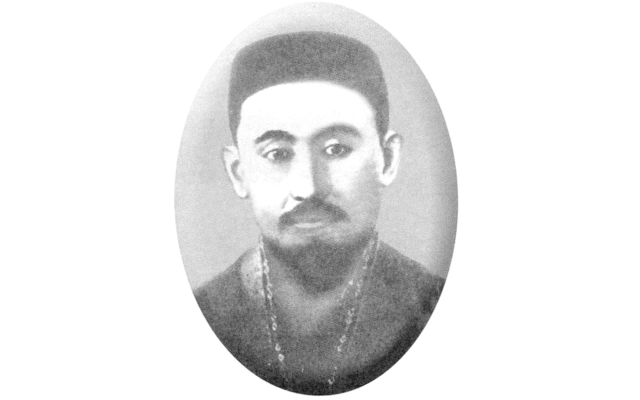
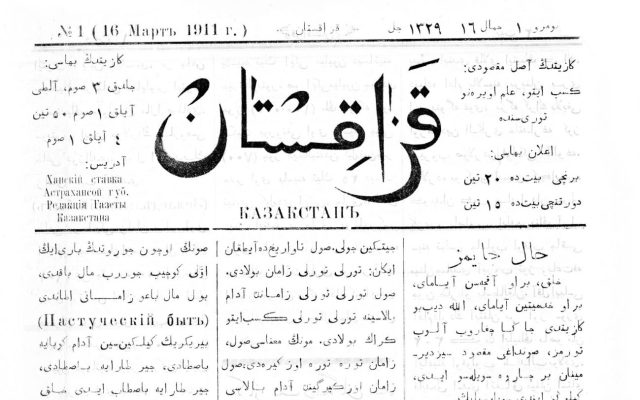
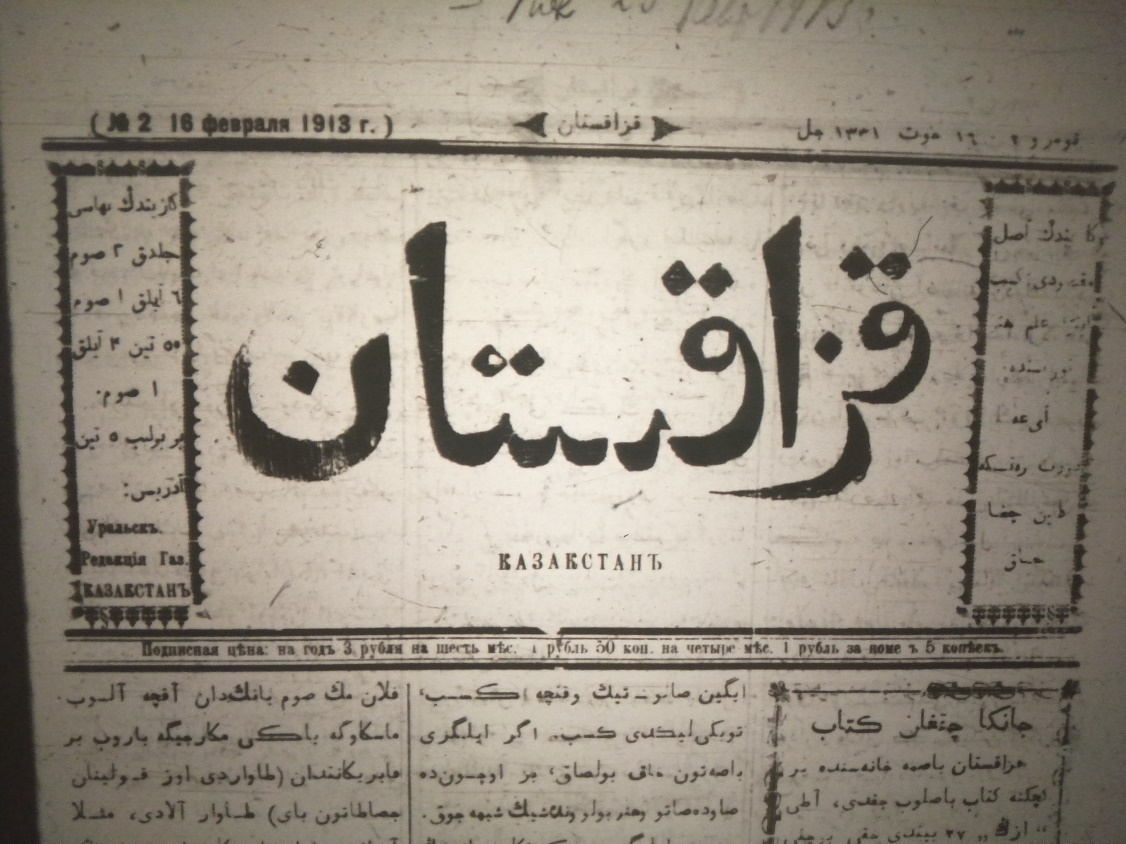
In issue No. 8 of the newspaper Qazaqstan (Kazakhstan), published on 6 March 1912, Gumar Karash wrote in an article entitled “Baku”:
“Last year, in 1911, at the beginning of the month of Zauza, we were deeply concerned about how to establish the Qazaqstan newspaper and set it firmly on its feet. Following a decision reached among our people, the two of us set out in the name of Allah for Baku, in search of Haji Zeynalabdin Taghiyev. Many said, ‘Those two idle, reckless fellows have left home.’ Yet we knew that we also had kind-hearted friends who sincerely prayed for us, wishing us a successful journey, that we might set out lightly and return with much to show for it. In recognition of our good intentions, Allah granted us success. The Haji welcomed us warmly and donated one thousand roubles to Qazaqstan…”
One hundred and one years earlier, Gumar Karash and Eleusin Buyrin, the organisers of a pioneering newspaper that sought to awaken public consciousness and encourage the Kazakh people to pursue education and scientific knowledge, had travelled to Baku, Azerbaijan. They had paid for the journey themselves, seeking to borrow the funds needed to publish a newspaper for their people.
A century had passed, and circumstances had changed beyond recognition. Now four of us were setting out for Moscow in search of the old newspaper volumes that preserved the words of Gumar Karash and his contemporaries.
Our situation, however, was entirely different. We were not travelling to borrow money, nor was anyone paying for the journey out of their own pocket. All our travel expenses were covered by the state. This was possible because of independence — the cherished dream of our ancestors, now fulfilled.
Our group consisted of Kazbek Kuttymurattuly, a special correspondent for Oral Öñiri; Alexander Kupriyenko, a photojournalist for Priuralye; videographer Temirbolat Tokmambetov; and myself. Each of us had a specific responsibility. Kazbek was to read documents written in the Arabic script and identify the materials we needed. The photojournalist would carefully photograph the documents we found, while the videographer would record footage for a future documentary film.
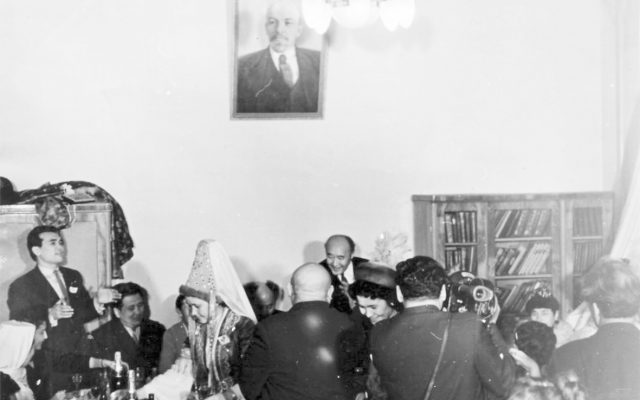
The previous year, we had made a special trip to Moscow to meet Nadezhda Karasheva, Gumar Karash’s granddaughter, and had enjoyed a long, open conversation with her. We decided to visit her again. After arriving in Moscow and settling into our accommodation, we went to see her. As always, she welcomed us warmly. We talked for hours and returned to our lodgings only after sunset.
Early the following morning, we headed for the State Archive of the Russian Federation. Before leaving Kazakhstan, we had exchanged emails and spoken by telephone with its staff, who confirmed that the newspaper issues we were looking for were held there. However, they had declined to send copies, insisting that the matter could not be resolved without a personal visit.
I went directly to Tamara Buyakevich, head of the archive’s research library. After explaining the purpose of our journey in detail, I asked whether my colleagues and I could begin our work. While we were speaking, she arranged for the original bound volumes of the newspapers to be brought to us. Seeing them with my own eyes and holding them in my hands filled me with joy. But my excitement was short-lived.
“Your photographer and videographer cannot enter the archive with their equipment,” she said. “You may come in without it and examine the materials you need.”
I explained that I had not travelled all this way merely to look through old newspapers. I had come to take copies home.
“In that case, could you arrange for the copies to be made? I am prepared to pay for them,” I suggested.
“Two hundred roubles per page. Tell us how many pages you need and place an order. But our specialist responsible for photographic reproductions has a very heavy workload, so I cannot say when we would be able to send the copies to you.”
After travelling such a long distance, we now faced the possibility of returning home empty-handed. With the newspapers right before my eyes, I was determined to find a way to obtain copies.
There is a Kazakh saying: “People find common ground through conversation, just as horses do through neighing.” How true those words are! But how could I establish a closer connection with someone on whose decision so much depended? Had she been Kazakh, I might have asked about her clan or ancestors to find some common ground. Since that was not the case, I decided to approach the conversation differently.
“Where did your ancestors come from?” I asked. “Did your family have any connection with Kazakhstan?”
I had guessed correctly: her ancestors were indeed from Kazakhstan. She began telling me where they had lived, where they had come from and why they had eventually moved to Russia. As our conversation continued, the atmosphere gradually became warmer.
We eventually turned to politics. I spoke about the friendly relations between the presidents of Kazakhstan and Russia and the close ties between our countries. I mentioned that West Kazakhstan Region borders five Russian regions and that our regional governor had signed memoranda of cooperation with their leaders the previous year. We discussed various aspects of relations between the two countries and agreed that ordinary people should help one another whenever possible, turning good neighbourly relations into genuine friendship.
To cut a long story short, we eventually returned to the matter that had brought us there. This time, Tamara Buyakevich’s response was entirely different. We reached an agreement: the archive staff would prepare high-quality copies of the first three issues of our newspaper and hand them over that very day. Our own specialist would also be allowed to enter with his equipment and photograph the required documents. Moreover, the copying fee would be reduced from 200 to 100 roubles per page.
My colleagues went inside and immediately set to work. The most demanding part of the task fell to Sasha Kupriyenko and Temirbolat Tokmambetov. Producing good photographic copies of old newspapers without specialised supporting equipment is far from easy. Only a professional can fully appreciate the difficulty of positioning a camera on a tripod, keeping the newspaper pages flat and achieving the correct focus.
Time was also limited. Nevertheless, the men rose to the challenge. They worked in the Russian state archive as confidently as if they were in their own workplace, even forgetting that they had not eaten anything since morning.
By the time the archive closed that evening, our work was complete. Our USB drive contained copies of the first three issues of Izvestiya (News), published on 17, 19 and 21 November 1918; issues Nos. 1–24 of Kirgizskaya Pravda (Kazakh Truth), published between 1 January and 7 February 1919; and several issues of Yaitskaya Pravda from 1919.
Although we had gone without food all day, the satisfaction of what we had found was enough to make us forget our hunger. We returned to our accommodation in excellent spirits.
The following day took us to the Department of Newspapers of the Russian State Library, located at 15 Bibliotechnaya Street in Khimki, near Moscow. There, too, an unexpected difficulty awaited us.
Security was strict at the Russian institutions we visited. There were guards at the entrances, and visitors had to undergo security checks. Now imagine four men arriving with large bags containing photographic and video equipment.
The library attendant, summoned to meet us, was clearly alarmed by the sight. We had barely greeted her and begun explaining why we had come when she exclaimed:
“Are you planning to rob a bank? This is a library!”
We did our best to explain the purpose of our visit.
“If you want to take photographs or make video recordings, you must submit a written request in advance. The management will need several days to consider it. And since you are foreigners, permission may not be granted at all!”
We knew that the original issues of Qazaqstan, published between 1911 and 1913, were held there. We also hoped that the library might have copies of Durystyq Zholy (The Path of Truth), a newspaper published in 1919.
Yet we had reason to worry. In the early 1990s, Maksat Tazh-Murat, a scholar researching Gumar Karash, had travelled to Russia specifically to examine Qazaqstan. He had been told that the building’s basement had flooded and that the newspapers were stored there. On that pretext, he had not been allowed to see the materials. Remembering this incident, we began to fear that our own visit might also prove unsuccessful.
“Could you at least inform your management that we have travelled a long way specifically to examine these documents?” we suggested. “If possible, we would be happy to explain our request to the director ourselves.”
The attendant made no attempt to conceal her displeasure but nevertheless went to pass on our request. Ten or fifteen minutes later, she returned. We never learned whom she had spoken to, what had been said or who had authorised the decision. But the woman who came back seemed completely transformed.
Her earlier irritation had disappeared. Somehow, she had obtained permission for everything we had requested. She now welcomed us inside with a smile. We exchanged astonished and delighted glances. Silently, I thought, “Perhaps Allah is helping us. May our work be successful.”
Ordinarily, visitors to the library were allowed to consult documents only in the designated reading room. We, however, were permitted to explore the storage areas and rooms housing rare collections.
At last, we were able to hold the original bound volumes of Qazaqstan in our hands. We carefully turned their pages, examining them one by one, and were pleased to see how well they had been preserved.
And we found Durystyq Zholy too!
We were able to photograph and film everything we needed inside the nine-storey building. By evening, we had saved complete copies of eleven issues of Durystyq Zholy, published between 20 February and 10 July 1919, onto discs and USB drives. With our work completed, we returned from Khimki to Moscow.
Every reader should understand the special place Durystyq Zholy occupies in the history of the Kazakh national press.
At a time of exceptional hardship and danger, Kazakh intellectuals came together at great personal risk to publish a newspaper in their mother tongue. Their position was clear: “Our mother tongue is Kazakh, and therefore it is enough for our press to be published entirely in Kazakh.”
The newspaper opened with Gumar Karash’s poem Durystyq Zholy (The Path of Truth).
This was how an earlier generation — people of firm convictions, clear principles and rich spiritual lives — stood resolutely against adversity in their determination to preserve their nation’s identity.
We returned home with one hope: that we might at least pass on the legacy of our forebears to future generations.
Zhantas NABIOLLAULY
General Director, Zhaiyq Press LLP
Oral — Moscow — Oral
“Oral oniri” newspaper