Last year, an interview with Nadezhda Karasheva, the granddaughter of the Kazakh poet, philosopher and educator Gumar Karash, who lives in Moscow, was published by numerous media outlets across Kazakhstan. The thoughtful and wide-ranging conversation attracted considerable interest among readers. Our newspaper recently published an article about zheti ata, the Kazakh tradition of knowing seven generations of one’s ancestors. Following up on that subject, we sent several questions to Nadezhda Burkhanovna via the internet. Her reply arrived promptly, and we are pleased to share this brief interview with our readers.
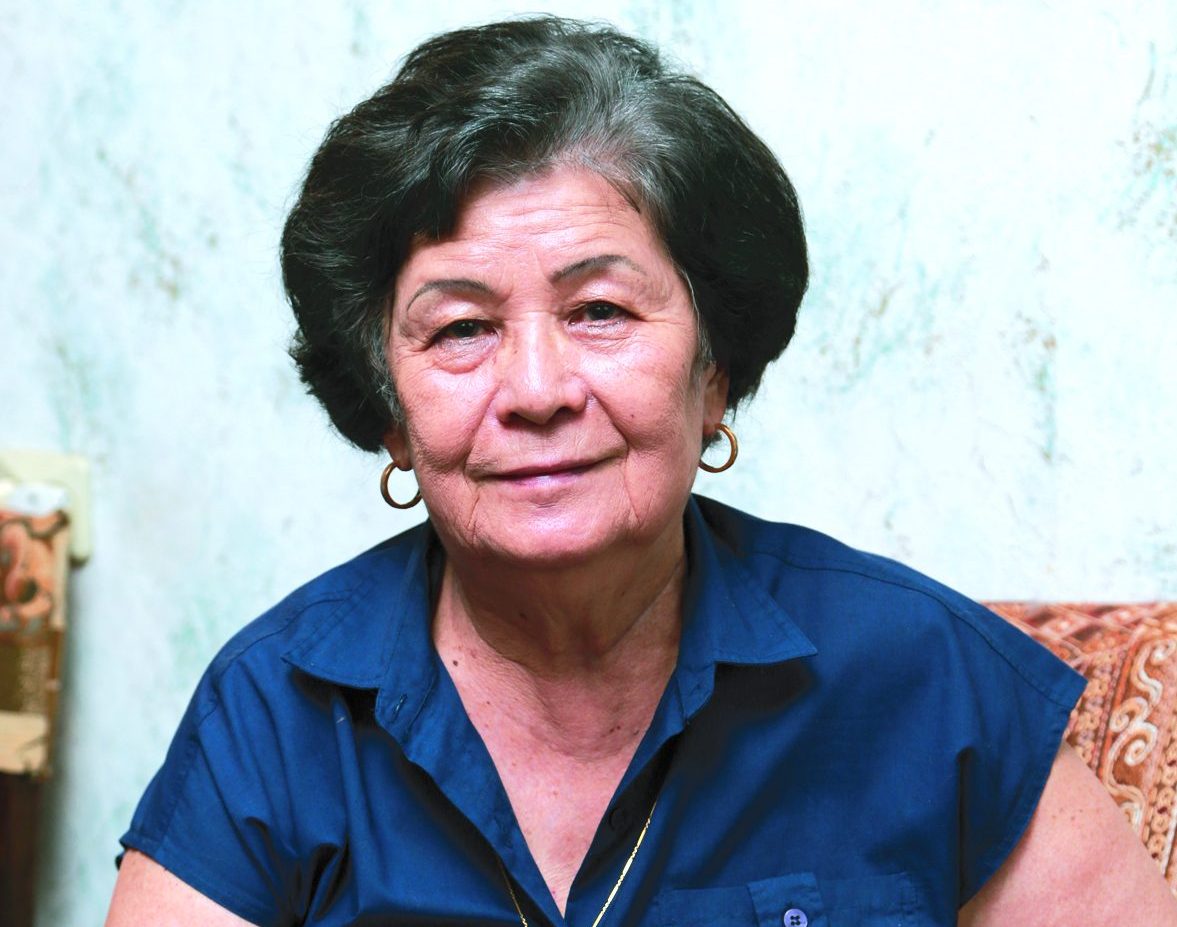
Nadezhda Burkhanovna Karasheva is a granddaughter of Gumar Karash. She was born in 1930 in Oral (Uralsk), Kazakhstan. In 1948, she graduated from a Russian-language secondary school in Almaty with a gold medal, and in 1953 she graduated with honours from the Oriental Studies Department of the Faculty of Philology at Lomonosov Moscow State University. Between 1953 and 1962, she worked at the Institute of Language and Literature of the Academy of Sciences of the Kazakh SSR, where she defended her Candidate of Sciences dissertation entitled Grammatical Features of Kazakh Literary Writing in the Early Twentieth Century (Based on Materials from the Aiqap Journal). She has lived in Moscow since 1963. At the time of the interview, she was serving as academic secretary at the Philological Centre of the Russian Academy of Education. She is the author of more than 120 publications on linguistics and language-teaching methodology. She has two daughters and a grandchild.
— What led you to move to Moscow?
— We moved to Moscow in 1962 because of my husband’s work. I have lived here ever since, for almost sixty years now.
— What have you done to study and promote your grandfather’s legacy?
— When we were children, my father, Burkhan, discouraged us from talking too much about our grandfather. When his works were removed from school textbooks, he would say, “Whoever had his works removed, the time will come when they are restored to their rightful place. But you must not get involved.” As a result, I knew relatively little about my grandfather’s literary legacy when I was young.
In the 1960s and 1970s, following Gumar Karash’s political rehabilitation, a number of publications about his life and work began appearing in the Kazakhstani press. However, they were all written in Kazakh. Consequently, much of the republic’s multiethnic population, including Russian-speaking intellectuals and young people, remained unfamiliar with the poet and his legacy. The fact that his writings produced before 1917 were written in the Arabic script presented an additional difficulty.
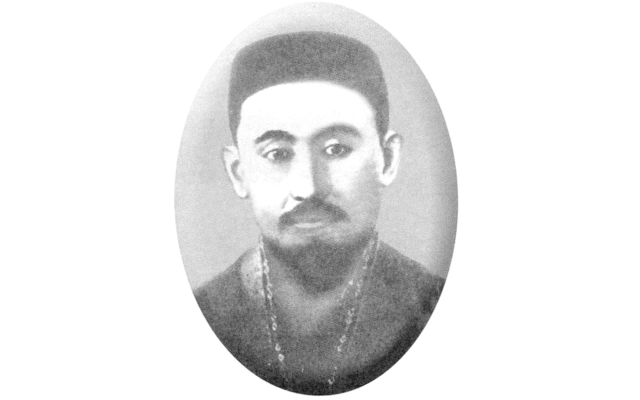
As the granddaughter of Gumar Karash — a poet, thinker, publicist and public figure — I wanted to introduce his legacy to Russian-speaking readers. In 2011, I prepared and published a short book entitled Gumar Karashev: A Literary and Biographical Essay (Almaty, 2011, 81 pages). It brought together information about his life, his poetry and prose, philosophical reflections, articles and folklore works. Although modest in length, it was the first Russian-language publication to bring together an account of the poet’s life and creative work. I hope it will mark the beginning of a broader effort to translate Gumar Karash’s writings into Russian and other languages, enabling his literary legacy to find its place in the world’s cultural heritage.
— Do you support the Kazakh tradition of knowing seven generations of one’s ancestors, known as zheti ata?
— Like many other peoples, Kazakhs consider it their duty to know their ancestors through seven generations. This subject has interested me since my youth. While living in Almaty, I began gathering information from elderly relatives and other members of our extended family, both close and distant. I learned a great deal from Gumar Azhikeyev, the elder brother of my mother, Fatima, who belonged to the Kazankulak–Azhikey–Iksan family line. I also received valuable information from Basyr, Gumar Karash’s eldest son, and his wife Tanzila, who had an extraordinary memory.
Later, the information I had collected was considerably enriched by Mustafa Ysmagulov, a member of the Berish clan, and Gulzhau Kydyrgaliyeva, Gumar Karash’s granddaughter through Zhanarystan, from the Orazakai clan. Both had taken a personal interest in the poet’s life. They made repeated visits to his native region, collected recollections from his contemporaries and helped clarify some of the lesser-known aspects of his life.
Drawing on these accounts, I compiled my family genealogy, tracing my ancestry back through seven generations. Of course, I cannot claim that every detail is beyond doubt. Only God knows the whole truth. I sent the family tree to all my relatives and asked them to supplement it with whatever information they could provide. I believe that everyone should know their roots and where they come from. After all, as the Kazakh proverb says, “One who knows seven generations of their ancestors will care for the welfare of seven communities.”
— Are you satisfied with how Gumar Karash and his legacy are being studied and promoted in Kazakhstan?
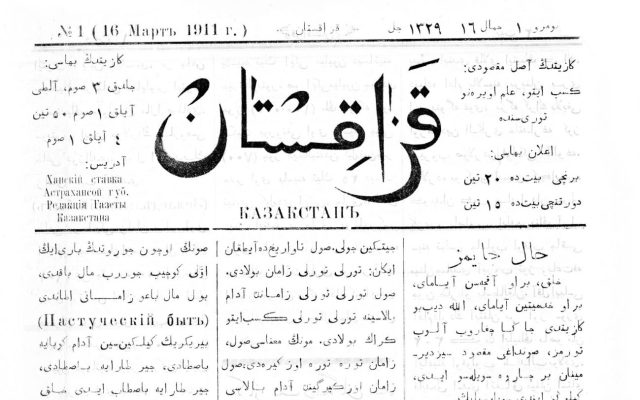
— It would be premature to say that Gumar Karash’s life and literary heritage have been fully explored. After all, only thirty or forty years have passed since his rehabilitation. In recent years, articles have appeared, specialised research has been undertaken, and the collection Zamana has been published. Considerable work has been done in the poet’s native region of West Kazakhstan. A street in Oral has been named after him, and a monument has been erected in his homeland. An excellent commemorative volume was published to mark the centenary of Qazaqstan, the pioneering Kazakh newspaper. It contains information about those involved in publishing the newspaper, including Gumar Karash.
The launch of the historical and educational magazine DANA.kaz has also contributed to a better understanding of the past and present of the Zhaiyq region. In Kaztalov District of West Kazakhstan Region, a school-gymnasium bearing Gumar Karash’s name has been opened, and a monument to him has been unveiled. We also hear about seminars, exhibitions, school competitions and conferences held at city and district level to explore his place and significance in Kazakh national culture.
The range of subjects addressed by Gumar Karash was extraordinarily broad. Beyond poetry, he wrote about national culture, education and enlightenment, philosophy, religion, pedagogy, journalism, law, the transition to a settled way of life, medicine, the position of women in Kazakh society, the mother tongue and many other issues. Much of his work has yet to receive thorough scholarly examination, and his considerable contribution to Kazakh literature and culture has still not been fully recognised. His writings have not been translated into other languages. All this shows how much work remains for scholars studying his life and legacy.
— As a direct descendant of Gumar Karash, how would you assess his contribution to Kazakh literature and culture?
— The scholar Yesmagambet Ismailov offered the following assessment:
“Gumar is a major classical poet who holds an important place in Kazakh literature of the early twentieth century, in the period following Abai. His historical contribution to the development of Kazakh written literature and the formation of its literary language is exceptional. Gumar is a great literary artist, a gifted master and a true craftsman of the written word.”
I consider this a fair assessment and fully agree with it.
— The regional newspapers Oral Öñiri and Priuralye, which are celebrating their 95th anniversary, take pride in the fact that your grandfather was among those who laid their foundations. You are also aware of the newly launched magazine DANA.kaz, whose April issue was dedicated to Gumar Karash. What are your thoughts on the publication?
— Of course, many people are still unaware of the full extent of my grandfather’s achievements. As you know, his works were also subjected to political repression. I am grateful to you for organising a major competition in his name and holding meaningful events dedicated to his memory.
I received the three issues of DANA.kaz that you sent me by post and read them all carefully. I appreciate your work in exploring and promoting the history of our native region, particularly the literary legacy of Gumar Karash.
Personally, I welcome the publication of DANA.kaz. The name also has a special meaning for our family: my granddaughter Dana is a great-great-granddaughter of Gumar Karash! The magazine is printed on excellent-quality paper, and its photographs have rich, vibrant colours. Most importantly, it contains a wealth of thoughtful and informative articles about the past and present of our native Zhaiyq region. I wish the magazine continued growth and prosperity, and many more readers! Thank you so much for remembering me, even though I live so far away.
Originally published in Oral Öñiri, No. 68, 6 June 2013.
Zhantas Nabiollauly
General Director, Zhaiyq Press LLP