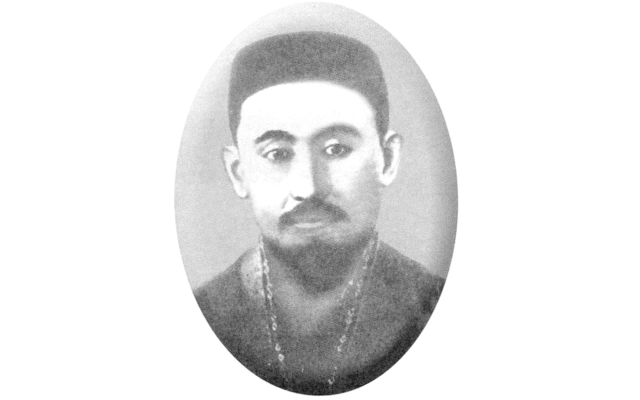
Gumar Karash was one of the most forward-thinking figures of the early twentieth century — a poet, philosopher, religious scholar and educator who lived through one of the most turbulent chapters in Kazakh history. A man whose deeds reflected his words, he devoted his life to enlightening his people and working towards the freedom of his nation.
His profound knowledge of religion enabled him to hold senior religious positions. Yet he later became an outspoken critic of ignorance among certain clerics and turned increasingly towards education and social reform. He made a substantial contribution to both Kazakh oral literature and the development of its written literary tradition.
Karash published several collections of poetry, including Oiga Kelgen Pikirlerim, Badel-Hajy, Bala Tulpar, Aga Tulpar, Karlygash, Ornek, Tumysh and Turymtai, alongside works exploring philosophical questions.
Between 1910 and 1912, he also published Shaiyr, or the Principal Verses of Kazakh Poets and Koksilder, or Verses about Noblemen and Heroes of the Nogai Era, pioneering collections of Kazakh heroic poetry and oral literature.
At a time when there was no newspaper on the Kazakh steppe devoted to the interests of the Kazakh people, he helped establish Qazaqstan, a publication intended to promote education, practical skills and national awareness. He also organised and directed Mugalim, a scholarly journal dedicated to teaching, literacy and the upbringing of children.
His articles, reflections and poetry appeared in widely read publications of the period, including Aiqap, Mugalim and Shora, as well as the newspapers Qazaqstan, Uran, Durystyq Zholy and Qazaq Durystygy. The last two publications were among the predecessors of today’s Oral Öñiri newspaper. He also contributed to Tatar-language periodicals. Through his writing, he encouraged unity, mutual understanding, education and the acquisition of practical skills.
In 1947, however, the Central Committee of the Communist Party of Kazakhstan adopted a resolution concerning what it described as serious political errors in the work of the Institute of Language and Literature of the Academy of Sciences of the Kazakh SSR. Gumar Karash was denounced as an alleged representative of the bourgeois-nationalist Alashorda movement. His name was removed from school textbooks, and the study and promotion of his literary legacy were prohibited.
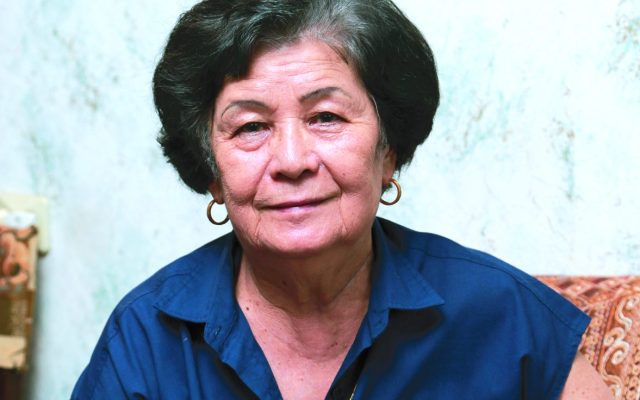
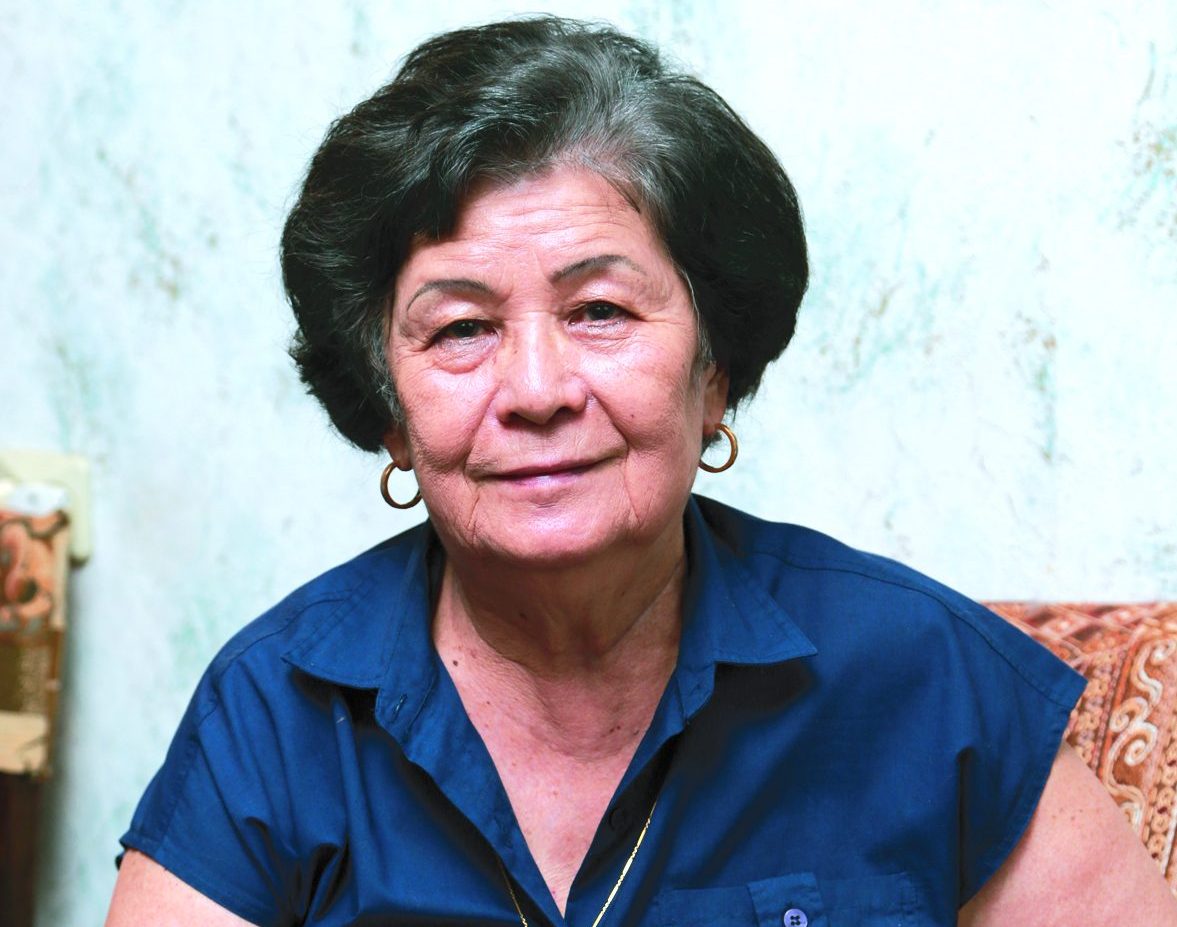
Our interviewee is Nadezhda Burkhankyzy Karasheva, Gumar Karash’s granddaughter.
Born in Oral (Uralsk) in 1930, she graduated from a Russian-language secondary school in Almaty with a gold medal in 1948. Five years later, she graduated with honours from the Oriental Studies Department of the Faculty of Philology at Lomonosov Moscow State University.
Between 1953 and 1962, she worked at the Institute of Language and Literature of the Academy of Sciences of the Kazakh SSR. There, she defended her Candidate of Sciences dissertation on the grammatical features of Kazakh literary language in the early twentieth century, drawing on material published in the Aiqap journal.
She subsequently settled in Moscow. At the time of our meeting, she was serving as academic secretary at a philological centre of the Russian Academy of Education and had authored more than 120 scholarly publications on language and language-teaching methods.
We found her address and home telephone number online, contacted her and arranged a meeting. During our telephone conversation, she mentioned that she was 82.
We could not help wondering how a long interview with someone of her age might unfold.
But when we arrived in Moscow, we were pleasantly surprised.
Nadezhda Burkhankyzy opened the door and welcomed us warmly. She was energetic, upright and elegantly dressed, looking scarcely older than sixty.
Within moments, the conversation began to flow. We immediately noticed how well she knew Kazakh customs, traditions, proverbs and sayings.
As we became absorbed in her recollections, we almost forgot that we were in another country, far from home. It felt as though we had come to visit a relative we had not seen for years.
We present part of our conversation with a descendant of one of Kazakhstan’s distinguished historical figures.
— Your grandfather, Gumar Karash, was one of the leading thinkers of the early twentieth century — a religious scholar, progressive poet and an important figure in the development of Kazakh written literature. He was ahead of his time, offering solutions to pressing social problems and seeking to awaken the consciousness of his people through knowledge and personal example. What do you know about your grandfather? And could you tell us a little about yourself?
— I was born nine years after Gumar Karash died, so I never had the opportunity to meet him. But our relatives often spoke of him as a celebrated poet, philosopher and progressive educator. At that time, three of his sons lived in Almaty: the eldest, Basyr, my father, Burkhan, and the youngest, Alikhan. There used to be considerable information about Gumar Karash and his writings in Kazakh literature textbooks for ninth- and tenth-grade pupils. But things changed, particularly in 1947, when the authorities issued a resolution condemning his legacy. He was labelled a bourgeois-nationalist poet, a mullah and a supporter of Alashorda. The publication and study of his works were prohibited. Around that time, I finished secondary school in Almaty and left for Moscow. I enrolled in the Oriental Studies Department at Lomonosov Moscow State University. I graduated with honours in 1953 and returned to Almaty. For almost ten years, I worked as academic secretary at the Institute of Language and Literature of the Academy of Sciences. I also pursued postgraduate studies there and defended my Candidate of Sciences dissertation. My research concerned the grammatical features of Kazakh literary language in the early twentieth century, based on material from Aiqap. It was a fascinating subject.
Aiqap, one of the earliest journals established by Kazakh intellectuals, began publication in 1911. It used the Arabic script, which made its original texts difficult for many people to read. Many distinguished scholars of the older generation attended my dissertation defence, including Yesmagambet Ismailov, Mukhtar Auezov and Mukhamedzhan Karatayev. Even Kunayev, who was then president of the Academy, came. Perhaps they were curious to see what this young girl would have to say! I was asked questions from every direction. I answered them all and defended my dissertation with the highest mark.
— What prompted you to settle in Moscow? Was it then that you began studying your grandfather’s legacy?
— We moved to Moscow in 1962 because of my husband’s work. I have lived here ever since. When we were children, my father, Burkhan, did not encourage us to talk very much about our grandfather. After Gumar Karash’s works were removed from school textbooks, my father would say: “Whoever ordered them to be removed will restore them when the time comes. But you must not get involved.” So I knew relatively little about my grandfather’s writings when I was young. And even when I grew older, I did not pay the matter the attention it deserved. Of course, I regret that now. If only I had been wiser, I could have gathered a great deal of information from elderly relatives, fellow villagers and other people who had known him personally. But what can I do? Those years have passed. Now there are important questions that even I cannot answer.
— We know relatively little about Gumar Karash’s descendants. Could you tell us more about his family?
— Gumar’s eldest child was Kadyr. He graduated from a secondary school in Astrakhan, returned home and worked in Kaztalovka. Our relative Gasyr described him as a highly educated, composed and determined young man. He was murdered in 1922. Nobody knows who killed him, although it is quite possible that his father’s political enemies were responsible. The second son was Basyr. He lived in the village and undertook various kinds of work. During the war, he was conscripted into the labour army and worked as a miner in Karaganda. Later, he moved to Almaty, where he died at the age of seventy. I learned some things about my grandfather from Uncle Basyr and his wife, Tanzilya. Their only son, Bolat, has also passed away. The third child was a daughter named Tanaziya. She lived with her husband in Karaganda. The fourth child was Burkhan, my father. He was very well educated — the most highly educated of Gumar’s children. In the 1930s, he travelled to Moscow with a group of young Kazakh men and graduated from the Timiryazev Agricultural Academy. After returning to Almaty, he worked for some time at the Ministry of Agriculture. When another wave of persecution began in the 1940s, my father quickly understood what was happening. He left Almaty and moved to the Taldykorgan region, where he became director of an agricultural technical college. He headed the institution for about ten years. Almost everyone working there was Russian. There may have been only one or two Kazakhs. In that way, he managed to escape political persecution. Later, he returned to Almaty and became head of a state land-management institution. He died at the age of sixty-three. Gumar’s fifth child was a daughter named Khamida. Sadly, she died of an illness when she was twelve. The youngest was Alikhan. He was called up for military service at twenty-one and subsequently disappeared without a trace. We never received a single letter from him. Nobody knows where or how he died.
My father tried to find out what had happened, but his efforts came to nothing. According to my father and Uncle Basyr, Alikhan had been the republican champion in draughts.
— Could you tell us about your own family?
— My husband worked in the diplomatic service. He has passed away. My elder daughter, Lola, is fifty-seven. She also graduated from Lomonosov Moscow State University. I encouraged her to pursue linguistics, following in my footsteps. She completed her studies with excellent results and became fluent in Chinese. Later, she spent about a year studying Chinese in Singapore. She holds a Candidate of Philological Sciences degree and heads a department of Oriental languages at a major university in Moscow. Oriental studies is a very broad field. Her department covers Japanese, Turkish, Korean, Chinese, Vietnamese and many other languages. Her job is extremely demanding. Sometimes I genuinely feel sorry for her because of how much work she has. My younger daughter was Karina. She was a beautiful young woman. She studied in Japan and became exceptionally proficient in Japanese. She worked for a major Japanese television company. Sadly, she died seven years ago from a blood disease. Lola’s daughter is named Dana. She is also a linguist, but she decided against defending a dissertation. “I don’t want to spend my life sitting behind a desk,” she said. She now works for the publication Afisha.
— There are different accounts of Gumar Karash’s death. Which version do you consider the most credible?
— I do not know for certain how my grandfather died, where it happened or who killed him. But I remember asking Uncle Basyr about it. He told me: “Your grandfather was travelling across the steppe when bandits attacked him and hacked him to death with sabres. “When his horse returned to the village without its rider, the villagers realised that something terrible must have happened to the poet. “They organised a search, and before long his remains were found at a place called Kunanshapkan.”
That is the account I believe. I have read different interpretations offered by researchers, but I think Uncle Basyr’s version is the closest to the truth.
— You mentioned that the Soviet authorities prohibited the publication and study of Gumar Karash’s works. Did that persecution affect you personally?
— Thank God, I was never personally subjected to political persecution. I believe I owe that to my father’s foresight and wisdom. He sensed that another campaign against prominent people was beginning and moved the family away from Almaty. He settled in an area where most of the people around us were Russian. He also retained his Communist Party membership. Perhaps he experienced some kind of pressure that I knew nothing about. He was a reserved man. He disliked idle talk and did not welcome questions about his father.
At the Institute of Language and Literature, I worked alongside Yesmagambet Ismailov and Mukhtar Auezov. They had known Gumar Karash personally. They had spoken with him, worked alongside him and even sat with him at public meetings.
Yet they never once told me, “We knew your grandfather.” Nor did they warn me about what I should or should not say. Before my dissertation defence, however, I was given a list of names I was not allowed to mention. It was a long list, beginning with Akhmet Baitursynuly and Gumar Karash.
— The days when your grandfather’s name was forbidden are now behind us. Are you satisfied with the research being conducted into his legacy? And what have you personally contributed to preserving it?
— I do not think we can say that Gumar Karash’s legacy has been fully researched. For many years, his name could not be mentioned and his works could not be published. Naturally, during that long period of enforced silence, many Kazakhs began to forget him. Fortunately, attitudes have changed, and his writings are now being published again.
Among the studies I know and consider particularly important are Ismailov’s dissertation on my grandfather’s legal ideas and Baktyly Ormanova’s dissertation on his life and political activities. I was especially pleased when Kabibolla Sydyikov brought together several collections of my grandfather’s poems in a volume entitled Zamana. That was a genuinely substantial contribution — the first major work of its kind. I also consider the recently published book Qazaqstan extremely valuable. Ever since my research into Aiqap, I have understood the important place of the Qazaqstan newspaper in the history of Kazakh journalism.
My grandfather helped organise its publication and contributed many of his own reflections and poems. The idea of naming the newspaper Qazaqstan was also his. That is why I was delighted to learn that its complete collection of issues had been published in book form. Because I live abroad, I am not fully informed about all the research currently being carried out in Kazakhstan. My husband’s diplomatic career took us to several countries in Asia, including Pakistan, Malaysia, Burma and Yemen. Whenever we were abroad, I made a point of visiting libraries. I looked for material about my grandfather and managed to find a small number of books in foreign languages that mentioned him. It was not much, but even those discoveries gave me tremendous pleasure. Anyone who studies Gumar Karash’s writings can see the extraordinary breadth of his thinking. Even in those difficult times, he addressed many of the issues that mattered most to society.
He wrote about education and upbringing, culture and productive work, the transition to settled life, religion, law, language and the importance of opening schools that taught children in their mother tongue. He understood that knowledge, literacy and education were essential to the future of his people. There is still an enormous amount of work for researchers of his legacy. But one difficulty remains. Most of the research devoted to Gumar Karash has been published in Kazakh.One of the few Russian-language publications I knew was the anthology Poets of Kazakhstan, published by Magauin in Leningrad.
I wanted people who did not know Kazakh to have an opportunity to discover my grandfather’s life and work. I was familiar with religious subjects and had sufficient knowledge of Kazakh, Russian and written Arabic, so I decided to prepare a book about him myself. Last year, a short Russian-language book of mine, entitled Gumar Karashev, was published. It contains a biography of my grandfather and an introduction to some of his writings. I also translated several of his poems into Russian as best I could. I regard this as my duty to his memory.
— Do researchers studying Gumar Karash contact you for information or ask you to share your recollections?
— No. Until your visit, nobody had come to me specifically to ask about my grandfather. There was, however, a film crew from Kazakhstan that came to interview me for a documentary about Mukhtar Auezov. I had worked with Auezov, and we maintained a correspondence over the years. As it happened, the last letter he wrote before his death was addressed to me. That was the reason the filmmakers came.
— You knew Mukhtar Auezov personally. Did he ever speak to you about your grandfather?
— As I said earlier, the people who had known my grandfather and worked alongside him never spoke to me about him. Auezov knew him, yet he never said a word. Akhmet Zhubanov was also a frequent guest in our home. We would talk for hours, but he never mentioned my grandfather either. To this day, I cannot understand why they remained silent. Perhaps they were afraid that speaking about him might cause me difficulties. Maybe they were trying to protect me. While researching Aiqap, I came across some of my grandfather’s writings in its pages. Yet even during my dissertation defence, nobody asked me a single question about Gumar Karash. The defence itself was quite an experience. I was twenty-seven at the time, and the committee asked me nearly thirty questions. They told me I could answer in Russian. But I insisted on speaking Kazakh.
— Do you have any surviving copies of Shaiyr and Koksilder, the collections of heroic poetry your grandfather published between 1910 and 1912? Or perhaps any of his manuscripts or other writings?
— According to Uncle Basyr, the bandits who killed my grandfather subsequently set fire to his house, destroying it completely. Some of his manuscripts may have perished in that fire. Neighbours apparently managed to rescue a few papers so that they would not be lost. It is possible that some of those documents still survive somewhere. Uncle Basyr used to say that my grandfather’s poetry was both simple and accessible to ordinary people. Whenever he wrote a new poem, people would often begin singing it. His verses passed from person to person and remained in people’s memories. Perhaps some of those songs have survived to this day. That is something future researchers may yet discover.
— As Gumar Karash’s granddaughter, how do you assess his contribution to Kazakh literature and the history of the nation?
— The scholar Yesmagambet Ismailov once offered this assessment: “Gumar was a major classical poet who occupied an important place in Kazakh literature in the early twentieth century, in the period following Abai. “His historical contribution to the development of Kazakh written literature and its literary language was exceptional. “Gumar was a great artist, a master of literary expression and the written word.” I believe that is a fair and entirely deserved assessment. I am deeply grateful to everyone who has devoted their efforts to studying my grandfather’s legacy. If Gumar Karash becomes a source of pride for the entire Kazakh nation, it will be an honour for all his descendants. Deep down, I had always hoped that if anyone ever came looking for me to learn more about my grandfather, they would be people from his homeland. And now that has happened. You found me, contacted me and travelled all this way to meet me. Thank you very much.
— Thank you, Nadezhda Burkhankyzy, for sharing these remarkable memories with us. We wish you good health and all the very best.