In an age of globalisation, if Kazakhstan is to stand as an equal among nations and secure its rightful place in the world, we must embrace education and science, deepen our understanding of our homeland’s history, literature and culture, and make a healthy way of life one of our priorities.
With this in mind, I would like to raise six important issues and offer my own views on how they might be addressed.
How Well Do We Really Know Our Homeland?
A century ago, there were no cars, trains or aeroplanes on the Kazakh steppe. Yet our ancestors travelled on horseback across this immense land, reaching places so distant that even birds would tire before getting there.
They knew their homeland by its stones, waters and grasses. Without a compass, they could find their bearings and reach their destination.
And what about us today?
Take someone just fifteen or twenty kilometres from their village and ask them to find their own way home. Many young people would lose their bearings, and sometimes even adults would struggle. Some people cannot distinguish north from south even when standing in the very heart of a city.
We proudly proclaim that the Zhaiyq (Ural) River divides Europe and Asia and that our land is a gateway between the two continents. Yet many young people cannot say which bank belongs to Europe and which to Asia.
Khan Bokei, deeply concerned for the future of the Kazakh people, risked his own life and, through knowledge, sound judgement and diplomatic skill, secured land between the Zhaiyq and Edil (Volga) rivers. In doing so, he expanded the territory of his homeland.
But ask a young person today — or even an older person — which side of the Zhaiyq the Edil lies on, and the question may leave them bewildered.
Outraged by the Tsarist government’s seizure of Kazakh lands and its increasingly aggressive colonial policies, the celebrated poet and zhyrau Murat Monkeuly lamented:
When they seized the Edil,
They reached beneath our garments.
When they seized the Zhaiyq,
They seized us by the collar.
When they seized the Oiyl,
They had achieved their aim.
At first glance, the meaning seems perfectly clear.
Now imagine standing on the banks of the Zhaiyq. Stop and think: where is the Edil? Where is the Oiyl?
Suddenly, verses that seemed so straightforward become difficult for many of us to understand.
Put a geographical map in front of someone, and they will quickly find the names of those rivers. But we do not live on a map. We live on the land itself.
At school, we used to think that mathematics, computer science, geometry, physics and chemistry were difficult subjects, while languages, literature, history and geography were relatively easy.
Most of us spent eleven years at school earning good or excellent marks in history, literature, environmental studies, astronomy and geography. Add to that another four years of university education.
So how is it that, despite all this schooling and the knowledge we claim to have acquired, we remain unfamiliar with something as fundamental as our own homeland?
Our Hard-Earned Money Is Flowing Abroad
 There is an old saying: “Better to see something once than hear about it a hundred times.”
What could be more rewarding than using our free time to explore our native land, enjoy its natural beauty and discover the remarkable places in our own region?
Suppose I wanted to visit the historical sites of West Kazakhstan — ancient settlements, burial mounds, mosques, or places where distinguished figures of our past were born, lived or buried. Or perhaps I simply wanted to spend a few days surrounded by beautiful scenery.
Who would show me the way?
Have roads and other essential facilities been built? Is there anywhere to eat or stay overnight? Are visitors provided with the basic comforts they need?
Unfortunately, the answer is no.
Often, you do not even know whom to approach for advice, let alone where to find someone who could take you to these places and show you around.
Now consider travelling abroad.
Everything is at your fingertips. You can find out what to see, where to go and what facilities are available simply by searching the internet. You can buy a ticket and reserve a hotel without leaving your home.
Once you arrive, you are well fed, comfortably accommodated and ready to explore. A local guide takes you to historic landmarks and natural attractions, helping you discover a different country and its people.
Foreign tourism operators know how to attract visitors and encourage them to spend money. They take you to their most scenic and historically fascinating places — and receive your hard-earned money in return.
They benefit. We lose.
We work hard throughout the year, only to take our earnings abroad and spend them in another country’s economy. We admire its landscapes, explore its history and return home delighted with the experience.
And why wouldn’t we? There are comfortable hotels, attractive places to swim and relax, a wide choice of food and services designed to satisfy visitors.
The question is: why should we not offer comparable opportunities in our own country?
What Have I Given My Child?
Throughout the year, work takes up much of our time, often leaving too little for our children. Once a year, we take our annual leave and spend it as we wish.
But during that precious holiday, what have we actually done for our children?
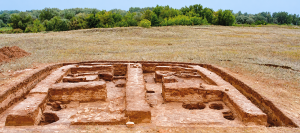 Have we given them an experience that teaches them something valuable? Something that will help them grow into healthy, thoughtful, responsible adults?
Will your child one day be able to say:
“When I was young, my father or mother took me somewhere, showed me something and told me something I have never forgotten. That experience helped me understand the world and shaped the principles by which I live.”
Have you done something meaningful enough for your child to remember it years later — and perhaps pass that lesson on to their own children?
Do We Truly Know Our History?
We have already established that our knowledge of our homeland’s geography leaves much to be desired.
But how well do we know its history?
A nation that does not truly know its language, faith and history faces an uncertain future.
From what I have observed, even historians sometimes lack a thorough understanding of the past of their own region, let alone ordinary citizens.
Nor have we established a system of historical education that cultivates national awareness among all the peoples living in Kazakhstan.
Let us consider just the last eight centuries.
The Golden Horde, the Nogai Horde and the Bokei Khanate — the capitals of these historical states were also situated in this region. Yet these states and their legacy have not received the historical recognition they deserve.
Think for a moment. Leaving aside the khans themselves, how many of our warriors, judges, orators, singers, composers and epic poets can you name?
Could you name ten?
How much do we really know about the ancestors who placed their people’s destiny above their own lives and defended their homeland with sword and spear in times of great danger?
What do we know of the wise elders who foresaw the future and worried about the fate of their nation?
Or of the bi — the traditional judges and gifted orators who settled disputes, reconciled communities and found the right words when agreement seemed impossible?
What do we know of the singers, poets and kuishi — the masters of traditional instrumental music — who expressed the people’s joys and sorrows through song and melody?
Think about it.
We soon realise that there is far more we do not know than we do.
And that brings us to another problem.
Let Us See Our Great Leaders Honoured in Our Streets
Across our towns and villages, new streets are being named and monuments erected in honour of ancestors who rendered outstanding service to the nation.
Most of the figures commemorated in this way lived during the past three hundred years.
But were these not the very centuries when our people lived under Russian rule?
Of course, every one of these figures deserves our gratitude. They struggled against colonial oppression and helped bring closer the day when future generations could live in an independent country.
But what of the courageous warriors, wise elders, judges, orators, poets, singers and musicians who lived before those three centuries?
Why are they so often overlooked?
Our great zhyrau — Asan Qaigy Sabituly, Shalkiiz Tilenshiuly, Dospambet Azauuly, Kaztugan Suyinishuly and Zhiyenbet Bortogashuly — were renowned across the lands of their time. Today, their names live on in legend.
The same can be said of our heroic warriors: Edige, Oraq, Mamai, Karasai, Narik, Shora and many others.
Yet what recognition have they received beyond the pages of history books?
Their neglect is not a reflection of any lack of achievement. It reflects our own failure, as their descendants, to study our history properly and share it with others.
If we addressed this omission, we could show not only people of other nationalities but also our fellow Kazakhs that our people possessed their own independent statehood and lived as a free nation long before coming under Russian rule.
How Can We Put an End to Corruption?
Open a newspaper or turn on the news, and you are likely to encounter familiar headlines: a senior government official arrested for taking a bribe; another accused of embezzling millions in public funds; someone charged with extortion; or revelations about the family connections behind an official appointment.
Such reports have become disturbingly common.
This is the reality of our time. Corruption is spreading, and it poses a serious threat to the future of our country.
When a law is broken, the offender must be identified and held accountable. Punishment is necessary to protect the rights of others.
We can continue sending those found guilty to prison. Whether imprisonment is always appropriate for economic crimes, or whether substantial fines and other penalties might sometimes be more effective, is a separate discussion.
But are we going to fight corruption in exactly the same way twenty or thirty years from now?
Or should we begin looking for other solutions?
What must we do today to ensure that corruption is less widespread in twenty or thirty years?
I believe the answer lies, first and foremost, in how we raise our children.
We should draw upon the finest traditions and customs of our ancestors, adapting those that remain valuable to modern life. From an early age, children should learn their native language and history, absorb national values, receive a sound education and be raised with honesty, compassion, integrity and moral responsibility.
The ethical principles of our spiritual heritage can help us nurture love for the homeland and respect for the traditions of our people.
The wisdom of Korkyt Ata remains as relevant today as it was centuries ago:
A daughter who has not learned from her mother lacks good upbringing; a son who has not learned from his father lacks guidance…
The Almighty does not favour those who are arrogant and conceited…
An inherited fortune is of no use to a foolish child…
Better the empty wilderness than a humble home that welcomes no guests.
Yet what do many children hear at home today?
“Money solves everything.”
“You cannot survive without money.”
“People will respect you only if you have money and power.”
Our ancestors said that a bird carries into flight what it learns in the nest.
A child who repeatedly hears that everything in life depends on money is likely to grow up believing that wealth is life’s ultimate purpose. Their ambition becomes earning as much as possible — and then multiplying whatever they have accumulated.
There is a traditional Kazakh story that offers a different lesson.
A pregnant woman wanted her child to grow into an educated, well-mannered and respected member of society. Seeking advice, she visited a wise elder.
“When should I begin raising my child so that the child grows into a good person?” she asked.
The elder asked how many months pregnant she was.
“Six months,” she replied.
“My dear,” he told her, “you are already six months late.”
The meaning is profound: a child’s upbringing should begin even before birth.
We must instil this understanding in the minds of today’s generation.
Our people say, “An upbringing that has entered the bones cannot be changed.” Another proverb reminds us that an illness may pass, but a habit remains.
So at what age do habits and values become deeply rooted?
Our ancestors used to say, “At thirteen, one is old enough to establish a household.”
Today, let our young people begin family life at twenty rather than thirteen. By twenty, however, a person may already have reached the age of raising children of their own.
We can still guide someone at that age and positively influence their decisions. But attempting to remake their entire character may prove a hopeless task.
As the warrior-poet Makhambet declared:
We fought for the Edil,
We struggled for the Tepter,
We risked our lives for the Zhaiyq,
We perished for the Qiyghash.
How many of our heroic ancestors gave their lives for the future of our land?
A century ago, our national intellectuals recognised that freedom and equality could not be secured by force of arms alone.
They took up the pen.
Through education, they sought to awaken the people’s consciousness and inspire the struggle for freedom. By encouraging their compatriots to learn trades, they showed them ways to improve their livelihoods.
For these convictions, the Soviet authorities executed them. Their descendants were persecuted and their families scattered.
Through disastrous and deliberate policies, the people were subjected to starvation. Of six million Kazakhs, four million died of hunger.
If every young person could truly feel in their heart that each peaceful dawn we enjoy today was won through the tears of our mothers and the sweat and blood of our ancestors, they would understand that we did not inherit this vast homeland by chance.
And if they understood that, they would not embezzle, squander or misappropriate the public funds allocated to culture, education, science, housing, agriculture, entrepreneurship and other vital sectors. Nor would they stand by while others did so.
The great thinker Yusuf Balasaguni expressed this wisdom in verse:
The goodness absorbed with a mother’s milk
Remains unchanged until death.
The habits rooted in flesh and bone
Endure until life’s final hour.
The lesson is clear: corruption cannot be defeated through punishment alone. It must also be prevented through sound upbringing and the cultivation of strong moral values.
Domestic Tourism: Our Greatest Opportunity
I have raised six major issues. One way to address them, I believe, is to begin developing domestic tourism on a solid foundation of scientific research.
In this year’s Address to the Nation, the Head of State stated:
“One of the important challenges of our current development is to diversify the flow of foreign direct investment into Kazakhstan’s economy. Investment should be directed towards promising sectors, including tourism. In developed countries, tourism clusters account for up to 10 per cent of GDP. In Kazakhstan, the figure is below 1 per cent. We must identify and study potential centres of tourism growth across the country. There are many of them.”
The Head of State has thus set a task that could help resolve a number of important problems.
There is no time to lose. We must get down to work with determination and care.
Our region is blessed with remarkable natural beauty: vast open steppes, forests, rivers, lakes, springs and a rich diversity of plants and wildlife.
It is a land of such peace and abundance that, as the Kazakh expression goes, even a skylark could lay its eggs on a sheep’s back without fear.
But nature is only part of its appeal.
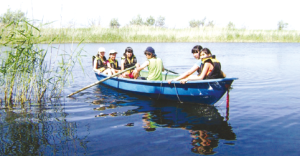 Our region possesses historical sites capable of attracting visitors not only from across Kazakhstan but from around the world.
We must therefore conduct serious scientific research into these places and the lives of the historical figures associated with them.
At the same time, we should identify how this heritage can help us raise younger generations to be compassionate, morally responsible, faithful to their values and devoted to their homeland.
On this foundation, we should establish domestic tourism clusters.
These clusters could operate at district, inter-district, regional, inter-regional and national levels.
Visitors should be able to explore the routes in whatever way suits them best — on horseback, by camel, bicycle, car or aeroplane.
Last year, at a gathering in Atyrau, Garifolla Anes, Doctor of Philology and Vice-President of the International Kazakh Language Society, made an observation that deserves particular attention:
“Those setting out from the homeland of Makhambet and Murat could visit the birthplaces of Asan Qaigy, Kurmangazy and Zhumeken, then travel to the Khan’s Headquarters before continuing towards Aktobe to pay their respects at the resting place of our ancestor Isatai.
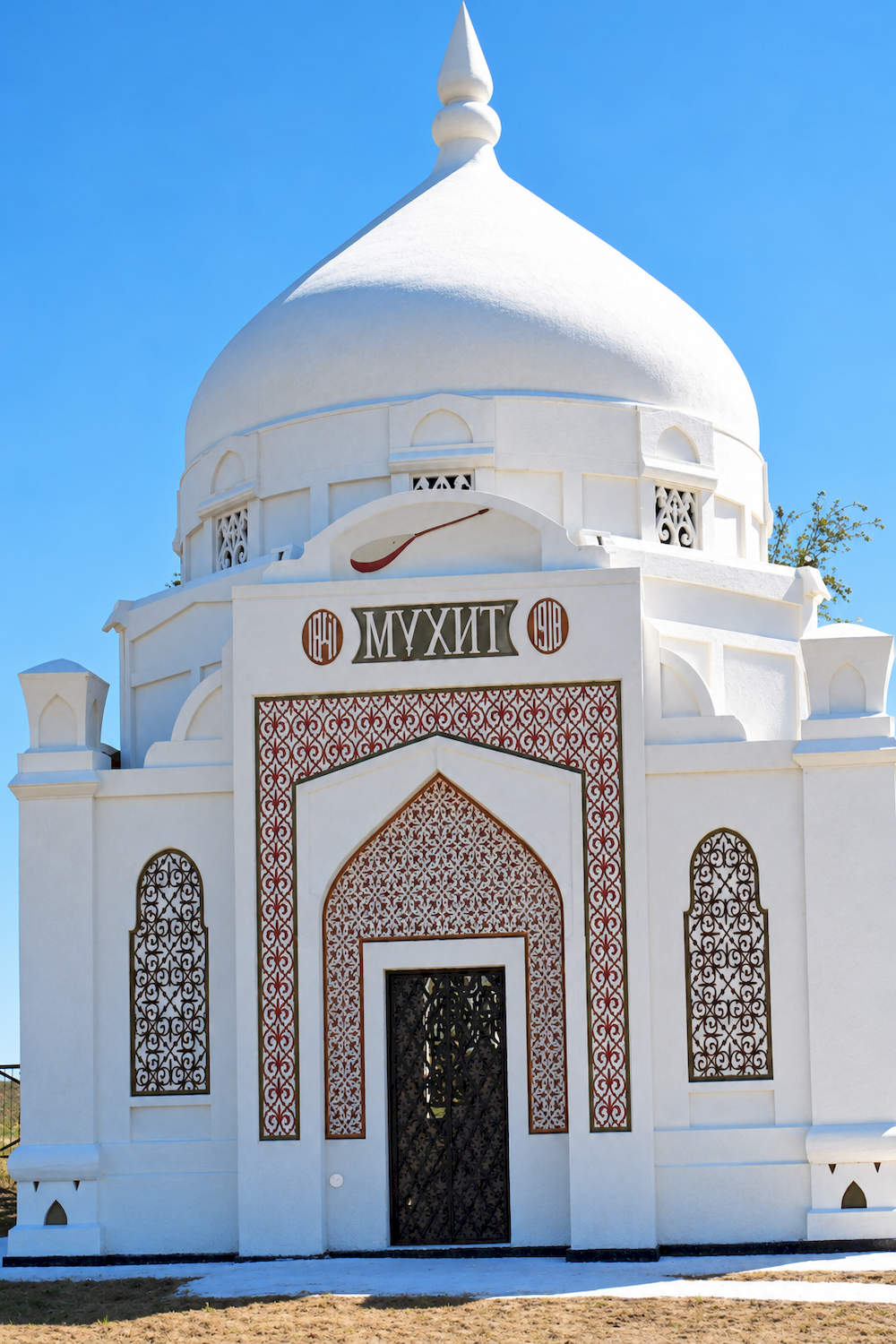
“Routes beginning in Khajytarkhan and connecting the resting places of Kurmangazy, Dauletkerei, Mukhit and Kazangap; the khans of Saraishyk; Bokei Khan, Zhangir Khan and Abulkhair Khan — together with a major road linking the four or five great capitals of the Nogai people — are they not ready-made opportunities for a tourism cluster?”
And the possibilities do not end there.
We can add the fourteenth-century settlement of Zhaiyq near Oral and the Kyrykoba archaeological site in Borili District, which still awaits thorough investigation.
The route connecting Oral, Oiyl, Karatobe and the villages of Syrym — places associated with the congress of the Western Alashorda government, which endured for eighteen months through the extraordinary efforts of Alash leaders — offers another readily accessible historical itinerary that would require relatively little financial investment.
The list could go on and on.
Our region has no shortage of places of exceptional historical importance and genuine interest to visitors. Each has its own story to tell.
What we lack is not heritage, but the ability to make the most of it.
Once the necessary scientific research has been completed, the financial side must be carefully assessed.
We need to determine where new monuments should be erected, where open-air museums could be established, which historical sites should be restored, and what infrastructure must be provided.
Roads, hotels, restaurants and other visitor facilities must all be taken into account.
Every proposed project should be properly costed, and practical solutions found for its financing.
Once domestic tourism routes have been established and suitable facilities created, we should encourage every parent to ensure that their children visit the region’s most important historical and cultural destinations while they are still at school.
Parents should see these journeys not merely as leisure activities, but as part of their responsibility to educate and raise their children.
In my view, every district should begin addressing this matter today and develop its own proposals.
There is no reason why individual districts should not begin establishing local tourism clusters straight away.
We hear that some schools have already started working in this direction. That is encouraging.
But such initiatives should not remain confined to individual schools. They would be far more effective if developed across entire districts.
It would also be valuable for those involved to share their experiences, report their achievements through the media and encourage others to follow their example.
When identifying and developing tourism destinations, we must look beyond financial returns.
We should pay equally close attention to what these places can teach future generations.
Young people are the future of our country.
If we invest substantial resources today in helping them learn their language and history and develop genuine love for their homeland, they will grow into citizens who serve their country honestly and help secure its future.
Naturally, in implementing these projects, we must consider not only their educational value but also their economic benefits.
According to information collected from tourism service providers by the West Kazakhstan Regional Department of Tourism, Physical Culture and Sport, the number of residents travelling abroad rose steadily over three years:
| Year | Number of people travelling abroad |
|---|---|
| 2009 | 5,536 |
| 2010 | 7,515 |
| 2011 | 9,023 |
If we assume that each traveller spent an average of 120,000 tenge, then in 2011 alone more than 1.082 billion tenge was spent abroad — money that contributed to the economies of other countries.
And the number of people travelling overseas is increasing year by year.
Now imagine that, by developing domestic tourism and creating attractive conditions for visitors, we could persuade just 30 per cent of those who travelled abroad in 2011 to spend their holidays here instead.
At least 324 million tenge could remain in our own economy.
Of course, this is a rough calculation, intended only to illustrate the possibilities. The actual figures might be different, but the potential financial benefits are beyond doubt.
In the end, developing domestic tourism is about far more than earning money.
It is about raising patriotic generations, rediscovering our history and honouring our ancestors.
Imagine our children visiting the places where the great figures of our past once lived and worked: our heroic warriors, revered spiritual leaders, traditional judges and orators, poets, storytellers, singers, musicians and all those who served their people with distinction.
Imagine them learning about these lives, standing before ancestral graves and offering prayers, or visiting the remains of ancient cities, fortifications and settlements to pay their respects.
Such journeys would broaden their horizons, deepen their understanding of life, strengthen their values and, we believe, bring them the blessings of the Almighty.
As our own modest contribution to this work, we intend to publish a series of articles in forthcoming issues devoted to each district of our region — its natural attractions, historically significant places and remarkable people.
We invite our readers to join the conversation.
If you have ideas, observations or suggestions, please share them.
Zhantas NABIOLLAULY
General Director, Zhaiyq Press LLP
Oral Öñiri newspaper, No. 69, 14 June 2012.
The article was subsequently republished:
- Under the title “Upbringing Begins with Respect for One’s Homeland” in Egemen Qazaqstan, Nos. 464–470, 4 August 2012, page 3.
-
Under the title “The Key to Wealth” in Dana.kaz magazine, No. 3 (4), April 2013, and No. 4 (5), May 2013.