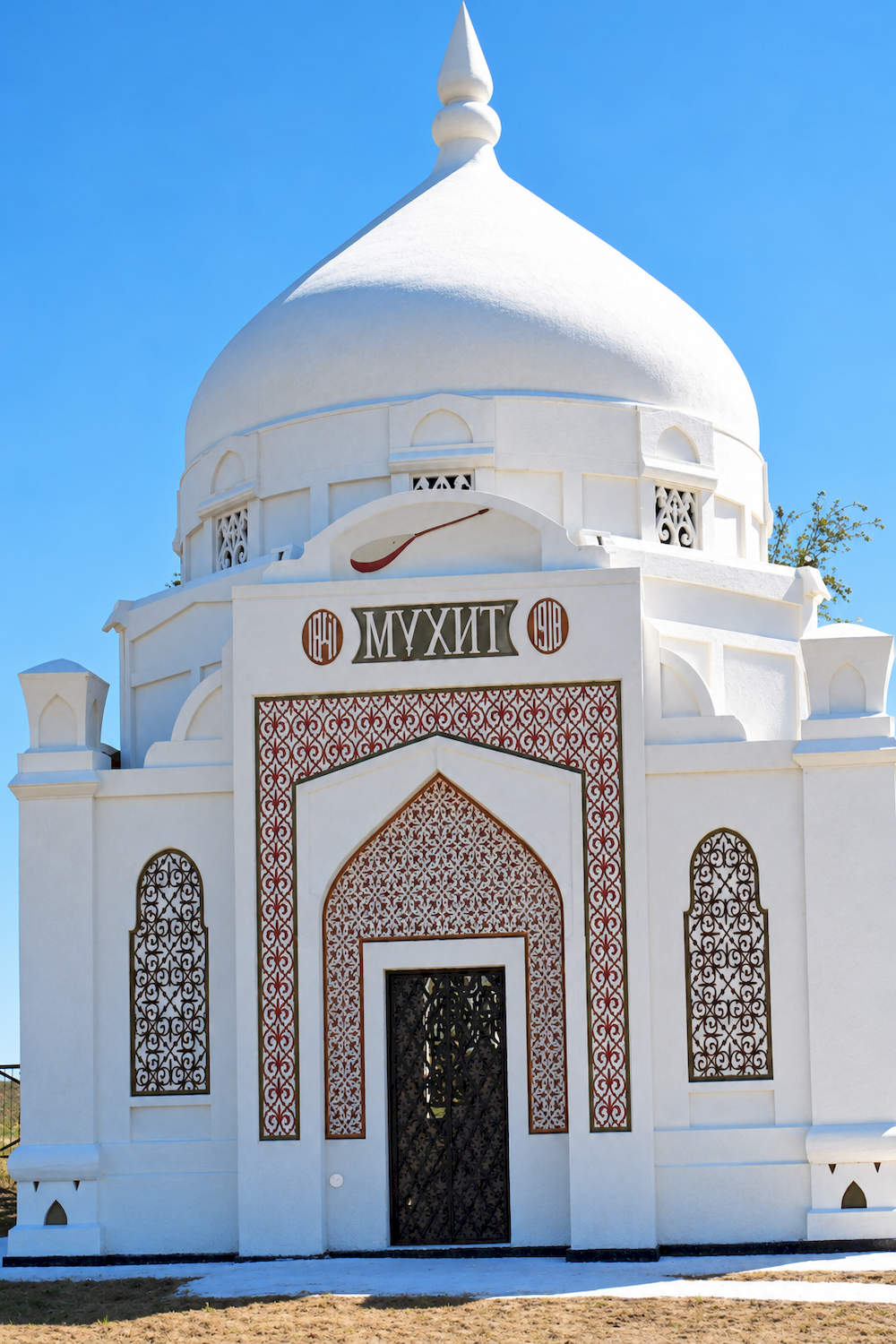
Our region has consistently worked to preserve the memory of prominent figures who fought for the independence of the Kazakh people and to ensure that younger generations know their legacy. Continuing this work, Zhaiyq Press LLP is launching another important initiative: a regional competition named in honour of Gumar Karash and Eleusin Buyrin, entitled “So You Want to Be a Journalist…”
While Gumar Karash is relatively well known, Eleusin Buyrin has yet to receive the recognition he deserves. The competition therefore aims to honour the memory of these two outstanding figures and ensure that their contribution to the nation is not forgotten.
Rather than attempt to recount all their achievements, we will focus on the part of their work most closely connected with the press.
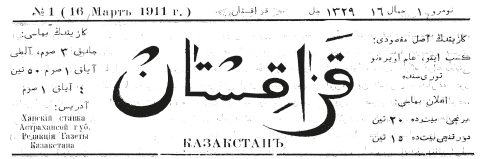
In 1911, with the support of leading intellectuals from western Kazakhstan, a newspaper bearing the name Qazaqstan (“Kazakhstan”) began publication for the first time. Its editor was Eleusin Buyrin, who was fluent in Russian. Gumar Karash helped guide the newspaper’s editorial direction, supported its financial, administrative and organisational work, and wrote many of its key articles. His writing challenged readers to think, encouraged them to learn trades and urged them to pursue education.
At a time when there was no internet, television or radio, the printed newspaper was the principal means of awakening public awareness across the Kazakh steppe.
Before Qazaqstan, newspapers such as Dala Ualayaty and Turkistan Ualayaty had been published regularly in the region. These publications, however, were established at the initiative of the Tsarist government and intended to support its policies. Kazakh intellectuals occasionally managed to publish their views, but the papers remained under strict imperial censorship. Writers addressing national issues faced persecution and punishment.
Following the unrest in Russia in 1905–1907, publications promoting Marxist and Leninist ideas became more widespread. Some Kazakh intellectuals also attempted to establish independent newspapers, but the Tsarist authorities suppressed these efforts before they could take root.
At the time, our people were officially referred to not as Kazakhs, but as “Kirgiz”, “Kaisak” or “Kirgiz-Kaisak”. These labels, the author argues, were imposed to sever the people from their roots, diminish their identity and maintain colonial domination.
Against that background of harsh imperial rule, publishing a regular newspaper called Qazaqstan was an act of extraordinary courage. That our independent country would later bear the same name can be seen as a remarkable example of foresight and historical continuity.
The author traces the name of today’s sovereign Kazakhstan to the launch of Qazaqstan in 1911. Although the country’s name changed over the course of history, it was formally restored in 1991 by decree of the Head of State.
The intellectuals who founded a progressive, democratic newspaper under the name Qazaqstan were, in the author’s view, already looking towards the creation of an independent country bearing that name.
For the Kazakh people, the newspaper was like a light kindled in darkness. It called for education, practical skills, enterprise, unity and solidarity. It encouraged people to adopt a settled way of life and explore new forms of economic activity.
The spirit of these appeals can be seen in the newspaper’s own words:
“We have been deprived of both skills and knowledge, and now, having lost even the livestock on which our livelihoods depended, we find ourselves in grave hardship. Enough of these quarrels. Enough!”
Another article, entitled “How Should We Live from Now On?”, argued:
“We must now devote ourselves to educating our children and learning trades. We must turn our attention to earning a livelihood. We cannot acquire these skills while continuing to live as we do today.
We must come together and establish settled villages. Then all the children in a village can receive instruction from one mullah, supported by the community.
Under present conditions, when families live scattered apart, each household would need its own mullah. Not everyone can afford that, and many children are consequently left without an education.
Living together would also bring benefits in the use of land. Small areas should not be divided into separate plots for individual use. Instead, all the land belonging to a village should be brought together, with one part used for cultivation, another for haymaking and another for grazing, so that the community can make use of it collectively.”
We intend to return to the original pages of Qazaqstan in future publications, presenting further excerpts alongside research and more detailed analysis.
Reading these articles raises a difficult question. Had the Kazakh people voluntarily begun adopting a settled way of life in those years, might the losses suffered during the famines of 1920–1922 and 1930–1932 have been considerably lower than four million?
In 1911, Russian and Tatar communities had printing houses capable of producing newspapers. Kazakhs, however, had no comparable facilities.
Apart from the first two issues, the remaining fourteen editions of Qazaqstan were printed on a press purchased from Azerbaijan after considerable effort and at the cost of substantial debt.
It was the first printing press acquired through the initiative of Kazakh intellectuals and owned by their newspaper. Gumar Karash and Eleusin Buyrin can therefore rightly be counted among the pioneers of regular Kazakh national journalism and the country’s printing and publishing industry.
Both men travelled widely in search of the money needed to keep the newspaper alive.
In his article “Baku”, Gumar Karash recalled one such journey:
“Last year, in 1911, at the beginning of the month of Zauza, we were deeply concerned with finding a way to get the Qazaqstan newspaper firmly established. Acting upon a decision we had heard discussed among people, the two of us set out from home in the name of Allah, bound for Baku in search of Haji Zeynalabdin Taghiyev.
Many said, ‘Two idle troublemakers have left their homes.’ Yet we knew there were also generous-hearted people who sincerely prayed for us, wishing that our journey would be blessed, that we would travel out lightly and return with much to show for it.
For the sincerity of our intentions, Allah granted us success. The Haji welcomed us warmly, donated one thousand roubles to Qazaqstan and spoke to us with the kindness of a father.
As we parted, he said, ‘Give my greetings to the children of the Kazakh people. This wealth is not mine; it belongs to the nation.’ Tears filled his eyes.
The distinguished Ali Mardan Bey Topchubashov helped us explain our circumstances. May Almighty God grant them long lives and bless us with more people like them.”
Under Soviet rule, the history of the Qazaqstan newspaper was not properly studied. Those who sought to investigate it encountered various obstacles.
For decades, while the communist system held power, the lives and work of Eleusin Buyrin and Gumar Karash remained largely outside the scope of academic research. Even today, their contribution has yet to be examined in full.
These men devoted their lives to the future of the Kazakh people. That they have still not received the recognition they deserve is a challenge to our generation.
Dear readers, the principal aim of this competition is to honour the memory of our forebears, who endured extraordinary hardship during turbulent times and devoted their strength to awakening the national consciousness of the Kazakh people. We want younger generations to follow their example and take pride in the history of their homeland.
The competition also seeks to identify talented young people willing to enter journalism and help them find opportunities to work for regional and district newspapers.
We are ready to support young people who wish to follow in the footsteps of these pioneers and dedicate their efforts to serving their country.
Gumar Karash (1875–1921)
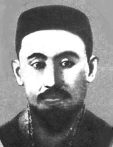 Gumar Karash, a poet, thinker and public figure, was born in 1875 in what is now Zhanibek District.
Orphaned at an early age, he was raised with the help of relatives and learned to read and write under a village mullah.
In 1902, he began teaching children in his home village. From 1911 to 1913, he took an active part in publishing the newspaper Qazaqstan.
During the same period, with the support of Shangerey Bokeev, he collected works of oral literature and published two collections in Orenburg, Shaiyr and Koksilder. He also published books of his own before the revolution.
Karash’s poetry, reflections and articles explored the issues of his time: life, faith, Islamic law, nature, love and the human condition. He openly criticised the colonial policies of the Tsarist government and the hypocrisy of local officials, calling on people to serve their nation honestly.
He believed that the Kazakh people should preserve their language and culture while embracing science and education and learning from the achievements of other nations.
Karash placed great hopes in the Alashorda government. He expressed those hopes in poems such as Alashtyn Azamattaryna (“To the Citizens of Alash”).
His works have appeared in school textbooks, the Russian-language Anthology of Kazakh Poetry, the collection Poets of Kazakhstan and various periodicals.
His poems, philosophical reflections, stories and articles were also published under the title Zamana (“The Times”).
Eleusin Buyrin (1874–1933)
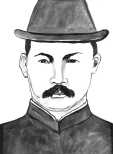 Eleusin Buyrin was born in 1874 in the Naryn Sands, in what is now Zhangala District.
He lost his father at an early age and faced hardship from childhood. While herding livestock for wealthy families, he studied Arabic with village mullahs.
A gifted and inquisitive boy, he quickly mastered Russian and was admitted to the Kazan Teachers’ Seminary.
After completing his studies, he taught Russian language and literature at a school in Astrakhan.
In the early twentieth century, Kazakh intellectuals devoted considerable effort to establishing the Qazaqstan newspaper. They invited Buyrin, who was teaching in Astrakhan at the time, to serve as its editor.
During the Soviet period, Buyrin worked as a defence lawyer and as an employee of the People’s Commissariat of Education of the Kazakh SSR. He later became a research officer at the Central Museum in Alma-Ata.
He subsequently faced persecution for views the authorities regarded as nationalist. In the autumn of 1932, he was forced to leave for Stalinabad with his ten-year-old daughter Sofia.
His final petition to the Executive Committee of the Tajik SSR suggests that he survived for only seven or eight months in exile before dying of starvation.
Unable to apprehend Buyrin himself, the NKVD arrested his eighteen-year-old son Anuar in Moscow in 1933. Anuar was expelled from his educational institution and, together with his mother and six-year-old sister Khadisha, was sent to perform forced labour at the “Third International” mine in a forested area forty kilometres from Nizhny Tagil.
Buyrin’s twenty-one-year-old daughter Gaisha was also expelled from her institute and exiled to Sverdlovsk.
After years of hardship and humiliation, the family was finally released from the camp in 1937 and returned to Alma-Ata.
Thus, the hardships of political persecution fell not only upon one of the first editors of the Kazakh national periodical press, but also upon his family and descendants.
Zhantas SAFULLIN
General Director, Zhaiyq Press LLP
Oral Öñiri, No. 52, May 5, 2012.